Hola que tal amigos de blogger, en esta ocacion les traigo la manera de saber quien se conecta a su red y expulsarlos con un filtrado de MAC, es algo muy sencillo me explico, con la aplicación llamada Fing podemos saber quien esta conectado en nuestro wifi y nos muestra su MAC esta numero podemos ponerlo en lo filtrado del router para que no se pueda conectar mas, en el videotutorial les explico mas a fondo.
Zoom’s video conferencing software has more problems than a secret web server on Mac. Even on Windows, websites you visit could start filming you without your consent. All you have to do is click a link. This problem affects Macs, too.
While previous reporting seemed to indicate that Zoom’s problems were specific to macOS, Windows is vulnerable, too. If Zoom is configured to turn on your camera by default in meetings, someone could embed a Zoom link in a web page and immediately start recording you. This would work on either Windows or Mac.
Zoom insists it “have no indication that this has ever happened”—yet. The company considers this a feature and says you’ve given permission for this if your Zoom client is configured to automatically turn on your webcam when you join a meeting.
Jonathan Leitschuh‘s proof of concept website demonstrates this. If you have Zoom software installed and go to the website, the Zoom software will launch and automatically join the meeting and start recording with your webcam. In the case of the macOS, you’d see that behavior even if you previously uninstalled Zoom, thanks to a secret web server Zoom leaves running after it’s uninstalled. But, even on Windows, Zoom will launch if you currently have it installed.
At first, Jonathan Leitschuh’s medium post seemed to suggest this issue only existed on MacOS. But he clarified otherwise in a tweet:
🚨 WINDOWS & MAC USERS 🚨 If you've ever checked this box on any browser other than Safari, you are vulnerable as well. pic.twitter.com/FbG2efEe0R
Zoom, a popular video-conferencing application, is in hot water today. The Mac version runs a secret web server in the background—even after you uninstall it!—that can be used to reinstall Zoom and even turn on your video camera.
If you’re wondering whether you’re affected—maybe you’re not sure if someone has ever installed Zoom on your Mac and then uninstalled it—here’s how to check.
To see whether you have the main Zoom app currently installed, open the Finder app, select Applications, and look for “zoom.us” in the list. If you have this app installed, you almost certainly have the web server running.
But, even if you don’t have the app here, the web server will still be running in the background if you’ve ever installed and then uninstalled Zoom.
To check whether the server is running, open a Terminal window. To do so, press Command+Space to open Spotlight search, type “Terminal,” and press Enter. You can also head to Finder > Applications > Utilities > Terminal.
To discover whether the web server is running, type the following command and press Enter:
lsof -i :19421
If you see a “ZoomOpene” process running, the web server is running in the background. If you don’t, it’s not.
If you’re using a security camera at home, you’re dealing with hundreds of hours of video a week. But if you need to retrieve any of it, you might only be interested in the bits with humans. Wyze gets that.
To help deal with constant live and recorded video, the company is rolling out “Person Detection” to its inexpensive cameras. With this feature enabled, the Wyze app will notify the phone app when a human walks into the frame of one of the cameras connected to your home network. Users can also search through recorded video, highlighting only the portions that include a human.
This sort of detection is much harder to automate than you might think—most of the consumer-facing software in the area has been focused on, well, faces. Wyze’s press release says that the company has partnered with Seattle-based software firm Xnor (pronounced Ecks-nor, not Znore) to perform AI processing on the Wyze Cam itself, no cloud server required.
Wyze says the person detection feature will reduce the number of false positives its users receive from the Wyze Cam v2 and Wyze Cam Pan. The feature will roll out in a firmware update starting today.
The Zoom video conferencing app for Mac has serious flaws left unaddressed despite disclosures. When visiting a malicious website, bad actors can activate your camera without permission. If you uninstalled Zoom, the malicious site can reinstall without your interaction.
Security researcher Jonathan Leitschuh noticed that Zoom has the capability to auto-join and start a video session just by visiting a link. He wondered how the company securely accomplished the feat and investigated. He quickly found out that that Zoom’s methods weren’t secure at all.
When you install Zoom on a Mac, it creates a web server on your machine. The web server is problematic on multiple levels. With just a few options, Leitschuh put together a proof of concept website. If you have Zoom installed and visit that website, you will be auto-joined to a call, and your webcam activated without any interaction on your part—even if you closed Zoom before clicking the link.
Worse yet, uninstalling Zoom doesn’t remove the web server. The web server can reinstall Zoom on its own as well. So if you visit a malicious link, it can reinstall Zoom, join you to a call, and start your webcam, all without any interaction from you.
You can test this at Leitschuh’s proof of concept, but be advised if you have Zoom installed your camera will start, and you’ll find yourself joined to a call with other people testing the site. Leitschuh notified Zoom of his findings along with a 90-day disclosure grace period. Unfortunately, the company didn’t do much to fix the problem.
Initially, the company brushed the whole thing off as part of the features it supports. Zoom eventually implemented a mild fix that prevents the camera from turning on, but malicious actors can still force users to join a call and reinstall Zoom. [Medium]
In Other News:
Microsoft is sneaking ads into Android: If you have a Microsoft Android app installed, you might see ads for other Microsoft apps. But not inside the app itself. Microsoft is inserting suggestions in Android’s share and open menus. If you share a photo with a friend, you might see OneDrive listed, even if you didn’t install it. Tapping OneDrive takes you the Play Store. Subtle yet gross. [Android Police]
Apple announced a new MacBook Lineup: Apple is shaking things up in the MacBook world: gone are the MacBook model and the non-Touchbar MacBook Pro models. But as they leave, a less expensive MacBook Air with an improved screen takes center stage. We think this is the most sensible lineup in years. We also believe you should wait on buying a MacBook anyway, because of the ongoing keyboard issues. [ReviewGeek]
Microsoft issued a warning about hard-to-detect malware: Microsoft discovered a malware campaign, dubbed Astaroth, using incredibly advanced techniques to evade discovery. Astaroth relies on system tools, like the Windows Management Instrumentation Command-line (WMIC) tool, to do all its work to masquerade as system activity (a Living in the Land technique). And it never saves files, instead executing entirely in memory (a fileless method). Astaroth is delivered through spam email with malicious links so be careful what you click. [ZDNet]
Over 1000 Android apps ignore your permissions choices, track you anyway: Security researchers discovered that many Android apps would track you even if you chose permissions options to prevent it. Most use alternative options; for instance, Shutterfly pulls GPS information from your photo metadata. Some even share data from one app to another. Android Q should solve the problem, but Android isn’t known for timely updates. [9to5Google]
Instagram wants to stop bullying: Instagram is testing new features designed to curtail bullying on its platform. The first is an A.I. process that detects when you are writing something disparaging and questions if you truly want to post the comment. The second will let users shadow ban commenters. A shadowban hides comments from everyone except the poster without notifying them. [Instagram]
Spotify Lite is smaller, with fewer features: Spotify’s new Lite app for Android is a svelte 10MB in size, which is great for devices with limited storage and countries with slower internet speeds. Of course, the smaller size means fewer features. But you still get the most important part, music, which is really all that matters. While it’s available now in 36 markets around the world, the US isn’t one of them. [Engadget]
Google says you get to keep your Stadia Games: Google Stadia is incredibly intriguing. But one question (ok many questions) loomed heavily: what happens if a game publisher stops supporting Stadia? Do you lose the game despite the money you spent? Google updated its FAQ, and it promises you’ll keep your games in that event “barring unforeseen circumstances” (because every company wants wiggle room). [The Verge]
Microsoft’s weird tweets were just a Stranger Things ad: Microsoft’s tweets have been “strange” lately, touting Windows 1.0 and other throwbacks. The references to 1985 made it a likely Stranger Things tie-in (a show set in 1985), and now that’s confirmed with a theme pack and Windows 1.11 app download. If you like things ugly, and really love Paint, download them now. [Ars Technica]
YouTube returns to FireTV and Prime Video gets Chromecast support: Google removed YouTube from FireTV as the two companies fought about representation in each other’s stores. The companies promised peace, and it seems that’s finally coming to pass. You’ll now find YouTube on most FireTV devices (save for the Echo Show). Also starting today, Prime Video will get Chromecast support. What a time to be alive. [GeekWire]
Touchscreens, with their virtual buttons that reconfigure based on your needs, are a fantastic technology that transformed the way we live. That is unless you are blind. Touchscreens are an obtuse technology for anyone without sight to use—the buttons lack tactile sensation, which is necessary to find them and determine their use.
PowerPoint features a large library of shapes used for things like creating flowcharts. That's not all, though—PowerPoint also lets you combine and merge these shapes to create a unique object. Here's how.
Merging Shapes in PowerPoint
To merge shapes in PowerPoint, you'll first need to insert the shapes you wish to merge. To do so, head over to the "Insert" tab and select "Shapes" found in the "Illustrations" group.
On the drop-down menu that appears, browse through the large library of shapes and select the one you want to use. We'll use the oval shape in this example.
Next, draw your shape. You can do so by clicking and dragging your cursor.
Repeat the steps above to insert your next shape. Once ready, make sure the shapes are overlapping.
Twitter is a fast-paced network that never stops, which can be overwhelming. It’s challenging to keep tabs on important topics. That’s where lists can come in handy—they make it easier to organize your feed.
Why You Should Use Twitter Lists
When Twitter was new, it was possible to follow everyone you found interesting and read all of their tweets. This became untenable as Twitter grew, and we were soon treated to a deluge of messages that were easy to miss.
With Twitter lists, you can partition individual accounts off from others and transform that deluge into a small trickle, centered around one theme. You can also easily add accounts to Twitter lists instead of following them. This means tweets sent by accounts on that list only appear there, keeping them out of your main timeline.
Possible uses for Twitter lists include:
Sports: Do you follow a ton of football accounts that pollute your feed? Create a new Twitter list and add them to it. This way, you’ll never miss the latest sports news, but it won’t crowd your feed.
Events: Add everyone attending an event to a Twitter list, keeping all their tweets in one place.
Directories: Add all your coworkers to a special Twitter list. If you make the list public, people can keep up with the latest goings-on at your company.
Competitors: Want to keep tabs on the competition without following them? There’s a Twitter list for that.
Celebrities: There’s nothing wrong with keeping up on the latest celeb gossip if that’s your guilty pleasure. And with Twitter lists, it doesn’t have to get in the way of more important things.
Twitter lets you create up to 1,000 different lists, and each one can have up to 5,000 accounts. Here’s how to get rolling.
How to Create a Twitter List
The process for creating new Twitter lists on the web and in the Twitter app is almost identical. We’ll outline any differences as we go.
Visit twitter.com and click your profile image at the top-right corner of the page. Click “Lists” in the drop-down menu. If you’re on mobile, your profile icon is on the left, and the “Lists” button is below it.
Click the “Create New List” button on the right side of the page. On mobile, the button is at the bottom of the screen.
iClever’s Wi-Fi outlets are a simple way to expand your smarthome. Michael Crider
It’s difficult to say much about smart outlets. They turn on, and they turn off. They do both of those things if you or an automated service tells them to. That’s about it.
Within those admittedly limited parameters, iClever’s smarthome outlets serve admirably. The IC-BS08 is the single-plug, indoor version, while the IC-BS06, offers double plugs rated for some splashy weather. Both models do what they say on the box and don’t cost much. The setup process, however, is pretty poor—even if all you’re trying to do is connect them to a management program, like Google Home.
I used both plugs to control some simple lights. I wanted to see if they would turn off and on as I indicated via the software switch on my phone and the scheduling system in Google Home. And they did! The IC-BS06 also allows you to control each plug separately (plug 1 or plug 2, as they’re helpfully labeled on the plastic case) or both together. To be thorough, I splashed it with some water to test the IP44 rating, which it’s supposed to be able to take (not soaking or sustained water pressure, however). It passed there, too.
The more elaborate outdoor version of the iClever Wi-Fi outlet includes two plugs and IP44 water resistance. Michael Crider
The problems started when I attempted to set up the plugs. Even getting to the app that allows you to set them up was problematic. iClever doesn’t have its own branded app; it uses “Smart Life by Tuya” (iOS, Android). It’s the first thing that came up in the Google Play Store when I searched for “iClever,” but it’s not very obvious it’s required.
The Tuya app for setting up the iClever plugs is a mess. Michael Crider
The generic setup process doesn’t help either. The outlets appear as generic icons without model numbers, so you have to guess which is which. I also had to put both of them in AP mode to set up the Wi-Fi. This is done by depressing the single device button and waiting for a long blinking via the light. This is, again, aided by illustrations in the app that don’t correspond to the placement or colors of the indicator lights. It took multiple attempts and 25 minutes to get both outlets working. This included having to disconnect the Smart Life app, and then re-connect it to Google to get the second outlet to appear in Google Home.
Once the connection was finally made, and the Smart Life app was connected to my Google Home system, the plugs appeared as promised. Manual and scheduled controls were also available, and they both worked. They’re limited to 2.4 GHz Wi-Fi networks, but that’s standard for most budget smarthome equipment.
Once connected to Google Home or Alexa, the plugs are easy to integrate into your system. Michael Crider
In terms of value, iClever is fairly competitive. You can get the indoor Smart Plug for $12 or a two-pack for $22. The outdoor version is $26, but the extra environmental protection and its dual-outlet build justify the additional cost. These prices are within a few dollars of plugs from lesser-known, budget brands on sites like Amazon. However, they’re about half the cost of more “official” plugs that are better integrated with Amazon or Google but provide the same functionality.
There are certainly more intuitive smart plugs available with far less frustrating setup processes. But if you’re looking at price first, you might be okay with the temporary headache during setup, as long as it works consistently afterward—which these outlets do.
The other plugs I’ve tried in this price range have all had a similarly frustrating setup process with third-party apps that are no better or worse—so you can consider that an endorsement.
Apple just simplified its MacBook lineup by killing the 12-inch model and refining the Air and Pro models. This new simpler lineup is more straightforward and easy to understand than in recent years—still, you may want to wait to buy.
No More 12-Inch MacBook, But Touch Bars Added to Pro Models
The writing’s been on the wall for the 12-inch MacBook since last year, when Apple refreshed the Air, so now seems like the right time for Apple to officially kill it. The 2019 Air has an updated True Tone display (and lower price tag), making the 12-inch MacBook’s already-outdated specs seem even more ancient.
With the removal of the 12-inch MacBook from the lineup, everything is simpler again. It’s just the Air—the laptop for most people—and the Pro—the laptop for professionals. This new, less-convoluted lineup should streamline purchasing decisions at least slightly.
The base model MacBook Pro is also on the receiving end of an upgrade, as all Pro models now feature the Touch Bar and Touch ID. The good news here is that the price hasn’t changed for the base model—it’s still $1299—despite the upgrade in hardware. Nice.
Apple’s new simplified MacBook lineup looks great and makes a lot of sense. But there’s still something that hasn’t been addressed yet: the keyboard.
As pointed out by The Verge’s Tom Warren, both the Pro and Air models are launching with the same Butterfly keyboard that’s been plagued with issues. Apple already updated its Keyboard Service Program to include these new models, which is pretty telling—if you buy right now, you’ll risk having keyboard issues down the road.
The word on the street is that Apple is expected to revamp the keyboard this fall, adopting scissor switches instead of the butterfly system. Why it didn’t move to this type of keyboard system (which has long been available) for these newly revamped model is anyone’s guess.
But either way, if you don’t want to risk ending up with a sketchy keyboard, it may be best to wait till later this year to pick up a new computer.
Microsoft makes Windows 10 ISO images available to everyone through its download website, but if you’re already using a Windows machine, it forces you to download the Media Creation Tool first. Here’s how to download Windows ISOs without the creation tool.
Microsoft’s Media Creation Tool is only for Windows. If you access the website from another operating system—like macOS or Linux—you’re sent to a page where you can directly download an ISO file instead. To get those direct ISO file downloads on Windows, you’ll need to make your web browser pretend you’re using another operating system. This requires spoofing your browser’s user agent.
The browser’s user agent is a short string of text that tells a website which OS and browser you’re using. If something on the website isn’t compatible with your setup, the site can serve you a different page. If you spoof the user agent, you can access a site that claims it’s incompatible with your system. To get to the direct ISO file downloads, your browser will claim it’s on a non-Windows operating system.
Click the three dots at the top of your Chrome browser, and then select More Tools > Developer Tools. Alternatively, you can press Ctrl+Shift+I on the keyboard.
Today’s smartphones let you enjoy video pretty much anywhere you might be. But the small screen sometimes means less enjoyment. With a pico projector like the ViewSonic M1+, a small device can give you a big picture and do it pretty much anywhere.
Like a Big Projector, Only Smaller
The M1+ is one of a class of display products called pico projectors. A pico projector throws a video image just like those used in home theaters or for business or educational presentations, but they are smaller and have less light output. Pico projectors are considered entertainment devices, although the M1+ can serve up business and educational presentations, as well. It just needs a much darker room than you would with a more powerful model. ViewSonic rates the M1+ at 300 lumens, while a more common standard-sized projector puts out anywhere from 2,000 to 3,500 lumens. Lumens aren’t a linear measure of light output; they’re logarithmic. So, the 2,500 lumens of a home theater projector doesn’t make it merely ten times greater than the output of the 300 lumen M1+; it’s actually much brighter than that. This is why the M1+ needs a darker room for optimal performance. The M1+ uses a 10-watt LED array that’s rated for a 30,000-hour lifespan. With a three-year warranty, you can be assured lots of hours of media watching.
It’s a Stand; It’s a Handle—It’s Both
The M1+ has a rather clever design. There’s a rotating handle that—when folded up—covers the lens, protecting it from damage (but not from dust). When folded down, the handle serves as a base for the projector and turns it on. If you move the handle 180 degrees to the rear, you can point the projector toward the ceiling if you and/or the kids don’t mind lying on your backs while you watch a movie. Additionally, if you would rather use a tripod (which doesn’t come with the M1+), there’s a threaded hole that works for most photographic tripods.
The M1+ has a multi-purpose lens cover that serves as a base when moved downward, and a carry handle when moved upward.
When you move the handle/lens cover upward, it serves as a carry handle. This is the position necessary if you’re using the tripod. Moving the handle so that it covers the lens turns off the projector, but not immediately—the internal fan needs to cool the LED lamp first (which is barely audible, even during quiet times in the video). This instant-off feature also comes into play if there’s an object close to the lens. Rather than reflecting the intense light onto the projector, the lamp turns off. You can also hold down the left-most button on the rear of the projector to turn it off.
Finally, you can set the projector to shut off if it detects a face (or another object) close to the lens. You need to enable this setting—especially if you’re using the M1+ around kids—because 300 lumens are enough to possibly cause eye damage if someone stares directly into the light.
Unobtrusive Controls and Inputs
The projector’s few controls are located on the rear panel. They consist of Plus, Minus, and Back buttons to navigate the on-screen menus, and an On-Off button which doubles as an Enter button. The included remote has similar keys, but it includes controls to access the Settings menu and to adjust or mute the volume. You can also perform these operations on the projector, but it’s awkward to use the Power button, and the Left and Right buttons.
The rear of the projector also features the dual, three-watt Harman Kardon speakers, which are nice on a projector as compact as this one. There’s also a strip of five white LEDs that light up when the projector is on to indicate how much battery life remains.
The rear panel contains four control buttons, the Harman Kardon speakers, and five LEDs that show the current battery charge. ViewSonic
On the left panel is a swing-down cover, which hides the inputs, power jack, and focus control. The M1+ is a short-throw projector, which means you don’t have to place it far from the screen to get a nice size image. ViewSonic states that you can get a 100-inch diagonal image with the projector placed eight feet from the screen. You’re likely to use it with a somewhat smaller screen and at a closer distance most of the time. Keep in mind that the further from the screen the projector is, not only will the image be larger, but the screen brightness will be dimmer.
Want to see the text inside a binary or data file? The Linux strings command pulls those bits of text—called “strings”—out for you.
Linux is full of commands that can look like solutions in search of problems. The strings command definitely falls into that camp. Just what is its purpose? Is there a point to a command that lists the printable strings from within a binary file?
Let’s take a step backward. Binary files—such as program files—may contain strings of human-readable text. But how do you get to see them? If you use cat or less you are likely to end up with a hung terminal window. Programs that are designed to work with text files don’t cope well if non-printable characters are fed through them.
Most of the bytes within a binary file are not human readable and cannot be printed to the terminal window in a way that makes any sense. There are no characters or standard symbols to represent binary values that do not correspond to alphanumeric characters, punctuation, or whitespace. Collectively, these are known as “printable” characters. The rest are “non-printable” characters.
So, trying to view or search through a binary or data file for text strings is a problem. And that’s where strings comes in. It extracts strings of printable characters from files so that other commands can use the strings without having to contend with non-printable characters.
Using the strings Command
There’s nothing complicated about the strings command, and its basic use is very simple. We provide the name of the file we wish strings to search through on the command line.
Here, we going to use strings on a binary file—an executable file—called “jibber.” We type strings, a space, “jibber” and then press Enter.
strings jibber
The strings are extracted from the file and listed in the terminal window.
Apps on your iPhone have to ask permission before accessing your data, but have you ever agreed to a permission request only to reconsider it later? Take back control of your data by reviewing your privacy settings.
This is about more than apps, too. Your iPhone lets you limit the ad tracking available to apps, preventing them from showing you targeted ads.
How iPhone Privacy Works
Apple’s rigid approach to iPhone privacy is reassuring, providing you with the tools you need to monitor exactly what your apps know about you. At any point, you can disable an app’s access to your location, camera, microphone, and other potentially sensitive bits of information.
Apps are always asking for permission. If you download a camera app, it will need access to your camera to work. This takes the form of an actionable pop-up window, where you can grant or deny the request.
This is how Apple designed privacy to work on the iOS operating system. You have to manually grant access to information and services, like your location, camera, microphone, health data, and even your Apple Music library. These privacy requests include other apps, like Reminders, Calendar, and Contacts.
Apple did this to make it easy to manage your personal information. Not all apps need access to everything they request to function. You don’t necessarily want all apps to send you push notifications, monitor your location, or listen in on your microphone.
This isn’t all about apps, however. There are other important options you should check, including advertisement tracking, keyboard access, and browser privacy options. There’s nothing paranoid about being privacy-conscious.
How to Change What Your Apps Can Access
You can control what apps have access to from the Settings app. In the Settings app, scroll down and tap on “Privacy” to reveal a list of private types of data, like Location Services, Contacts, and Photos. Tap on each of these to see a list of apps that have requested access. Tap the toggle to grant or revoke access to any app you see fit.
Sometimes, it's hard to fit a gym session or a run into your day, but that doesn't mean you can’t do something active. Let's check out some ways you can fit more exercise into your life.
In this article, I'm going to stretch the definition of exercise a bit to include other healthy activities, like, well, stretching and balancing. They might not burn loads of calories, but they're still good for you. We're also going to skip some of the obvious ways to get more exercise, like going to the gym or taking up a sport you enjoy. Everyone knows those. We want to look at ways you can slip activity into your day-to-day life, even when you're busy.
How to Get More Exercise at Home
Your home is where you spend most of your downtime, but it's also a great place to sneak in a bit of extra activity.
One of the simplest ways you can do this is by starting each day with some push-ups, crunches, or air squats. As soon as you roll out of bed, take five minutes to get your heart rate up and your body moving. It'll wake you up and get your day off to a good start. It doesn't matter what your current level is—even ten push-ups, crunches, or air squats is enough. As your fitness improves, you can increase the volume without having to increase the amount of time.
You don’t have to exercise first thing in the morning if that doesn’t work for you. You could do the same set of 10 push-ups, crunches, or air squats as soon as you walk in the door from work, whenever a commercial break comes on the TV, while you wait for the microwave, immediately before you sit down to eat, or whenever you check Instagram. Pick a few events throughout the day you can spend 60 seconds exercising after.
Vigorous cleaning is another good way to get your heart rate up. If you've got a few minutes to spare, throw on one of your favorite pump-up songs, and tidy your living room. Your house gets cleaner, and you get healthier.
Pick something like squatting or a stretch you need to do, and do it while you brush your teeth every day. It's free time, so take advantage! I stand on one leg while brushing. My balance is terrible, but I'm working on it.
Almost everyone could benefit from more stretching. It's a pretty passive (and boring) activity. So, why not pair it with something you almost certainly do every day, like watching TV. Instead of just sitting in a heap on your couch, take a few minutes to stretch out your whole body while you watch your favorite shows. Again, you just fit something healthy into your day without having to change up your routine in a significant way.
If you have kids, why not play with them outside for 20 minutes each day? Playing catch or going for a short walk are great ways to combine quality family time with exercise.
The main features of Microsoft Office 2010 are the following:
Create visual impact with enhanced picture and media editing features
New backstage view which replaces the traditional File menu: centralized access to save, print, share and publish buttons
New Paste button with live preview: visualize the different paste options before pasting
New visualization tools in Excel: Sparklines (include a visual summary of your analysis) and Slicer (filter data in a PivotTable or PivotChart and display the significant details)
New co-authoring capabilities: work with your files simultaneously with other people
Broadcast Slide Show feature which allows you to instantly broadcast your live PowerPoint presentations
Enhanced Conversation View and conversation management tools in Outlook: it removes redundant messages and ignores email discussions
Improved navigation and search tools in OneNote: you can take notes while working in PowerPoint or Word
Edit and customize all kind of integrated formats such as XML, DOCX, PPT slideshow files.
Another alternative to Microsoft Office 2010
If you are looking for a suite with the same kind of functionalities but without any limitation of time, there are similar programs as OpenOffice or Libre office, that are the most complete free alternative to this office suite and provide the user basic and advanced features for their daily tasks.
Please Note:This program is longer available. You can download Microsoft Office 2013 or purchase the 2010 version in the link below.
System Requirements:-
Operating System: Windows XP, Vista, 7/8/8.1/10 (32-bit &64-bit) or later
Processor: 1.0 GHz or faster
Memory: 512 MB RAM
Size: 3GB available free space for basic editions.
With Odin3, you can flash your Samsung cell phone and overwrite the system files. You can install any version of the Android OS on your smartphone before your phone manufacturer has released an update, putting you on the bleeding edge of software. Once your phone has been rooted, you are able to do all sorts of things.
Odin3 makes a phone rootable by installing a custom kernel giving you permanent root access. Users are however cautioned because installing custom operating systems or kernels can brick your device.
Please note that in order for Odin3 to run properly, you must run it as an administrator. In addition, edit the INI file included to your specification.
Odin3 is software which can update phone firmware.
A fraudulent app called “Updates for Samsung” promised to help users install the latest firmware updates for their Samsung phones. In reality, it redirected users to an ad-filled site and tricked them into purchasing an expensive subscription.
Android updates can be a mess, and that’s mostly the manufacturer’s fault. If you want guaranteed timely updates, your best bet is to buy a Pixel phone. Unfortunately, some bad actors took advantage of how obtuse updating a Samsung phone can be and released an app called “Updates for Samsung” promising to make updates easier.
The app in question didn’t truly fulfill the “convenient and easy” promise. When opened, the app redirects users to an ad-filled site that did have Samsung firmware download links. But you have to dig past a bucket load of ads, and hope the free download link it offered didn’t crash.
When malware analyst Aleksejs Kuprins dug into the code, he discovered the app throttled its free download options to 56 KBps, and in testing generally crashed before completing. “Updates for Samsung” offered a $35 premium subscription that removed those limitations for a successful fast download.
Even the subscription process was suspect, as it didn’t use Google’s payment system, in violation of Play Store rules. Thankfully, after reporting this information to Google, the app has been removed from the Play Store. It’s just a shame it took 10,000 installs and an outside party noticing the problem for Google to put a stop to this abuse of unsuspecting users. [ZDNet]
Tesla promises a free upgrade to new self-driving chips in older cars: Telsa unveiled a new “self-driving” chip made in-house that it promised had all the power necessary to make self-driving possible. The problem? Older Tesla models don’t have it, and people already paid for the self-driving add-on. The company promised that anyone who did pay for the self-driving option would get a free hardware upgrade. [The Verge]
Amazon asks FCC for permission to launch satellites: Amazon wants to provide nationwide broadband and thinks it can accomplish that with 3,236 satellites. Dubbed “Project Kuiper” the company behemoth is taking the next step towards that end goal: asking permission to launch. If this story sounds familiar, that’s likely because SpaceX just launched satellites for the same purpose. [GeekWire]
The latest Windows 10 update may cause color issues: Some users have noticed that after taking the Windows 10 May 2019 Update, colors no longer display correctly on their monitor. Microsoft says it issued a fix, but users continue to complain even after updating. Here’s hoping Microsoft completely solves the issue soon. [TechRadar]
HQ Trivia laid off staff, and is moving to a subscription model: If you forgot all about HQ Trivia, don’t feel bad. So did everyone else. And that’s the problem. HQ Trivia, once the app everyone had to have, is old news and the world moved on. As such the company laid off some of its staff and is trying to pivot to a new game with a subscription. At $10 a month, we don’t have high hopes for a giant turnaround. [TechCrunch]
Firefox begins beta tests for $5 ad-free news: Getting the news online is a balance of choices. You may not like ads, but ads support the companies that bring you the news. Firefox, like Apple News+ before it, thinks it has an equitable solution. Pay $5 a month to skip the ads. Part of that subscription goes to Mozilla, the other part to the sites you read. [International Business Times]
MovePass shuts down its app temporarily: Moviepass, the beleaguered movie subscription service, has more bad news. The company is shutting down its app and services for an unspecified time. It promises to return, and that not to charge users while the app down. The company says this is necessary for app updates. Subscribers can only hope it didn’t just run out of money again. [MarketWatch]
Apple testing FaceID and TouchID sign-in for iCloud.com: If you’re using the betas for iOS13 or MacOS 13, you can try a new sign in option for iCloud. Instead of plugging in your password manually (or using your password manager to take care of it), you can use FaceID or TouchID to sign in (depending on your hardware). Likely a precursor to “Sign in With Apple” the process sounds incredibly convenient while maintaining security. [9to5Mac]
Lightsail 2 is an incredibly exciting and unique satellite. First up in its unique credentials, crowdfunding helped bring the spacecraft to life.
You also won’t find a traditional means of propulsion in the satellite. Instead, as the name suggests, the LightSail 2 will soon unfurl a broad set of sails (which double as a solar charger) and use the impact of photons to move.
Google Chrome offers to save passwords for all your online accounts. It then stores and syncs them to your Google account as part of the Smart Lock feature. Chrome also has a built-in password generator that automatically creates strong passwords at the click of a button.
First, make sure password saving is enabled (it should be on by default). To check, click on your profile picture in the top-right corner, and then click on “Passwords.” You can also type chrome://settings/passwords into the Omnibox and hit Enter.
Toggle the switch labeled “Offer to Save Passwords” to the on position (if it isn’t already).
Next, jump to a website where you want to create an account. When you click on the password field, a pop-up will suggest a strong one for you. Click “Use Suggested Password.”
A factory reset of your iPhone erases all of your content and settings, reverting it to a like-new state. However, there are a few extra steps you should take if you plan to get rid of your iPhone.
What Does a Factory Reset Do?
As the name implies, a factory reset wipes everything from your phone and takes it back to the way it was when you first got it—you know, like it’s straight from the factory. It erases all your photos, apps, accounts, videos—nothing will be left. A factory reset takes several minutes to complete. Once it’s done, you’ll be prompted to set up your iPhone like it’s new.
What a factory reset does not do is completely reinstall your iPhone’s software from scratch. If you’re troubleshooting your device and a factory reset doesn’t solve the problem, you can try reinstalling your iPhone’s operating system.
If you plan to sell your phone or change platforms, though, there are a couple of other things you should do in addition to a factory reset.
Disable Find My iPhone
If you’re resetting your device because you want to sell it or give it away, it’s essential to turn off “Find My iPhone.” As of iOS 7, “Find My iPhone” also serves as an activation lock. This means if “Find My iPhone” is on, only you can set up the phone again. Fortunately, turning it off is easy.
Open the Settings app and tap your name at the top.
Windows 10 now lets you increase the mouse cursor’s size and change its color. Want a black mouse cursor instead? You can choose that! Want a huge red cursor that’s easier to see? You can choose that, too!
To find this option, head to Settings > Ease of Access > Cursor & Pointer. (You can press Windows+I to open the Settings application quickly.)
To change the pointer’s size, drag the slider under “Change the Pointer Size.” By default, the mouse pointer is set to 1—the smallest size. You can choose a size from 1 to 15 (which is very large).
Choose a new color in the “Change Pointer Color” section. There are four options here: white with a black border (the default), black with a white border, inverted (for example, black on a white background or white on a black background), or your selected color with a black border.
If you choose the color option, a lime green cursor is the default. However, you can choose any color you like. From the “Suggested Pointer Colors” panel that appears, select “Pick a Custom Pointer Color,” and then choose the one you want.
When it comes to smartwatch dominance, two names stand above the rest: Apple and Fitbit. Apple with the Watch, and Fitbit with the Ionic and Versa. Picking the one that’s right for you can be a challenge.
Back in the day, there were fitness trackers, and there were smartwatches. But as time has gone on, the lines have blurred. Now, most fitness trackers are decent smartwatches, and most smartwatches are decent fitness trackers. This couldn’t be truer than with the Apple Watch—which is a smartwatch first and a fitness tracker second—and the newest offerings from Fitbit, the Ionic and Versa—which are fitness trackers first and smartwatches second.
But here’s the thing: they’re both really good at being smartwatches and fitness trackers. Picking the one that’s best suited to your life comes down to a few key points.
Before we get started, however, let’s talk about what both watches can do.
What You’ll Get From Either Watch
There are some basics that you’ll get either way. With either watch, you’ll get activity tracking, step count, calorie burn, notification mirroring, and quick replies. You’ll be able to customize the watch face (to a certain extent) on both watches, with an assortment of first- and third-party options available for download.
The same can goes for app support—which we’ll talk about in greater detail later—but there are app options available for both platforms. Just like with smartphones, they do a lot of the same basic things; the difference is in the details.
First Things First: What Phone Do You Have?
Cameron Summerson
This may go without saying, but to cover all the bases we need to talk about your phone first. The odds are, if you’re reading this, you have an iPhone. Perfect! The Apple Watch and all models of Fitbit are compatible with your phone. It doesn’t matter which iPhone you have—as long as it’s relatively new, you’re good to go.
If you have Android, on the other hand, then guess what? The Apple Watch is out of the question. You can still use any Fitbit you want, but if you’re thinking of getting an Apple Watch, then you’ll need to switch platforms completely. Sorry, fam.
With that said, from this point forward, we’ll be operating under the assumption that you’re an iPhone user. It just makes sense, right?
Use Linux’s ar command to create function libraries when you’re developing software. This tutorial will show you how to create a static library, modify it, and use it in a program, complete with sample code.
The ar command is a real veteran—it has been around since 1971. The name ar references the original intended use for the tool, which was to create archive files. An archive file is a single file that acts as a container for other files. Sometimes for many other files. Files can be added to, removed from, or extracted from the archive. People looking for that type of functionality no longer turn to ar. That role has been taken over by other utilities such as tar.
The ar command is still used for a few specialist purposes, though. ar is used to create static libraries. These are used in software development. And ar is also be used to create package files such as the “.deb” files used in the Debian Linux distribution and its derivatives such as Ubuntu.
We’re going to run through the steps required to create and modify a static library, and demonstrate how to use the library in a program. To do that we need a requirement for the static library to fulfill. The purpose of this library is to encode strings of text and to decode encoded text.
Please note, this is a quick and dirty hack for demonstration purposes. Don’t use this encryption for anything that is of value. It is the world’s simplest substitution cipher, where A becomes B, B becomes C, and so on.
The most dreadful part of air travel is undoubtedly getting through security. While we can’t promise to make it a total walk in the park, we can offer some tried and true tips to get you through faster.
You know when you're waiting to go through the body scanner, and there's always a line that goes through much faster than yours, and you can't help but wish you were one of those lucky people? Well, if you sign up for the TSA PreCheck program, you can join the group. This government-run program makes it possible for you to be classified as a trusted traveler in their books and enjoy expedited screening every time you fly.
All you have to do is submit an application, wait for them to process a background check and then leave your days of long waits and invasive checks behind. For a five-year membership that costs $85, you can go through security without having to take off your jacket, shoes, or belt, and you can leave your laptop and your liquids in your bag.
When you hold elite status with an airline, you automatically qualify to bypass the long waiting line for security screening. This is valid for any elite member of any airline, and if you're traveling with a companion, you can bring them along. However, this service doesn't work if you're already in the TSA PreCheck line.
Becoming an elite member usually entails collecting miles and minimum spending per year, but you can speed up the process by getting your hands on airline credit cards that make it possible to reach your goal through a points-earning system.
Check Waiting Times In Advance
If you have some flexibility on the day of departure, you can plan to reach the airport at the best time for you to get through security. The TSA's own app MyTSA, as well as third-party apps like MiFlight and Terminal Buddy display the waiting times of the lines at the terminal of your interest hours before your flight. This way, you're aware of what to expect, and you can make a more informed decision about your arrival at the airport.
Check-In Online
On top of the various checkpoints and screening processes that slow us down and make us wish we were already at our destination, we can't forget about the very first line we have to deal with on arrival: the check-in line. Luckily, there's a way to speed things up a little, and it doesn't take much.
We tend to trust the content of video and audio recordings. But with AI, anyone’s face or voice can be recreated with pin-point accuracy. The product is a deepfake, an impersonation that can be used for memes, misinformation, or porn.
One look at the Nicholas Cage deepfakes or Jordan Peele’s deepfake PSA makes it clear that we’re dealing with strange new technology. These examples, while relatively harmless, raise questions about the future. Can we trust video and audio? Can we hold people accountable for their onscreen actions? Are we ready for deepfakes?
Deepfakes Are New, Easy to Make, and Growing Fast
Deepfake technology is only a few years old, but it’s already exploded into something that’s both captivating and unsettling. The term “deepfake,” which was coined on a Reddit thread in 2017, is used to describe the recreation of a human’s appearance or voice through artificial intelligence. Surprisingly, just about anyone can create a deepfake with a crappy PC, some software, and a few hours of work.
As with any new technology, there’s some confusion surrounding deepfakes. The “drunk Pelosi” video is an excellent example of this confusion. Deepfakes are constructed by AI, and they’re made to impersonate people. The “dunk Pelosi” video, which has been referred to as a deepfake, is actually just a video of Nancy Pelosi that’s been slowed down and pitch-corrected to add a slurred-speech effect.
This is also what makes deepfakery different from, say, the CGI Carrie Fisher in Star Wars: Rogue One. While Disney spent oodles of money studying Carrie Fisher’s face and recreating it by hand, a nerd with some deepfake software can do the same job for free in a single day. AI makes the job incredibly simple, cheap, and convincing.
How to Make a Deepfake
Like a student in a classroom, AI has to “learn” how to perform its intended task. It does this through a process of brute-force trial and error, usually referred to as machine learning or deep learning. An AI that’s designed to complete the first level of Super Mario Bros, for example, will play the game over and over again until it figures out the best way to win. The person designing the AI needs to provide some data to get things started, along with a few “rules” when things go wrong along the way. Aside from that, the AI does all of the work.
The same goes for deepfake facial recreation. But, of course, recreating faces isn’t the same as beating a video game. If we were to create a deepfake of Nicholas Cage hosting the Wendy Williams show, here’s what we would need:
A Destination Video: As of right now, deepfakes work best with clear, clean destination videos. That’s why some of the most convincing deepfakes are of politicians; they tend to stand still at a podium under consistent lighting. So, we just need a video of Wendy sitting still and talking.
Two Datasets: For mouth and head movements to look accurate, we need a dataset of Wendy Williams’ face and a dataset of Nicholas Cage’s face. If Wendy looks to the right, we need a photo of Nicholas Cage looking to the right. If Wendy opens her mouth, we need a picture of Cage opening his mouth.
After that, we let the AI do its job. It tries to create the deepfake over and over again, learning from its mistakes along the way. Simple, right? Well, a video of Cage’s face on Wendy William’s body isn’t going to fool anybody, so how can we go a bit further?
The most convincing (and potentially harmful) deepfakes are all-out impersonations. The popular Obama deepfake by Jordan Peele is a good example. So let’s do one of these impersonations. Let’s create a deepfake of Mark Zuckerberg declaring his hatred of ants—that sounds convincing, right? Here’s what we’ll need:
A Destination Video: This could be a video of Zuckerberg himself or an actor who looks similar to Zuckerberg. If our destination video is of an actor, we’ll simply paste Zuckerberg’s face on the actor.
Photo Data: We need photos of Zuckerberg talking, blinking, and moving his head around. If we’re superimposing his face on an actor, we’ll also need a dataset of the actor’s facial movements.
The Zuck’s Voice: Our deepfake needs to sound like The Zuck. We can do this by recording an impersonator, or by recreating Zuckerberg’s voice with AI. To recreate his voice, we simply run audio samples of Zuckerberg through an AI like Lyrebird, and then type out what we want him to say.
A Lip-Sync AI: Since we’re adding the voice of fake Zuckerberg to our video, a lip-sync AI needs to make sure that the deepfake facial movements match what’s being said.
Speed tests are a quick way to see just how fast your internet is. ISPs promise “up to” a certain speed in optimal conditions, but a speed test will confirm how fast—or slow—your connection is.
What is a Speed Test?
An internet speed test is the best way to get an idea of how fast your connection is right now. The service you connect to often limits your download and upload speeds based on the plan you chose, local congestion, any throttling rules it has, and so on.
The catch is the promises your Internet Service Provider (ISP) makes nearly always include the phrase, “up to.” This gives an ISP wiggle room—if it promised you “up to 30 Mbps,” and you consistently only get 28 Mbps, then the company can say it’s kept its promise. But if you see 10 Mbps, then you’re not getting what you pay for, and it’s time to call your ISP.
A Speed test measures your ping, and download and upload speeds. Measuring the latter two is essential because most ISPs make separate promises for download and upload speeds. Usually, the download speed features prominently, but if you dig into the details, the ISP typically specifies a slower upload speed for each level. For instance, our local ISP offers a plan with a 500 Mbps download speed, but 125 Mbps upload speed.
How a Speed Test Works
After you choose a server, a ping, download, and upload test is performed.
When you start a speed test, multiple things occur. First, the client determines your location and the closest test server to you—this part is important. Some versions, like Ookla’s Speedtest.net, have an option to change the server. With the test server in place, the Speed Test sends a simple signal (a ping) to the server, and it responds. The test measures that roundtrip in milliseconds.
After the ping is complete, the download test begins. The client opens multiple connections to the server and attempts to download a small piece of data. At this point, two things are measured: how long it took to grab the fragment of data, and how much of your network resources it used.
If the client detects you have room to spare, it opens more connections to the server and downloads more data. The general idea is to tax your internet connection and see how much it can do simultaneously.
Imagine your internet service as a highway with a speed limit. Opening additional connections is like adding more lanes to the highway. The speed limit hasn’t changed, but more cars can pass through the same space at a faster rate; thus, the 50th car will arrive sooner using a four-lane highway than it would on a two-lane.
UFC returns to Las Vegas tonight, July 6 as Jon Jones, the light heavyweight champion, faces off against Thiago Santos. Here’s how to watch.
How to Watch the Fight Live in the United States
UFC 239 is exclusive to ESPN+, ESPN’s streaming service, in the United States, so the only way to watch the fight live is online. For that, you’ll have to sign up for ESPN+ and then purchase the fight as a pay-per-view event.
Coverage of the main fight card begins at 10:00 PM Eastern Time (US), with the early prelims beginning at 6:15 pm EST and the prelims starting at 8:00 pm.
ESPN+ typically runs $4.99 per month, though you can sign up for a free seven-day trial. To watch UFC 239 live, you’ll need to pony up an additional $60.
At this time, there’s no way to watch the fight live over cable TV or through any other streaming service.
How to Watch the Fight with a Six-Hour Delay Outside the United States
If you’re outside the United States, you can purchase the fight through ufc.tv, though you’ll have to watch it six hours after the fight airs.
The pay-per-view price will vary depending on your locations. In some regions, such as the Philippines, you can watch the fight for as little as $17 US.
Having Issues Bypassing Geographic Restrictions? Use a VPN
Whether you’re traveling from your home country or live in a place that has ridiculous restrictions on what’s available, the solution to bypassing restrictions is always to use a VPN, which will make it appear as if you are coming from a different location. Our VPN picks are these:
ExpressVPN: This VPN choice is incredibly fast, easy to use, and has very user-friendly clients for every platform. Here’s how to watch the fight:
Coolers are a necessity for camping trips, beach dates, and sporting events. But, honestly, hard-shelled coolers are an inconvenience. Maybe it’s time to bring a convenient, lightweight, soft cooler to your next big event.
What to Look for in a Soft Cooler
Before buying a soft cooler, it’s important to consider your needs. Soft coolers come in many shapes and sizes, and if you go out to buy the first one that you see, then you’re probably going to be disappointed. There’s no point in buying a giant soft cooler for beach dates, and you’ll only disappoint your friends by bringing a personal sized soft cooler to a get-together.
Insulation: Unlike hard coolers, soft coolers aren’t the best insulators. Usually, soft coolers can retain ice for about one day. Consider it a trade-off for portability. That said, some soft coolers have better ice retention than others, and the Engel HD30 can retain ice for up to four days.
Durability: In the world of soft coolers, durability tends to be directly related to price. All of the soft coolers on this list are lined for easy cleaning, leak-prevention, and decent durability. But if you want a soft cooler that can survive the abuse of camping trips and boat rides, be prepared to pony up some cash.
Size and Portability: Soft coolers come in a variety of sizes and are ultimately more portable than similarly-sized hard coolers. The biggest benefit of many soft coolers is that they can be collapsed for even more portability once they’re empty. Still, there isn’t a great one-size-fits-all option, so you may want to consider picking up a large volume soft cooler for bigger gatherings and a medium-size or personal cooler for smaller excursions.
Capacity: Of course, your preferred cooler size is based on capacity. It can be challenging to tell a cooler’s capacity online, so we’ve listed each cooler’s size in quarts. For reference, ten quarts can hold about 17 cans without ice, or about eight cans with a reasonable amount of ice.
Once you’ve sorted out what you need from a soft cooler, it’s time to start shopping.
The Premium Option: Engel HD30 20qt Vacuum Seal Cooler ($200)
Engel
The Engel HD30 is a waterproof, well-insulted 20-quart tote with a built-in vacuum seal. It has an ice retention rating of up to four days, which is impressive for a soft cooler. Really, this is the perfect cooler for outdoor events or travel. It’s a great option for anyone who’s stuck between the convenience of a soft cooler and the ice retention of a hard cooler.
The Budget Option: CleverMade 31qt Collapsible Cooler ($30)
CleverMade
Of course, you don’t have to dip into your savings account just to buy a soft cooler. The CleverMade 31qt soft cooler is large, collapsible, and cheaper than a dinner for two. It’s leak-proof, and it can retain ice for about a day.
The Best Sports Pick: YETI Hopper 12qt Cooler ($200)
YETI
If you’re interested in buying a soft cooler that can handle a beating, then you should check out the YETI Hopper. It’s a reasonably sized 12-quart cooler with a leak-proof, puncture resistant case. It can retain ice for about one day, which makes it ideal for dangerous boat rides, hunting trips, and other outdoor expeditions.
The Best Personal Cooler: Coleman 8qt Collapsible Cooler ($14)
Coleman
There’s no point in buying a soft cooler that’s bigger than your needs. If all you need is a small, collapsible cooler for beach dates or travel, then consider grabbing a Coleman personal cooler. It’s small and leak-proof, can retain ice for 16 hours, and it can conveniently fold down to a compact size when not in use.
For Ultimate Convenience: MIER 9qt Backpack Cooler ($70)
MIER
Soft coolers are made for convenience, but they can still be a bit awkward to carry around. If you need a cooler that’s good for hiking, biking, or even a day at a theme park, then check out the MIER backpack cooler. It’s adjustable, durable, leak-proof, and it can retain ice for a whole day. It also has a built-in front pocket (for bottle openers and other tools), a sternum strap that goes across your chest, and two daisy-chain attachment points.
Three-quarters of American adults need corrective lenses of some sort. For those who choose glasses, the frames become an integral part of their look. But how do you find the best frames to suit your face?
Different Frame Types for Different Faces
Many overly simple guides promise to sync up particular frame styles to specific face shapes. However, the reality is that many faces don't fit one specific shape, but fall somewhere between extremes (such as "oval" or "square"). Picking the right glasses doesn't mean following a formula, so much as it means understanding the effect that specific frames will have when you put them on.
Let’s take a look at some of the most common shapes and styles of glasses, and the ways they can complement (or distract from) your facial features. Use this as a reference point for your decisions — but don't forget, the best frames are always the ones that make you feel great when you look in the mirror.
Thick Frames
Thick frames offer a statement-making look that remains popular even though thinner frames are trending at the moment.
While thick frames were once the daring, hip choice in glasses, they've now taken their place among classic looks. Still, the thicker the frame, the bolder your glasses become. This means that if you have small, delicate features, a pair of thick frames run the risk of overpowering your face and taking center stage.
But for some, that powerful effect might be just what you're looking for. If you want your glasses to be the focal point of your face, consider a thicker frame. Otherwise, avoid thick frames unless you have bold features (like large eyes or stand-out cheekbones) to add balance.
Thin Frames
Thin wire frames have become a hot alternative to the bold frames that dominated trendy glasses for years. Wire frames lend themselves well to softer, rounded designs for a more neutral look.
These thin frames offer one of the most universally flattering looks in glasses since they don't make a bold statement on your face. Delicate wire glasses let your features stand out more, which is ideal for those who don't want their glasses to be the boldest part of their look or anyone with small features.
If you don't love the idea of wire frames, you can also choose a thin plastic pair to get the same effect. Opt for clear plastic or a translucent, neutral shade for the subtlest look.
If your internet seems slow or web pages won’t load, the problem could be your Wi-Fi connection. Perhaps you’re too far from the source, or thick walls are blocking the signal. Here’s how to check your precise Wi-Fi signal strength.
Why Wi-Fi Signal Strength Matters
A stronger Wi-Fi signal means a more reliable connection. This is what enables you to take full advantage of the internet speeds available to you. Wi-Fi signal strength depends on a variety of factors, such as how far you are from the router, whether it’s a 2.4 or 5ghz connection, and even the materials of the walls around you. The closer you are to the router, the better. While 2.4ghz connections broadcast further, they might have interference issues. Thicker walls made of denser materials (like concrete) will block a Wi-Fi signal. A weaker signal, on the other hand, leads to slower speeds, dropouts, and (in some cases) total disconnection.
Not every connection problem is a result of weak signal strength. If the internet on your tablet or phone seems slow, start by rebooting your router if you have access to it. If the problem persists, the next step is to check if Wi-Fi is the problem. Try using the internet with a device connected through ethernet. If you still have issues, the network is the problem. If the ethernet connection is fine and a router reset didn’t help, then it’s time to check signal strength.
Checking Wi-Fi Signal Strength the Easy Way
To check the strength of your Wi-Fi, the first thing to do is look at the device having issues. Whether it’s using iOS, Android, Mac, or Windows, you should have a Wi-Fi connection indicator. Usually, four or five curved lines make up the Wi-Fi symbol, and the more that are filled, the stronger the connection.
Every phone, tablet, and laptop is different and may indicate a different Wi-Fi strength. But it’s worth consulting a second, or even third device. If you checked a phone, consider testing a tablet, too. Compare internet performance on both devices and see what they display for Wi-Fi strength. If you have similar results with both, you have an excellent baseline to use.
If you’ve determined your Wi-Fi connection is weak in a particular spot, the next thing to do is walk around and pay attention to the Wi-Fi bars on your smartphone or tablet. Keep track of how far you are from the router, and how many walls there are between it and you.
Pay attention to when your Wi-Fi bars increase and decrease. It’s a rudimentary check, but for most cases, it will suffice.
The More Advanced (and Precise) Method to Check Wi-Fi Strength
Two-Factor Authentication (2FA) is a great security tool, and we always recommend it. Most apps make it pretty easy to turn on 2FA, and Amazon is no exception. Here’s how to enable it and make yourself safer.
You’ll need to be logged in to your Amazon account, either on the Amazon website or in the Amazon app in your phone. Once you’re logged in, go to Your Account > Login & security and click the Edit button next to “Advanced Security Settings.”
At the top of the page, next to the “Two-Step Verification” title, click “Get Started.” (And yes, Amazon calls it two-step verification instead of two-factor authentication, but it’s the same thing.)
Now you get to choose how you want to receive your 2FA codes. We recommend using an authenticator app, which is the process we’re going to show here, but you can use SMS if you prefer as it’s better than not using 2FA at all.
The first step in the process is to install your authenticator app, which we’ll assume you’ve done already. The second step is to open your authenticator app and add an account:
If you’re using the Amazon website: Hold your phone camera up to the QR code displayed by Amazon, and follow the instructions in your app.
If you’re using the Amazon app on your phone: Copy the long code that’s displayed and add it manually to your authenticator app.
On Christmas day, 2013, many delighted people opened up new Xbox and Playstation gifts. That excitement turned to disappointment when they were unable to log onto game services and play. Now the hacker responsible will spend 27 months in jail.
Austin Thompson is the worst kind of trendsetter. Back in 2013, many game services, whether it be Xbox, PlayStation, or Steam, were ill prepared for DDOS attacks. That fact became readily apparent when Thompson easily took down multiple services over the Christmas holiday break.
Under the name DerpTrolling, the hacker took requests, made announcements of next targets, and then frequently brought another game service to its knees.
Others took notice and followed suit, DerpTrolling inspired Lizard Squad, Phantom Squad, and others, some of which set up DDOS-for-hire services.
Later in 2014, Federal Agents found and arrested Thompson. In late 2018 he pleaded guilty. Now the hacker has been sentenced to 27 months in prison and ordered to pay $95,000 in restitution. If you think 27 months doesn’t seem that long, keep in mind Thompson has been in jail since his arrest in 2014. [ZDNet]
Superhuman Promises to turn off Super Tracking: Superhuman, an email app that comes with fancy features and a $30 a month price tag, had a tracking problem. By default, it injected a tracking pixel into every email sent out that would tell you how many times a person opened an email and that person’s location. It was overkill, and problematic, and thankfully, Superhuman is rolling the feature back. [TechCrunch]
You should really stop using your ISP Wi-Fi router: Confirming what we’ve been sayingfor years, ISP provided routers tend to be subpar at best and only cost you extra money in the long run. A study shows that ISP supplied routers were unable to achieve full speeds on 100 Mbps networks. Worse yet the 2.4 GHz bands lost speed at a distance at a faster pace than 5 GHz band, which defies all logic. [TechRadar]
Apple may soon ditch its terrible keyboards: When you consider all the recalls as of late, the MacBook’s sterling reputation is a little bit damaged. One of the biggest reasons is the terrible keyboard that tends to stick or break altogether. Now Apple may be planning to change to a better design. Unfortunately, we don’t have confirmation yet; this is still a rumor. But here’s hoping the rumor is true. [Engadget]
Samsung sued for allegedly misleading ads: Samsung regularly touts its phones as water resistant. And they are, under the right conditions. If you drop many Samsung phones in fresh water and they don’t go deeper than 1.5 meters, the phones will likely be fine. But water resistance ratings doesn’t cover salt water or pool water scenarios, which is where Samsung shows its phones in ads. Now an Australian watchdog is suing the company, claiming the ads are misleading. [Slashgear]
YouTube bans Infosec videos in a bid to ban hacking videos: Kody Kinzie, a co-founder of Hacker Interchange, was in for a rude surprise when he went to upload the latest video to the Cyber Weapons Lab channel. He couldn’t upload it: the channel had a strike for “teaching about hacking.” While the subject of hacking is covered, it’s not about how to do it illegally. Instead, it covers how to use hacking skills to protect against illegal uses. YouTube doesn’t see the distinction it seems. [The Verge]
User Inyerface is the worst—on purpose: A well-designed user interface is incredibly important. To drive that point home, design firm Bagaar created a site that features the most frustrating user interface you will ever use. If you manage to complete it (instead of tossing your keyboard at the wall), User Inyerface will reward you with a celebratory gif and show the time it took you to finish. Our best is 5:19. What can you do? [Ars Technica]
SwiftKey Beta adds its own take on Animoji: Apple’s Animoji is all the rage, but you need an iPhone from the X series to use them. Now Microsoft has its own version of Animoji called Puppets, and the company is showing them off in a beta of SwiftKey. The most impressive part is just about any Android phone can use them, no special kinect-like camera needed. [9to5Google]
Google’s upcoming camera app makes Night Sight easier to find: We think Google’s Night Sight is amazing. But one of the main problems with it is the feature is buried in a submenu which may make it hard to discover. An upcoming update will solve that by moving the Night Sight option to an easier to find location. Very nice. Now if we could just get it on non-Pixel phones… [XDA Developers]
Bad news: too much exposure to sunlight is generally bad for you. Good news: the Earth does a decent job of protecting you from that damage (but wear your sunscreen).
Astronauts, however, don’t get that protection when they’re in space. So we’ve always naturally assumed that astronauts are more likely to face cancer and heart disease thanks to that greater exposure to the Sun’s harmful rays.
Gmail now offers “dynamic emails” that let you complete tasks without leaving your email inbox. These use AMP, just like many mobile websites. If you’d rather stick with traditional non-dynamic emails, here’s how to disable this new feature.
To disable dynamic emails, open the Gmail website on your computer, click the gear, and select “Settings.”
Look for “Dynamic email” in the list of settings under the General tab. Uncheck the “Enable dynamic email” option.
Note: Dynamic emails will also be disabled if you select the “Ask before displaying external images” option to the right of Images here.
Scroll down to the bottom of the page and click “Save Changes” to save your changes.
Gmail won’t load dynamic emails anymore. If an email is dynamic, you’ll see the classic version instead—just as if you were using a non-Gmail email client.
As 4K replaces HD in our homes, manufacturers are unveiling some interesting marketing jargon, like “Ultra HD upscaling” (UHD). But upscaling isn’t some unique feature—it just allows 4K TVs to work with lower resolution video formats, like 1080p and 720p.
All TVs Have Upscaling
Upscaling means low-resolution content will fill your entire TV screen. Without it, a low-resolution video takes up less than half of the screen space. This is a typical feature on all TVs. Even 1080p TVs had it—they could upscale 720p content and display it in full-screen mode on a 1080p screen.
UHD upscaling is what makes your 4K TV work like any other. It can take lower-resolution content and display it on the entire 4K screen.
Upscaled 1080p content on a 4K screen often looks better than 1080p content on a normal 1080p screen. But upscaling isn’t magic—you won’t get the sharp image you would from true, native 4K content. Here’s how it works.
Resolution Exists at a Physical and Visual Level
Before getting into upscaling, we need to understand the concept of image resolution. At a glance, it’s a relatively simple concept. An image or video with a high resolution looks “better” than an image or video with a low resolution.
However, we tend to forget some key aspects, namely, the difference between physical resolution and optical resolution. These aspects work together to create a good image, and they’re the basis for understanding upscaling. We’re also going to cover pixel density—but don’t worry—we’ll keep things short and sweet.
Physical Resolution: On a TV spec sheet, the physical resolution is simply referred to as “resolution.” It’s the number of pixels on a display. A 4K TV has more pixels than a 1080p TV, and a 4K image is four times the size of a 1080p image. All 4K displays, regardless of their size, contain the same number of pixels. While TVs with a high physical resolution can use their extra pixels to offer additional detail, it doesn’t always work out that way. Physical resolution is at the mercy of optical resolution.
Optical Resolution: This is why your old disposable camera photos look better than your pretentious friend’s fancy digital camera photos. When a photo looks sharp and has a clear dynamic range, it has a high optical resolution. TVs sometimes squander their high physical resolution by displaying video with a crappy optical resolution. This leads to blurry images and contrast. Sometimes, this is a result of upscaling, but we’ll get back to that in a minute.
Pixel Density: The number of pixels per inch on a display. All 4K displays contain the same amount of pixels, but on smaller 4K displays, the pixels are closer to each other, so they have a high pixel density. A 4K iPhone, for example, has a higher pixel density than a 70-inch 4K TV. We’re mentioning this to reinforce the idea that screen size isn’t the same thing as physical resolution, and that a screen’s pixel density doesn’t define its physical resolution.
Now that we’re all brushed up on the difference between physical and optical resolution, it’s time to get into upscaling.
Upscaling Makes an Image “Bigger”
Every TV contains a mess of interpolation algorithms, which are used to upscale low-resolution images. These algorithms effectively add pixels to an image to increase their resolution. But why would you need to increase an image’s resolution?
Remember, physical resolution is defined by the number of pixels on a display. It has nothing to do with the actual size of your TV. A 1080p TV screen is comprised of only 2,073,600 pixels, while a 4K screen has 8,294,400. If you show a 1080p video on a 4K TV without upscaling, the video will take up only a quarter of the screen.
So you want to get into the fitness tracker scene, and Fitbit seems like a great place to start. It is! But there are also a bunch of models to choose from, so picking the right one can be confusing.
The good news is that picking the right one comes down to a few key features. Like with most things, each upgraded model only adds a few things over the one below it, so you can draw your line in the sand and go from there. But, first things first, you need to decide whether you want something from Fitbit’s smartwatch line or its fitness tracker line.
What You Get From Every Fitbit
Before we get into the differences between all the smartwatches and fitness trackers, we should probably talk about what you get with every Fitbit device—the base functionality that you can expect to see regardless of whether you spend $70 or $250. For the same of simplicity, here’s a bullet list:
Step tracking
Calories burned
Basic sleep tracking
Silent alarms
Female health tracking
Exercise autotrack
Move reminders
Hourly activity counts
Mirrored notifications (from your phone)
If those are the only features you’re after, then even the $70 Inspire will suit your needs. That said, the picks can get pretty dang granular from there—for example, you get basic sleep tracking with the Inspire, but far more advanced sleep metrics with the Inspire HR, which monitors heart rate.
But that’s just one example. Let’s break down all the picks, shall we?
What’s the Difference Between a Smartwatch and a Fitness Tracker?
Ah, I’m so glad you asked! When it comes to Fitbit’s smartwatches and fitness trackers, the critical difference can be summed up in one word: apps. Simply put, the company’s smartwatches have app support, where the fitness trackers don’t. Easy, right?
Well, not so fast.
That’s the main difference—but it’s not the only difference. Things start to get a bit blurrier from there, with the higher-end fitness trackers like the Charge 2 covering a lot of the same features (and sometimes more) as the low-end smartwatches, like the Versa Lite. For example, the Charge 3 supports Swim Tracking, something that the Versa Lite doesn’t support. But we’ll get into more of these granular comparisons later.
The point is, if app support is important to you, then you should at least start with the smartwatch family—that’s the Versa, Versa Lite, and Ionic. Now, that said, you’ll need to keep your expectations in check here. There aren’t a ton of apps for the platform right now, so don’t expect to get into full smartwatch territory with any of Fitbit’s offerings. If you’re looking for the full smartwatch shebang, you’ll be better off with an Apple Watch or Samsung Gear.
Windows can show you which applications are using your network right now and how much data they’re transferring. You can even see a list of apps that have used your network over the last 30 days.
This shows which apps are using the internet, but the below methods don’t just show internet usage. They show all network usage. Whether an application is communicating with a remote server on the internet or another computer on your local network, it will appear as using your network connection all the same.
Use the Task Manager to See Current Usage
To check precisely which applications are using your network right now—and how much data they’re downloading and uploading—look in your Task Manager.
In the list of processes, click the “Network” heading to sort the list of running processes by network usage. Watch the list, and you’ll see which applications are using your network along with how much bandwidth they’re using.
(If you don’t see the Network heading, click “More Details” first.)
Technically, this isn’t a complete list—if a process isn’t using much network resources, Windows rounds down to 0 Mbps (Megabits per second.) It’s just a quick way to see which processes are using a noticeable amount of bandwidth.
Think you know what’s connected to your home network? You might be surprised. Learn how to check using nmap on Linux, which will let you explore all the devices connected to your network.
You might think your home network is pretty simple, and there’s nothing to be learned from having a deeper look at it. You might be right, but the chances are you’ll learn something you didn’t know. With the proliferation of Internet of Things devices, mobile devices such as phones and tablets, and the smart home revolution—in addition to “normal” network devices such as broadband routers, laptops, and desktop computers—it might be an eye-opener.
If You Need To, Install nmap
We’re going to use the nmapcommand. Depending on what other software packages you have installed on your computer, nmap might be installed for you already.
The idea of a “personal brand” gets a bad rap these days, but it’s an essential part of building an online presence. Here’s how to do it right.
In the age of Instagram influencers, the concept of a “personal brand” might be more misunderstood than ever before. Some people think personal branding suggests someone who is inauthentic in their daily or digital life.
However, nothing could be further from the truth. When done well, a personal brand reflects your authentic self in a way that translates online, so people who’ve never met you get a sense of who you are.
In fact, you already have a personal brand. It's expressed in the things you do, the clothes you wear, the art you like, and the way you live your life. The trick is to figure out what your brand is and how to communicate it to other people. Here's what you need to know.
Who Needs a Personal Brand?
Personal branding, as a concept, isn't as new as you might think. Some people would argue it's been around as long as the modern concept of business. There was a time when personality drove people's shopping decisions: you bought from people whose character—or brand—you liked.
But with the growth of massive companies, the “personal” part disappeared for much of the 20th century. Personal branding never played a role in people buying Coke products or Dawn dish soap. However, the digital age has brought personality back into the mix of how we do business.
Today, personal branding is vital for anyone who wants to use their online presence as a way to grow in their career. This can include artists, editors, designers, teachers, and many others. Once, customers would have stepped into your shop or studio to get to know you. Today, they find you online, and will probably never meet you in person. Personal branding takes the place of a personal meeting to show them what you're all about.
To decide whether you need a personal brand, take a close look at how you use online spaces and where you plan to take your career. If you use social media purely for entertainment and staying in touch with friends, you might not need a personal brand. But if you use social media to get new clients or connect with potential customers, you probably do need one. If you ever plan to launch a business or become freelancer, you should also have a personal brand—it's never too soon to start working on it.
Many people feel an aversion to the concept of personal branding because they think it means being fake. However, the only thing that can make a personal brand successful is authenticity.
Superhuman’s email tracking informed someone when you opened their email—and from where. Even if Superhuman completely removed this feature in response to privacy pressure, other apps will still be able to track your email opens. Here’s how to stop it.
While Superhuman has now removed location tracking, it still supports email open tracking. And other email tracking apps could let someone who emails you find out your geographical location, too.
This isn’t unique to Superhuman! While it’s not normally part of a consumer email application, many email newsletters and other marketing emails have long used tracking pixels. They know how many people open each email—and they can see which people on their mailing list open each email.
Despite all the furor, Superhuman is just using an existing email feature and exposing it a new way—albeit one that seems creepier to many people. Superhuman has now disabled the open tracking feature by default, but anyone Superhuman user can enable it.
Even if Superhuman continues bowing to pressure and completely removes this feature, people will still be able to use other email tools—from dedicated email applications to browser extensions that integrate with Gmail—to track your email opens.
To stop email open tracking, you’ll just need to turn off the “automatically load images” setting in your email client of choice.
Superhuman’s CEO Rahul Vohra notes that there are browser extensions like Ugly Email and PixelBlock that can block tracking pixels—without blocking other images—in Gmail in your web browser. However, these will only work in Gmail in your browser and they aren’t guaranteed to block all tracking images. Disabling remote image loading is a foolproof method that will work everywhere—at least, it will work in every email client that lets you disable the loading of images.
After you disable this, you’ll likely see an option to load images whenever you open an email. It depends how your email client works. If you don’t agree, you won’t see images, and no one will be able to see you opened that email. Many email clients, like Gmail, will let you automatically load images from specific senders if you’re not worried about those senders tracking you.
There's nothing like a loud bang and a bright flash of light to really make an occasion feel special. New Year's Eve, Halloween, and of course, the Fourth of July are all celebrated with fireworks. They're a pretty tricky subject to photograph, though, so let's break down what you need to know.
What Makes a Good Firework Photo?
For all the flash and bang in real life, fireworks on their own are a pretty boring photo subject. Totally isolated, they look like something computer generated. Instead, the best firework photos have something else happening in the image. It might be people in the foreground or just the fireworks bursting over a city, but there's something else going on.
When the pyrotechnicians let off fireworks, they do it to get the best show. This means that fireworks are let off individually or in small bursts one after the other. It's rare that the whole sky will be filled all at once. This looks great in real life, but in a photo, a single firework going off looks anticlimactic. Most firework photos are actually long exposure images that capture all the fireworks that went off over a 10 second, 20 second, or even longer period.
The Technical Stuff
To capture a photo of fireworks, you've got two options: the first (and the bad one) is to hand-hold your camera and try and time a photo so you capture the fireworks as they go off. The second (and good solution) is to set your camera up on a tripod and use a long exposure time so that the fireworks burst at some point during it. This is the method I'll be discussing.
For the best photos, get to the location of the firework display early, before the sun has fully gone down. Set up your tripod and frame the shot where you think the fireworks are going to be. You might need to adjust things later, but getting there early will let you get the best position and angle.
Windows 10 includes a bunch of personalization settings that let you change your desktop background, windows colors, lock screen background, and more. Here is what you need to know to get your computer looking exactly how you want it.
We’re going to be talking about the Personalization settings Windows makes available at Settings > Personalization, so you might as well go ahead and fire that up now. There are other ways you can customize your computer’s look, though, such as configuring folder options , or customizing the Start menu, Taskbar, Action Center, and icons however it makes sense to you.
Change Your Windows Background
The first set of options—those you find in the “Background” category on the Personalization settings page—let you control your desktop background and they should look pretty familiar to you if you’ve been using Windows for a while.
To use a picture as your background, choose “Picture” from the “Background” drop-down menu. Just like in previous versions, Windows 10 comes with a few pictures to choose from, or you can click "Browse" and locate your own picture.
Once you choose a picture, you can decide how your picture will fit on your desktop—whether it fills, fits, stretches, tiles, and so on. If you’re using multiple monitors, you can also choose a “Span” option that displays a single picture across all your monitors.
If you want to rotate through a set of pictures for your background, choose “Slideshow” from the “Background” drop-down menu. To create a slideshow, you’ll need to select a folder from which Windows can draw pictures. You can’t select individual pictures–only folders–so go ahead and set up a folder with your favorite background pictures before selecting this option. After selecting your folder, you can also specify how often Windows changes the background picture, whether it shuffles the pictures randomly, and how the pictures should fit your desktop.
If you have an Android smartphone and a Windows 10 PC, you can now sync your Android phone’s notifications to your PC and see them on your desktop. This feature was previously in testing, but is now available to everyone.
To use this feature, you’ll just need to set it up in the Your Phone app. The Your Phone app also lets you sync photos to your PC and text from your PC. A future version—already in testing—will let you mirror your Android phone’s entire screen to your desktop and interact with it from your PC. If you use Android, we highly recommend setting this app up—especially now that notification-mirroring is finally available.
Notifications have arrived! With the Your Phone app, you can now receive and manage your Android phone's notifications on your PC. Get Your Phone app from the Microsoft Store here: https://t.co/E56Z8eVdIRpic.twitter.com/ovlKi1QOJy
Don’t worry, it’s not all-or-nothing—you can choose exactly which app notifications you want to sync to your Windows 10 PC. Dismissing a notification on your PC will also dismiss it on your phone, so you won’t have to dismiss the same notification twice.
The Your Phone app is compatible with Windows 10’s April 2018 Update (version 1803), October 2018 Update (version 1809), and May 2019 Update (version 1903). If you install the app and don’t see the feature yet, wait a day or two—these things roll out gradually and not everyone will get the new features all at once.
Microsoft just released Windows 10 Insider build 18932. This update features drag-and-drop for Eye Control, notification management improvements, and touch support when using smartphone screen mirroring. These features will arrive with Windows 10 20H1, expected for release around April 2020.
Drag and drop is a new feature in Eye Control, an accessibility feature that lets you control your PC with your eyes without any additional software. You need a supported eye-tracking device for this. Now, if you do have one, you can perform a mouse drag-and-drop action with just your eyes.
Microsoft
The latest release features improvements for taking control of notifications, too. Now, when a notification appears, you’ll see an option inside that notification to disable notifications for the app or go to its app notification settings. You don’t have to dig deep into Settings to find these options.
Other improvements include an option to disable notification sounds on the Settings > System > Notifications & actions (previously, this was only available in the old Sounds control panel), a button to quickly access notification settings in the Action Center, and the ability to sort the list of apps on the Notifications & actions page by “Most recent” so you can quickly find the apps you want to manage.
There are other improvements, too. If you’re using phone screen mirroring in the Your Phone app and have a touch screen, you can now control your phone’s screen by tapping your PC’s touch screen. Microsoft is also moving Windows 10 to a new settings sync engine.
For developers, the Windows search indexer will “exclude common developer folders, such as .git, .hg, .svn, .Nuget, and more by default,” boosting system performance while compiling or syncing large code bases.
Every time you speak to Alexa, it sends a recording of your voice to Amazon’s servers. If you’ve ever wondered how long Amazon keeps that transcript, the company has an answer for you. Indefinitely—or until you delete the data manually.
Alexa isn’t always recording everything you say. Most of the time, it just listens for the wake word (Alexa, Echo, or Computer), but once you do say that wake word, everything that follows is recorded and sent to Amazon’s servers. The cloud servers are the real intelligence behind Alexa; they parse what you say and then send an appropriate response.
What wasn’t clear is what happened after. We knew that Amazon kept the recording for an unspecified amount of time. Having the transcripts are useful for improving the service, and you can even listen to your requests as well. But we didn’t know if Amazon ever deleted the data.
Amazon recently answered that question in a letter to Senator Chris Coons, and you may not like what it has to say:
We retain customers’ voice recordings and transcripts until the customer chooses to delete them.
That is, if you don’t go out of your way to delete your data, Amazon won’t either. It will keep your voice recordings forever. You can, of course, choose to delete the data manually. Amazon did go on to specify that when you do this, your voice recording truly is removed. But some underlying data may be kept when necessary. If, for instance, you asked Alexa to purchase something, then transaction data is saved for purchase records purposes.
If you ordered an Uber or Lyft, while Amazon deletes the actual recording of your voice requesting the service, the outside companies, like Uber, still have a record that you used the service, and your pickup and dropoff point and any other information Amazon shared with the third-party company. It isn’t clear from Amazon’s answer if the company shares a copy of your voice recording with skill developers.
Deleting your data is, thankfully, rather simple and you can even do so by voice now. We’d still like to see Amazon follow in Google’s footsteps and stop retaining voice recordings sent to cloud servers by default. [CNET]
In addition to searching and replacing text, Word lets you search for special characters—tabs, indents, paragraph marks, and so on—and then replace them with other special characters. This can be handy for quick and easy changes which would typically take you a bit more time to do manually.
When Is Searching and Replacing Special Characters Useful?
To understand when searching and replacing special characters may be useful, let’s look at some examples.
Let’s say there is a lengthy legal document that you need to edit. You have been asked to replace the word “section” with the section symbol. The section symbol is a pair of overlapping “S” characters and is often used in legal documents to reference a numbered section in a document. Your document is over 50 pages, and there are numerous references to various sections throughout. You can easily replace the word “section” with the section symbol using search and replace.
You have just finished writing a draft of your first novel, and it includes a variety of hyphenated words. You need to keep the hyphenated words together by replacing the regular hyphen with a non-breaking hyphen. You start replacing the symbol manually but stop yourself after a few attempts. You know there has to be an easier way. There is! Just use Find and Replace to do the job for you.
A colleague has resigned, and you have been assigned the task of editing a report that the colleague worked on before he left. The report is well written, but there is inconsistent paragraph spacing throughout. After clicking Show/Hide, you discover that in some cases, there are two paragraph marks instead of one. One way to correct the paragraph spacing would be to press the Delete key every time you see an extra paragraph mark. But there’s a faster way–just search for every occurrence of two paragraph marks and replace it with one paragraph mark.
There are too many special characters to detail all of them, but let’s take a look at a few general examples of how searching and replacing those characters works.
Example One: Replace Text with a Special Character
Let’s say your document looks something like this:
Note: If you don’t see the special characters in your document, you can turn them on by clicking the Show/Hide button on the Ribbon. Its icon looks like the paragraph symbol.
You need to replace every occurrence of the word “Section” with a section symbol. Switch over to the “Home” tab on Word’s Ribbon and then click “Replace.” Alternatively, you can press Ctrl+H.
When I was offered the OmniCharge Omni 20+ for review, I asked myself, “is it worth $200 to charge everything you could want at any time?” And the answer is yes, but you don’t necessarily need to spend that much.
The Omni 20+ offers three things on top of its competitors in the growing “big giant battery with a wall outlet” niche (sorry for using technical terms there). One, it’s very compact. Two, it offers wireless charging for phones and other gadgets. And three, it has a direct charge port for non-standard devices, like DSLRs or specialized industrial equipment. That last one is extremely important to a small sliver of users and makes this battery worth it for them. But the rest of us will be better served by bigger, cheaper batteries.
A Beautiful Brick
The Omni 20+ is a brick, but a beautiful one. Its smooth, tapered edges and thoughtful layout show a bit more design work than the usual rechargeable battery, and it’s shockingly compact for a 20,400 mAh unit. All the controls and ports are on the smaller edges: two USB-A ports on the front (18 watt maximum on both), USB-C (60 watt max out, 40 watt max in) and DC “barrel” port (100 watt maximum) on one side, and a standard American AC outlet (120 watt peak output) on the opposite. The top, bottom, and one edge are blank, so you’ll need to know ahead of time that there’s a 10-watt Qi wireless charger hiding beneath the top plastic.
The Omni 20+’s screen is handy, but its menu system is very obtuse. Michael Crider
There’s also a rare sight on a battery, and one of the features marking this model as a premium tool instead of a convenience gadget: an OLED screen. Though it only has three buttons, this control system allows the user to disable or enable various ports and features. It’s more necessary than you might think: it allows the DC barrel port to charge almost anything, ranging from 12 to 20 volts at five amps.
The DC barrel port on the Omni 20+ differentiates it from other batteries, but it’s redundant on top of the AC outlet. Michael Crider
It’s too bad that actually navigating this screen is such a hassle. The package includes almost zero documentation, so I had to go online to the OmniCharge website to figure out how the various buttons opened the menu system and turned the various ports on and off. Once I managed this, actually working the thing was easy…but it’s a long way from intuitive.
Where’s the Dang Charger?
That brings me to another omission from the package: any means of actually charging this massive battery in a timely manner. The box includes a USB-C-to-C and a USB-C-to-A cable, and yes, technically you could charge it off of those from just a phone’s “wall wart” or a computer. But depending on your setup, that could take you all day (or longer). To completely charge and drain this thing multiple times, I was lucky that I had an Anker 60-watt USB-C charger for my laptop. For a $200 battery, including no means of efficient recharging is a huge let-down.
The package includes an A-to-C and a C-to-C cable, but no means of quickly charging the battery itself. What? Michael Crider
In terms of actual performance, I have no complaints. After digging into the screen menu a few times, I was able to charge a smattering of mobile gadgets at their highest rates, even without using the AC wall outlet. That includes my Galaxy Note 8, HP Chromebook X2, Nintendo Switch, and Galaxy Buds all via the USB-C port, with the phone and headset taking a recharge from the wireless port, too. For my less universal gadgets, I resorted to the USB-A ports, and my clunky old ThinkPad happily slurped up juice from the AC outlet. I managed to use every port on the device, except the DC barrel, at once. Aside from a little heat from the body, it performed fine.
What Problems Does It Solve?
But therein lies the problem of value. If you’re looking at this battery over, say, this very similar RAVpower model for $120 less, that DC barrel port is what you’re probably most interested in. I couldn’t find a use for it. Everything I have that recharges via those cables uses an AC adapter, and the $50 accessory pack add-on (which still doesn’t include a means of quickly charging up the battery itself) wasn’t supplied to me. The wireless charging is likewise niche: if you’re going to the trouble of bringing a portable battery that weighs 1.3 pounds along with you, half an ounce for a USB cable and much faster charging doesn’t seem like an imposition.
The DC barrel charging port is highly adjustable, handy for enterprise gadgets. Michael Crider
The New Item menu in File Explorer lets you create new files in the current folder, but you might not ever use some of the options. Here’s how to remove unwanted entries from the list.
You can access the New Item menu by clicking the “New item” button option when you’re in a File Explorer folder.
You can also access it by right-clicking an empty area in a folder and then pointing to the “New” option on the context menu that appears.
Some programs will add new file types to this menu automatically, which can clutter up the menu if you’re never likely to use them. To remove an entry, you need to go into the Windows Registry and delete an entry.
Standard Warning: Registry Editor is a powerful tool and misusing it can render your system unstable or even inoperable. This is a pretty simple hack, and as long as you stick to the instructions, you shouldn't have any problems. That said, if you've never worked with it before, consider reading about how to use the Registry Editor before you get started. And definitely back up the Registry (and your computer!) before making changes.
Turned on by default in many modern messaging apps, “read receipts”—a confirmation delivered to the sender that you have read their message—are an unnecessary source of stress for everyone involved. Turn them off.
The premise of the read receipt is simple: when you open a text message in iMessage, WhatsApp, or other text-based communication platforms, the sender is notified you did so (and presumably read it). While some people are very passionate about the importance of read receipts, arguing that they lead to transparency and force us to acknowledge other people in a timely fashion, we couldn’t disagree more. We’re not fans, and it turns out not many other people are either.
The beauty of text messaging is that it’s an asynchronous activity that, unlike face-to-face chatting or a phone call, doesn’t require you immediately reply. Text messages grant you the time to think the communication over because the other party doesn’t know that you’re even there. You could be sleeping. You could be busy at work. You could be doing anything but reading their text message. The read receipt snatches the beauty of asynchronicity away and injects extra stress into the interaction by shouting out, every time you read a message, that you have, in fact, read that message. Not only is stressful for you, but it’s stressful for the recipient by telling them that you saw their message but, based on your silence, you’re not responding for whatever reason.
You can return text messaging back to its simple roots by turning off the read receipt. Use iMessage? It’s as simple as opening up the settings on your iOS device and, under Settings > Messages, toggling off “Send Read Receipts.” You can do the same thing in the settings of WhatsApp and other messaging apps (the setting may be called “read receipts,” “read reports,” or “seen messages” depending on the app).
Once you do that, you can enjoy a less stressful text messaging experience and respond on your own time.
Two-factor authentication has become an essential security precaution for many people, but it can also be a source of anxiety. When you change or upgrade phones, Google Authenticator doesn't migrate codes automatically—you need to do that manually.
Thankfully, it's not difficult to move Google Authenticator codes from one phone to another, although, admittedly, it can be somewhat cumbersome and time-consuming. Google intended this, more or less, by design. It shouldn't be too easy to retrieve authentication codes from anywhere except the device you’re using for your two-factor authentication, or the whole value of 2FA would be moot.
Nonetheless, here's what you need to know to get Google Authenticator (and all of your authentication codes) from an old phone to a new one. Whether you're jumping platforms or staying within your iOS or Android universes, the process is the same.
Move Google Authenticator to a New Phone
First of all, don’t do anything to the copy of Google Authenticator on your old phone. Leave it be for now, or else you might get caught without a way to enter 2FA codes before the new phone is set up. Start by installing Google Authenticator on your new device—either Google Authenticator for iPhone or Google Authenticator for Android.
Next, you’ll need your computer. Open Google's 2-Step Verification page in a browser and log into your Google account when it asks you. In the “Authenticator app” section of the page, click “Change Phone.”
Choose the kind of phone you are migrating to and click “Next.”
You should now see the “Set up Authenticator” screen, complete with barcode. Open Google Authenticator on the new phone and follow the prompts to scan the barcode. Tap “Setup,” and then “Scan a Barcode.”
Often, the best way to get around when you're traveling is to rent a car. It gives you a lot more flexibility to get out and explore. Here are some things to think about when you’re going to rent a car.
Remember Your License and a Credit Card
First things first—you’ll need to have your driver’s license with you. Leave it at home, and you can kiss your dreams of driving a convertible around the South of France goodbye.
Depending on where you're traveling, you may also need an International Driving Permit (IDP). This doesn't replace your driver’s license, but rather, supplements it by translating it into different languages. It's handy to have one, as it can smooth over any issues with local law enforcement. IDPs cost $20, and AAA is authorized to issue them, so check out their website for more information on how to apply.
Another quirk of rental car agencies is they generally need a credit card in the name of the person driving to secure any deposits. They won't accept debit cards or a credit card in someone else's name. This tends to crop up as an issue when a group of friends is renting one car for all of them.
Check Your Insurance Options
To drive a rental car, you will need some kind of insurance. The most important is Collision Waiver Damage (CWD) coverage, which covers you for damage to the rental car. There are a few ways you can get it:
If you have a comprehensive insurance plan on your own car, you might have CWD coverage. Check with your insurer.
Some travel insurance plans provide CWD coverage.
Many rewards credit cards offer CWD coverage as a perk. See if yours does and, if so, double-check the terms.
Some insurance companies offer CWD coverage plans. Contact a broker to find out more.
With any of these options, make sure to check any terms and exclusions. Your credit card might offer coverage in the US but not in Europe, for example.
If you don't have CWD coverage from another source, the rental company will sell it to you. Their plans, however, are usually costly and often have high excesses. If you can get it elsewhere, do so.
The new Wonderboom 2 ($100) from Ultimate Ears is a killer little Bluetooth speaker that packs a lot of punch for its tiny size. It sounds great, lasts forever, and is probably bombproof. It’s a winner all around.
Ultimate Ears and JBL have long been my favorite brands on the Bluetooth speaker scene, with the JBL Charge 2+ being my go-to option for the last several years. But the new Wonderboom 2 from UE finally unseated my trusty Charge as my new favorite little speaker. It’s the best balance of portability, sound quality, battery life, and robustness I’ve ever seen (and heard). It’s the speaker I’d design if I designed speakers.
Right out of the box, I was admittedly skeptical of the Wonderboom 2’s tiny stature. But those concerns were quickly put to rest as I fired it up and started jamming to the same test playlist I’ve been using on speakers and headphones for years. For being so small, this speaker packs a surprisingly big punch.
Despite its short, tubby build, the Wonderboom 2 provides rich sound quality—more bass than one normally expects from a speaker of this size, along with equally as impressive high- and mid-response. The overall clarity and range of this speaker can’t be overstated—it sounds shockingly big for being so small. It also gets quite loud, although, maybe not loud enough for big, open spaces. But UE has a solution for that: Outdoor Mode.
The Outdoor Mode button—it’s a little tree. Cameron Summerson
There’s a button on the bottom of the speaker with a little tree on it. Once activated, it increases the speaker’s overall volume and frequency response. This mode reduces bass, while upper mids and highs become more present; this allows the speaker to push more sound without distorting (read: it’s a lot louder). It’s a super cool feature—especially because it’s easily toggled at the touch of a button.
Speaking of buttons, let’s talk about the others found across the top and front of the device. The front houses two huge volume buttons (up and down, heh) that also serve as a battery life indicator when pressed together. The top has three buttons: a Bluetooth button for pairing, a power button, and a multifunction Play/Pause/Skip Track button in the center. I’m always happy to see media controls present on speakers, as I might not always be able to use my phone to control playback. Good on UE for throwing this little button the Wonderboom 2.
The Wonderboom 2’s top buttons. Cameron Summerson
Since I brought it up, let’s talk about the Wonderboom 2’s battery life, which can only be summed up as insane. I charged the speaker when I first got it, and it hasn’t hit the charger since. I initially tried to keep track of how many hours of use I got out of it (as I do with most reviews), but I lost track around hour 20 or so. It’s probably sitting at around 24-26 hours of playback at a consistent 1/3-1/2 volume, which is next-level impressive. Of course, you can expect less time the higher the volume gets (and even less with Outdoor Mode enabled), but even then, you’re probably looking at a minimum of 10 hours. The thing just never stops. The worst thing about the battery? It charges over micro USB. It’s time for manufacturers to stop doing this—USB-C is the future.
The Wonderboom 2 uses a micro USB port for charging, which is a shame. Cameron Summerson
Finally, I love the overall size of the Wonderboom 2, which stands at just over 4 inches in height, with a circumference of around 3.75 inches. This might be the weirdest thing I’ve ever said in a review, but I really enjoy holding the Wonderboom 2—it fits perfectly in my hand. It’s a strange sensation to enjoy holding a speaker, but here we are.
Notification settings are relatively complex on a modern iPhone or iPad. It’s possible for an app to play sounds or vibrate your phone without showing any visible notifications. Here’s how to pin down the offender.
Phantom Vibrations (and Sounds)
It’s worth remembering that phantom vibrations are a common phenomenon. Many people have felt their iPhone vibrate in their pocket, only to pull it out and realize it hadn’t vibrated at all. Phantom sounds can also occur, especially in noisy locations. Did your phone’s notification sound really play? Perhaps that was just another sound amidst the din of noise—or the same notification sound coming from someone else’s phone.
But that’s not the only issue. Your iPhone could have vibrated or played a sound even if there are no notifications on your notification center or lock screen when you check it.
An App Has Invisible Notifications Playing Sounds
Apps can have invisible notifications that vibrate your phone or play your notification sound.
To check for this, head to Settings > Notifications. If an app is set to “Sounds” without “Banners,” it will play a notification sound without showing you any visible notifications. If an app is set to “Sounds” without banners, but with “Badges,” it will show a red notification badge with a counter of new items on the app. It plays a sound when the badge increases, but it won’t show a visible notification.
Scroll through the list and look for any such sneaky apps. If you see one or more set only to “Sounds,” they’re likely the cause of your iPhone’s mysterious beeps and vibrations.
If you find such an app, tap it, and then choose what you want to do. For example, you might want to disable notifications for that app entirely by toggling “Allow Notifications” or enable visible notification banners under “Alerts.”
AMD is often the top choice when you're looking for value in a processor, but soon, it may take the crown of top performance from Intel—at least in the short term. Consider AMD when building your next PC.
AMD made a big splash this spring with the introduction of its Ryzen 3000 desktop CPUs and the accompanying X570 chipset. This duo starts shipping July 7, 2019, with promises of zippy PCIe 4.0 transfer rates, and a killer value proposition in terms of cost, core count, and power usage.
Value has always been AMD's advantage over Intel, with its Zen, Zen+, and now Zen 2 architecture. We won't know for sure how well the new Ryzen 3000 processors perform until independent benchmarks and tests appear. Nevertheless, it sure looks like Ryzen 3000 will be impressive.
Intel, meanwhile, isn't making a move on new desktop processors any time soon (with, perhaps, one exception), strengthening the rather convincing argument to consider AMD for your next desktop build.
AMD vs. Intel: The Struggle Is Real
Intel
AMD owned the Computex trade show in May when the company introduced its Ryzen 3000 desktop processors, which are based on the Zen 2 architecture and the new X570 motherboard chipset. The new CPUs use a 7nm (nanometer) process, with a wide range of core and thread counts at lower heat generation (TDP) and, presumably, lower power usage than previous models.
At E3, AMD followed up its Computex triumph by introducing yet another Ryzen 3000 processor, the 16-core Ryzen 9 3950X. Before the Ryzen 3000, you would only find 16-core chips at the enthusiast level, requiring high-end motherboards at a high-end price.
AMD's 16-core chip, by comparison, has a sticker price of $749. That's still expensive, but Intel's 16-core chip (the Core i9-9960X) is more than double that price. Perhaps that's not quite a fair comparison, as the Intel chip is overkill for most people. It supports a whopping 44 PCIe 3.0 lanes compared to 24 PCIe 4.0 lanes in the new AMD chip, and Intel's CPU can handle a boatload of memory.
Then again, that's the point. The AMD 16-core chip is a mainstream CPU that fits into mainstream boards. That's something Intel doesn't have. If Intel intends to provide a more affordable response to Ryzen 3000, we won't see it for a while. The next generation of Intel CPUs, called Ice Lake, are headed to notebooks around the end of the year, but there’s been no word on when the next round of desktop CPUs will appear.
AMD's Value Proposition
AMD's new processors are offering a lot of value over its previous generation parts and Intel's current desktop processors. Let's take a simple example with the $329 Ryzen 7 3700X and its predecessor, the Ryzen 7 2700X, currently selling for about $280. The newer processor has the same core and thread count as the older version, and it offers around the same clock speeds. But the newer CPU has a bigger total cache at 36MB, compared to around 21MB for the 2700X. This suggests the 3700X will be better with heavy workloads, such as video processing. A CPU's cache is like its onboard memory. It lets the processor access instructions faster than fetching it from the system's memory.
Microsoft finally let us know what’s going on with the next Windows Update, code-named 19H2. And it seems the update will be relatively minor, more of a service pack than anything else. New features may even be off by default.
That left everyone in the dark about what was going on with 19H2 (usually an October update). The typical sequence had been to start testing the “xxH2” update soon after xxH1 releases, and then begin finalizing the update in September of each year. The goal is an October release (barring issues). So moving Windows Insider testers past the update was surprising.
Now Microsoft is explaining what the plan is. The company released the first 19H2 update to Windows Insiders on the Slow Ring. And in a blog post, Microsoft said that 19H2 would have “a scoped set of features for select performance improvements, enterprise features and quality enhancements.”
The company goes on to explain that even the release of this update will look different, it will behave more like a Cumulative update instead of a large feature update. All in all, it seems 19H2 is shaping out to be something more of a service pack for the May 2019 Update than the late year feature update we’ve seen in the past. What we don’t know is if this will be the new norm. [The Verge]
A Chinese Smarthome platform is actively leaking passwords:SmartMate, a smarthome management platform, misconfigured a backend server two weeks ago, making it accessible to the public. The server contains IP addresses, user names, passwords, and even reset password info. And while the passwords are hashed using MD5, they’re unsalted. That means the password encryption is easy to crack. Bad form all around. [ZDNet]
PlayStation Vue live streaming prices are increasing: PlayStation Vue is a terribly named live tv streaming service from Sony, similar to SlingTV (and not a gaming service as the name suggests). The company announced yesterday it will raise all of its prices by $5, meaning its cheapest plan is now $50 a month, and the most expensive plan will set you back $85 a month. Boy that’s so much better than dropping cable, right? [TechCrunch]
Samsung’s Unpacked Event scheduled for August 7th: Samsung is sending out invites for a product launch event it calls “Unpacked.” The invites heavily feature a black stylus, suggesting we’ll be hearing about the next Galaxy Note. Hopefully, this phone doesn’t try to fold… [CNET]
Amazon Alexa’s skills will soon work together: Currently, if you want to move from one Alexa skill to another (say a movie theater booking to a restaurant reservation skill), you’ll have to ask for the new skill explicitly and repeat information (times, location, etc.). Amazon’s new skill connections feature aims to solve that by letting some skills work together and hand over information. Sounds useful. [TechRadar]
Windows Phone 8 won’t update apps anymore: If you’re still using Windows Phone 8 or Windows Phone 8.1, you really should stop. Starting today, Microsoft will not push app updates to these two mobile operating systems. Any updates Windows Phone Developers release for their apps will only push to Window 10 mobile. [Windows Central]
Google seems to have cut off the Pixel C from updates: Google only guarantees 18 months of updates for Pixel devices, and it seems the Pixel C tablet has hit that mark. As 9to5Google points out, the Pixel missed the last round of updates, and its 2015 release date puts in the right timeframe for a cutoff. You could try moving your tablet to LineageOS, but that’s behind in updates as well. [9to5Google]
Ryuk Malware continues its reign of terror and ransom: Georgia’s Judicial Council and Administrative Office of the Courts is the latest in a long line of victims to Ryuk malware. The infection encrypted essential data and seems to have taken the court’s website offline. Representatives at Emisoft, an antivirus company, tells us they can decrypt computers infected with Ryuk about three to five perceent of the time. It’s a long shot, but it may be worth trying as opposed to paying the perpetrators ransom, which would encourage them to keep going. [Ars Technica]
A solar eclipse is coming, but unless you happen to live in Chile or Argentina, chances are you can’t see the total eclipse in person.
That’s OK, NASA has you covered with the next best thing. The Space Agency will livestream the eclipse today. You can choose from three different streams, one without any audio, one with commentary in English, and one in Spanish. The streams start at 3 PM Eastern Time (7 PM UTC), with commentary beginning an hour into the stream.
If you do email on your phone, swipe actions can help you spin through your inbox much quicker. Here’s how to use them in Outlook and how to change them if the defaults don’t work for you.
To swipe an email in Outlook, put your finger on the email and move it right (“swipe right”) or left (“swipe left”). By default, swiping right deletes an email (move it to the Deleted Items folder) and swiping left moves an email to your Archive folder. This might be enough for you, in which case, thanks for reading this very short article, and we hope it was useful.
If, however, you want to change the default swipe actions—or turn them off entirely—read on. There are several different swipe actions you can choose from in Outlook:
Delete: Moves the email to the Deleted Items folder.
Archive: Moves the mail to the Archive folder.
Mark as Read: Marks the email as read, but doesn’t do anything else.
Moveto Folder: Shows a list of your mailbox folders so you can move the email.
Flag: Adds a to-do flag to the email.
Schedule: Hides the email until a time you specify.
Read & Archive: Marks the email as read and then moves it to the Archive folder.
None: This effectively turns off the swipe action.
You can apply any of these actions to the swipe left or swipe right action, and even apply the same action to both left and right swipes. This is ideal if swiping isn’t your thing, and you want to change both left and right swipe to “None.”
To change the swipe actions, tap the hamburger menu in the top left of the app.
Sometimes, unbeknownst to us, adware, malware, and unwanted extensions change settings—like homepages and default search engines—and make it nearly impossible to change them back. When you reset a browser’s settings, it removes some of the guesswork and does it all for you.
What Settings Get Reset?
When you reset Chrome to default, a lot of data gets deleted, but not everything. While you’re signed in to your Google account on Chrome, the following settings will revert to the default on all devices you’re currently signed in on:
Default Search Engine: Changes back to Google.
Homepage and Tabs: TheHome button—if you’ve enabled it—will disappear and any startup tabs will be cleared.
New Tab Page: Changes back to the default New Tab page with Google logo, search bar, and thumbnails of most visited sites.
Pinned Tabs: These will unpin and be removed.
Content Settings: This includes a site’s access to the camera or microphone, notifications, whether to block pop-ups, and so on.
Cookies and Site Data: All will be cleared.
Extensions and Themes: Will be disabled.
Some settings, like fonts, accessibility features, bookmarks, history, and passwords, will remain unaffected. If you’re looking to wipe your Google account completely, you can use our guide to delete all synced data in Chrome.
Options for minimizing smart TV software are limited these days. Google
If you long for the days when a TV was just a TV, you're out of luck. Every major TV manufacturer has switched exclusively to “smart” TVs, filled with onboard streaming software you may or may not want.
These flashy interfaces are, all too often, coming between you and the stuff you want to do on your TV. There’s also the problem of privacy and security. If you have to log into a television with yet another personal account (possibly connected to all of your streaming media services, to boot), it’s inherently less secure than an old-fashioned screen. That’s before you even throw in the different streaming accounts, payment systems, software updates, or built-in cameras and microphones. At present, there hasn’t been a wide-scale attack on smart TV software, but that doesn’t mean they aren’t vulnerable.
Unfortunately, if this is upsetting to you, your options are limited. But it might be worth it to go through the best of the few options you do have for security, convenience, or just making your television simple again.
Smart TVs Ain’t That Smart
There are many reasons why you might want to avoid the current crop of smart televisions. One of the most common is that, well, they’re “smart,” i.e., far more complex than the old screen-and-tuner variety. All you had to mess with on those were the inputs and picture settings.
The reason almost every TV sold now has smart streaming features is it’s cheap and easy to implement. With a few low-cost parts (often shared with budget smartphones sans the screen and battery), TV manufacturers can turn a “dumb” screen into something that streams video over Wi-Fi from dozens of sources. It’s so cheap and easy to do this that it seems like the entire industry has ticked over to smart TVs in just a few short years.
But cheap and easy isn’t the same as good. A lot of these manufacturers aren’t necessarily that great at software or interfaces, and slapping some ARM-powered guts into a decent screen won’t change that. So, you can find yourself using a now-unavoidable interface that looks like a stripped-down game console, without the benefit of the speed or input consoles have.
Remember when “TV security” meant locking your front door? Samsung hopes you don’t. Samsung
There’s also the problem of security. Most TVs want you to log into a new system with a username and password even before you connect the accounts of your streaming services. That creates yet another point of failure for personal security, which doubles if your TV or remote includes a microphone. Smart TVs use local internet connections to update their software, theoretically patching security vulnerabilities.
However, there’s no evidence that TV manufacturers are taking security seriously, so this is yet another thing to consider that you didn’t have to worry about with older designs. It’s been shown that some brands are vulnerable to hacking, so Samsung now includes encryption and anti-malware software on its platform.
It’s all quite removed from plugging a rabbit ear antenna into your old RCA. The options for simplifying a smart TV’s usage and minimizing its security risks are somewhat limited.
Want to find out about the people logged on to your Linux computer? Well, don’t lift a finger; raise your pinky instead.
To discover some details about the people logged on to a Linux or Unix-like computer, many system administrators would likely turn to the fingercommand. Which is all well and good, but on many systems finger will be absent. It isn’t installed by default. You may well run across a system where this command is unavailable.
Instead of installing finger—assuming you have permission to do so—you can use pinky, a lightweight and modern version of finger. It was installed by default on all the Linux distributions tested during the research for this article, including Ubuntu, Manjaro, and Fedora.
A Delicate Touch
As you’d expect with a Linux command, pinky has its fair share of command line options (only two of which have names). But surprisingly, they all relate to pruning bits of information out of the reports that pinky produces. You can whittle the output down to include just the information of interest to you.
If pinky starts out as a lightweight, it can be positively featherweight by the time you’ve trimmed off the information you have no interest in.
Using pinky
The simplest way to use pinky is to type its name on the command line and hit Enter.
Reviewing the BeyerDynamic Lagoon makes me sad. Not because it’s a bad set of headphones—it’s very good. But because in spite of a top-notch job in almost every aspect of the product, recent advances have outclassed it.
The Lagoon offers an amazingly polished presentation that justifies its high price, at the top of the ever-growing pile of Active Noise Cancelling (ANC) Bluetooth headphones. But it’s impossible to deny that competition from the likes of Sony and Bose have made this tech accessible at a lower price point. The simple truth is that, apart from an admittedly excellent fit and finish, you can get a better experience elsewhere for less money.
Nicer, Not Better
The Lagoon offers pretty much everything you could ever want from a high-end set of headphones. A beautiful, understated design that makes Sony look boring and Beats look trashy. A laundry list of cutting-edge features, like support for APTX Low Latency and two different levels of ANC. Even personalized sound profiles, allowing you to customize the equalizer and sound cancellation levels through the mobile app. It’s clear that BeyerDynamic wanted to squeeze every possible feature it could into this set, and have done so, in a surprisingly small package for around-the-ear headphones. And yes, that includes USB-C charging.
Let me highlight, literally, a small design choice that shows why the Lagoon is a cut above in terms of style. Most Bluetooth headphones include a single small LED for identifying things like connection status or battery level. On the Lagoon, this status light is a ring of LEDs on the inside of both cups, creating a sort of “floor effect” lighting system. It’s a delightful little touch, showing the user the information quickly and easily without making it distracting for everyone around them.
The Lagoon features delightful rings of status LEDs inside the cups. Michael Crider
The problem is, this solution isn’t really any better than a single, small LED; it’s just nicer. That’s a common theme here. The beautiful jingle and recorded voice you hear upon turning the headphones on or activating ANC is nice, but not more useful than a simple series of beeps. The swipe-and-tap controls on the right cup make the set look stunning and smooth, but they aren’t easier to use than conventional buttons. Even taken together, these splendid details can’t overcome the shortfalls of the headphones’ more important features.
Noise Cancelling Doesn’t Compete
And unfortunately, this set falls short in a couple of crucial areas. The first, and most dramatic, is noise cancellation. The level of cancellation in the Lagoon simply isn’t as effective or dramatic as it is in the new industry standard, the Sony WH1000X M3. Don’t get me wrong, it’s good…it just isn’t anywhere near as good as it needs to be to hang out in such exalted company.
The right cup holds the power, ANC, and touch-based music controls. Michael Crider
The second failure ties into this: value. BeyerDynamic sets the retail price of the Lagoon at a whopping $500, or $399 if you’re buying directly from its store. You can get the best consumer-grade noise cancellation money can buy from Sony for about $300 street price. And if you’re willing to give up creature comforts, you can find active noise cancellation that’s almost as good as the Lagoon from budget brands like Anker for under $100. For anyone concerned with value, this set it just a losing proposition.
That doesn’t mean that I can’t recommend the Lagoon to anyone. It’s incredibly appealing as a piece of consumer design; the materials are excellent, and the sound quality blew me away no matter what I was using it with. (The 40mm drivers have a super-wide 10-30,000 Hz frequency range, for you CTRL-F users out there.) Even the included Millennium Falcon-shaped carrying case is gorgeous, and much less voluminous than some other options thanks to fold-flat ear cups. The battery lasts for 20+ hours, even with ANC activated at the highest level.
Who’s It For?
Good grief, even the carrying case is nice. Michael Crider
So if you’re looking for ANC headphones that do almost everything as well as the big boys while looking, sounding, and feeling, fantastic, the Lagoon is for you…if you don’t care about noise cancellation. And you don’t mind paying $100-200 more than you need to. I realize that’s a pretty small portion of the market, but those who fit into it will be thrilled with the Lagoon. Everyone else will probably be better served by the more popular picks.
Apple has recalled a lot of MacBooks recently. Your MacBook may be eligible for free replacement of its battery, keyboard, logic board, display backlight, or another component. Here’s how to check whether you can get some free repairs.
Even if your MacBook is working fine, you should check for any available recalls—for example, one Apple MacBook battery recall notes that the battery “may overheat and cause a fire safety risk.” If you take Apple up on the offer of free service, you’re both getting a new, fresh battery and reducing the odds your MacBook will burst into flames.
How to Check Your MacBook’s Model Number and Serial Number
To know whether your MacBook is eligible, you’ll need to know its precise model name. You may also have to provide Apple with its serial number.
To find this information, click the Apple icon on the menu bar at the top left corner of your Mac’s display. Select “About This Mac” in the menu.
All the information you need is displayed right here. Your MacBook’s model name is displayed under the version number of macOS you have installed, and the serial number is displayed to the right of “Serial Number” at the bottom of the list of information.
Which Macs Are Eligible?
Apple offers a mostly complete list of recalls, which the company calls “Exchange and Repair Extension Programs,” on its website. Check whether your Mac’s model name appears in this list:
MacBook Air (Retina, 13-inch, 2018) – Apple hasn’t listed this one on its website. However, “a very small number” of these systems have “an issue” with their logic board and are eligible for free replacement of that board.
MacBook Pro (Retina, 15-inch, Mid 2015) – Some of these MacBooks are eligible for a battery replacement. The battery may overheat. Check the MacBook’s serial number to see if it’s eligible. If you have an eligible Mac, Apple advises you to stop using it immediately for fire safety reasons.
MacBook Pro (13-inch, 2016, Four Thunderbolt 3 Ports) – Some of these MacBooks have an issue with their display backlight. The backlight may stop working entirely, or you may see “vertical bright areas along the entire bottom of the screen.” Here’s what to do if you have this problem.
MacBook Pro (13-inch, 2016, Two Thunderbolt 3 Ports) – Some of these Macs have the same backlight problem as above.
MacBook Pro (13-inch) Without Touch Bar – On some of these MacBooks, the battery may expand due to another component failing. Apple says this isn’t a safety issue, but will replace the battery free of charge of your device is eligible. Here’s how to check your MacBook’s serial number. Note that this doesn’t affect MacBook Pros with touch bars.
If You Have a Keyboard Problem
Apple says that “a small percentage of the keyboards” in some MacBooks may have problems. If your MacBook’s keyboard has characters that “appear unexpectedly,” “do not appear,” or the keys just feel “sticky” or don’t respond consistently, Apple will likely fix it for you.
Like any computer, laptops are dust and grime magnets. But a dirty laptop isn’t just a cosmetic nightmare—it can also cause poor performance and overheating. So, how can you clean your laptop properly?
Cleaning a laptop is arguably more tedious than cleaning a desktop. You have to clean the keyboard, the internals, the screen, and the case itself. Still, you can easily give your laptop a makeover in under one hour, provided you have canned air, some 90%-100% isopropyl alcohol, cotton swabs, and a microfiber cloth.
Start on the Inside
Most of the dirt and grime you see on your laptop is purely a cosmetic issue. While everyone wants their laptop to be beautiful on the outside, it’s really the inside that counts. But the dust, crust, and crumbs that accumulate inside your laptop can clog fans, vents, and heat sinks, which result in overheating and poor performance.
We’ll start by cleaning your laptop’s internals. This will be easier on some laptops than for others, but it’s mostly the same process across the board. Take your laptop somewhere dust-friendly (a garage or outside), prepare your compressed air or eco-friendly canless air (don’t use a vacuum), and get to work!
If Your Laptop Opens: Power it down, remove the battery (if you can), and then unscrew the back panel. This may void your warranty, but that’s the price you pay for beauty. Use short bursts of compressed air to push dust from the center of your laptop toward its vents. Then, push all of that dust out the vents with gentle bursts (if the fans spin too fast, they might break). That’s it! You’re done. Screw your laptop back together.
If Your Laptop Doesn’t Open: Most modern laptops can’t open, which makes cleaning less of a science and more of a guessing game. Power down your laptop and push some quick bursts of compressed air into its vents. Be patient and don’t shove the compressed air stick into the vents. You could hit a wire or push canned air condensation right against the board.
It’s rare to find anything other than dust, hair, and crumbs inside of your laptop. If you do happen to see some stains on or around the board, clean them off with 90%-100% isopropyl alcohol and a cotton swab. Make sure that you apply the alcohol to the cotton swab, not the board, and never use household cleaners on your laptop (or other electronics).
Once your laptop is beautiful on the inside, it’s time for a Princess Diaries makeover. We’ll start with the keyboard since it’s probably covered in years of small stains and finger grease.
Cleaning a laptop keyboard is a strange process. Unlike a desktop keyboard, which can usually be disassembled, laptop keyboards are a fairly surface-level operation. You’ll need a microfiber cloth, cotton swabs, some 90%-100% isopropyl alcohol, and compressed air. Never use household cleaners to clean electronics and don’t use vinegar instead of alcohol—it could seep into the keyboard and corrode its components.
Start with a dry microfiber cloth: Use this to wipe down your keyboard before you get into the more detailed work. It’ll pick up most of the dust so you can focus on the grime.
Hit it with compressed air: Like the microfiber cloth, compressed air can get some dust off your keyboard before you get into detailed work. Remember to use short bursts or condensation can form under the keys.
Whip out the alcohol: Apply some 90%-100% isopropyl alcohol to a cotton swab (don’t pour it on your laptop) and start rubbing down your keyboard. Get between those keys, and don’t be afraid to use a dry (preferably unused) toothbrush to deal with tight spots.
If there are crumbs under your keys: Laptop keyboards are hard to take apart. Do a Google search on yours to see if the keys are removable. If so, remove them with a small, flat tool (a guitar pick works well), and then hit the troubled spot with a cotton swab of alcohol or a short burst of compressed air. If the keys can’t come off, aim a quick blast of canned air under your troubled keys and pray for the best. Don’t go overboard or you’ll end up with condensation under the keys.
If you have trouble getting the crud out from under your keyboard, consider sending it to the manufacturer for repairs or take it to a local service person. There’s no point ripping apart your laptop when someone else can do it for you.
When beautiful summer days are upon us, avoiding cranking up the stove keeps your home cooler. So, here are some recipes to keep you (and your kitchen) from roasting.
These tasty recipes are sure to keep you cool this summer. Some require a little time at the stove, but you can prepare them the night before (when it's cooler) and enjoy them chilled from the fridge the next day.
Cold Soups
Just because it’s summer, doesn’t mean soup season has to end. There are plenty of cold soup options out there. Here are a few favorites.
Gazpacho
If you've never had it before, gazpacho is a chilled vegetable-based soup, perfect for fresh garden veggies (including those you picked up at the farmer's market). Not only does it make a great meal on its own, but you can also serve it as a side dish or an appetizer.
All you need is a blender, a refrigerator, and some fresh veggies. Here's an easy recipe for gazpacho—tweak it with your own vegetable favorites.
Peel, and then cut up 4 large tomatoes (cutting them into quarters is good—they don’t have to be finely diced). Scrape out the seeds before sticking them in the blender.
Add about 1 cup of chopped onion; 2 tbsp each of fresh parsley and olive oil; 1 tbsp each of lemon juice and salt; 1 cup of vegetable stock, and 2 peeled cloves of minced garlic.
Blend these ingredients until they're smooth.
Pour the blending puree into a dish with a lid, and then stir in an additional 1/2 cup each of diced tomatoes, diced cucumber, diced red pepper, and diced red onion.
Put the lid on and chill in the refrigerator until it's time to eat!
If you find you like this simple recipe, you’ll be excited to know gazpacho is a popular dish, and there are hundreds of variant recipes online you can try.
Melon Soup
There are melon soups of all kinds. Some are meant for winter, while others are perfect for summer. Watermelon, of course, makes a great melon soup, but this recipe is for a cooling and refreshing cantaloupe soup.
Begin by peeling and seeding 1 cantaloupe. Cube it and place it in your food processor.
Add 1/2 cup of orange juice and blend until smooth.
Put the puree in a bowl; add 1 tbsp of lemon juice, 1/4 tsp of cinnamon, and 1-1/2 cups of orange juice. Stir and refrigerate.
While cantaloupe is a staple for summer soups, you can find recipes with all kinds of variations, like three melon soups, soups that incorporate mint and cucumber, and more.
Salads
Salad is an easy summer option. You can adjust the serving size to make it a full meal or a side to complement one of the other recipes we’ve given you.
Sometimes, you want to give presentation handouts to your audience. You can print these from Microsoft PowerPoint, but converting to Word document lets you use Word's feature-rich formatting toolset to spruce things up.
Open up the PowerPoint file, head over to the "File" tab, and then select "Export" from the sidebar.
Under the Export menu, select "Create Handouts."
A few bullet points with some useful information about what you can do with the handouts will appear to the right:
Put slides and notes in a Word document
Edit and format content in Word
Automatically update slides in the handout when the presentation changes
Go ahead and select the "Create Handouts" button under the bullet points.
Recently a road closure led to Google Maps suggesting an alternate route in Colorado. Unfortunately, anyone who took the detour encountered a single lane muddy road, leading to many of the drivers getting stuck with no way out.
Drivers on their way to the airport encountered an unwelcome site: a crash on Peña Boulevard (which leads to the airport) led to a traffic jam, which is the last thing anyone wants to see when they have a flight to catch. But Google Maps said it had a solution! With the traffic jam in full force, it suggested an alternate route to get to the airport. And better yet, it promised to do it in nearly half the time the journey would have taken on Peña Boulevard.
Who wouldn’t want to jump on that promise? Unfortunately for about 100 drivers, the detour was a terrible suggestion. Recent storms converted the single lane dirt road into mud. Worse yet, both sides of the road had steep ditches, so there was no turning around. Cars quickly got stuck, leading to an even worse traffic jam with no escape.
As it turns out, the road Google Maps took so many drivers down may have not been open to the public and couldn’t handle the influx of massive traffic. Local news trucks even found a road closed sign, but it had fallen to the ground. The whole sequence of events once again proves it’s usually wise to second guess map directions, especially when it offers to cut travel time in half by leaving the main road. Even if other people are also taking the same route, they may be listening to the same bad directions you are. [CNN]
In Other News:
UK Citizens can port their number with a text: Starting today, The United Kingdom’s “Text to Switch” rules take effect. The new rules state that when a customer texts their carrier for a port out code, the carrier must respond with that code within a minute. That should make switching carriers far easier than it is now. [TechRadar]
Security systems are useless when off: It may seem obvious, but if you have a security system and don’t turn it on, the alarm system can’t help you. Security solutions company Cove surveyed nearly a thousand people who had a break-in, and of those who had a security system about half of them admitted it was off during the break-in. Unfortunately, when it comes to any security, humans are the weakest link. [ZDNet]
Another City hit with ransomware: Now a third Florida city found its computers infected ransomware, specifically Ryuk. Ryuk typically infects computers through a malicious link in an email. Previously we reported that Lake City paid out nearly $500,000 to decrypt its files, and now Key Biscayne finds itself with the same decision to make. Stop us if you’ve heard this before, unfortunately, when it comes to any security, humans are the weakest link. [Ars Technica]
Microsoft is deleting your ebooks: Microsoft used to sell ebooks in its Microsoft Store. But those are going away, and the company will delete purchases you made, and you won’t be able to read those books anymore. The only good news here is, the company promised to offer refunds for all books purchased. [Gizmodo]
Electric Vehicles in the EU get more “vroom vroom”: Starting today, any hybrid or electric vehicles sold in the EU are required to have an Acoustic Vehicle Alert Systems (AVAS). Hybrid and electric cars are quieter than internal combustion engine vehicles, and so may be more dangerous to pedestrians and other road users. The AVAS will make sounds when the car is traveling under 12 mph. Jaguar already posted a clip of the sound its vehicles will make if you want a preview. [The Verge]
Google’s upcoming Fuchsia OS gets a developer site: Google is working on an alternative OS called Fuschia. It isn’t Linux, it isn’t Chrome, and it isn’t Android. But it may be somewhere between all those options. Now Google has opened up a developer site for anyone interested in taking a closer look at the upcoming OS. [9to5Google]
Bixby gets a third-party skills store: If you’re among the tens of people who love and use Bixby, good news: Bixby is getting a store. The Bixby Marketplace will apparently “enhance Bixby” by offering tools that are similar to Alexa Skills. These Capsules extend what Bixby can do, but probably not enough to make anyone use it on purpose. [Thurott]
Apple recalling more MacBooks: MacBook owners have it rough right now. First, the keyboards were failing, then batteries were catching fire, and now it seems the Logic Board may be going on strike. Apple says a “small number” of MacBook Air models from 2018 may see an issue “with power” and it will replace the Logic Board for free [9to5Mac]
In 2018, NASA launched the Transiting Exoplanet Survey Satellite (TESS) Spacecraft. The TESS is essentially a space telescope (proving yet again everything sounds more impressive with the word space in front of it) and is specifically designed to find planets outside our solar system (dubbed exoplanets).
The space telescope has been hard at work, discovering planets, taking beautiful pictures of the stars, and even spotting comets. Now NASA says that the satellite found a new exoplanet, and its the smallest one found by TESS so far. Designated L 98-59b, the planet is about 80% the size of Earth.
We’re interested in planets close in size to Earth because they make good potential candidates for life as we know it. But size isn’t everything—gravity, for instance, is influenced by the makeup of the core of a planet, and a world the same size as Earth could have far more or less gravity depending on its core.
In the case of L 98-59b, the planet’s position makes it an unlikely candidate for life—it sits in the “Venus Zone” which suggests a runaway greenhouse effect. Unless you prefer to be tossed around by constant hurricane-level winds and battered with acid rains, Venus is a terrible place for anything alive. [Engadget]
Windows 10’s May 2019 Update finally offers an easy, safe, and officially supported way to access and work with your Linux files from within File Explorer and other applications. Here’s how to get at your Windows Subsystem for Linux files.
Unlike previous methods, this is a safe way to work with Linux files! Windows does some magic in the background, making it possible to edit your Linux files from Windows applications without causing file permission issues. You still shouldn’t modify the underlying files at their real location on your system.
There are two ways to access your Linux files. First, the easy one. From within the Windows Subsystem for Linux environment you want to browse, run the following command:
explorer.exe .
This will launch File Explorer showing the current Linux directory—you can browse the Linux environment’s file system from there.
You can also access them directly at a \\wsl$ path. In File Explorer or any other Windows application that can browse files, navigate to the following path:
\\wsl$
You’ll see the folders for all your installed Linux distributions, which are exposed as if they were network shares. For example, Ubuntu 18.04 usually is available at \\wsl$\Ubuntu-18.04 .
Feel free to create a shortcut to this folder—for example, you could drag it to the Quick Access section in File Explorer’s sidebar.
Whether you’re detailing a sketch, inking a comic book, or drafting a floor plan, you’re going to need a super precise pen that’s tailor-made for the purpose. We’ve rounded up some of the best technical pens on the market.
While technical pens vary across designs, they share one thing in common: they are specifically designed for creating lines with uniform precision.
How they achieve that may vary from pen to pen: most use a tiny nib—as opposed to ball roller or a felt tip—typically made from metal or plastic. The result is a pen that bites into the page and only creates lines where you want them. This is fantastic for precision drawing, use with rulers and straight edges, and for sketching tiny little details that any other type of pen would blot up with an uneven flow.
Technical pens aren’t all-purpose, however: they aren’t for jotting quick notes, or for quickly lashing sweeping lines across the page. Instead, think of them as like little scrimshaw knives that carve the page and leave ink neatly in the scars with deliberate intent and steady precision. Fittingly, they also tend to require care and maintenance, since tiny ink channels and nibs are more likely to dam up with dried ink if you don’t clean the parts between uses.
That said, there’s no other kind of pen that delivers the “carving” sensation of a dip pen with the precision of a mechanical pencil. Let’s have a look at the contenders:
What to Look for in a Precision Pen
The pens we’ve gathered here run a bit of a gamut, with a range of approaches to how the ink meets the paper as well as quality-of-life features. There are three main things to consider when looking for a precision pen:
Tip: Most precision pens use a specialized tip that resembles a mechanical pencil. A tiny metal tube holds a nib—nibs can be plastic, or a bit of metal wire—which is scratched against the paper, delivering consistent, precise lines, albeit with slow and deliberate motions. Other precision pens merely scale down the roller ball you would find in a regular pen. These feel more like regular modern pens, but are more likely to skip or blot the ink.
Maintenance: It’s easy to ruin a precision nib pen if you don’t clean it after every use. The parts are so tiny that dried ink can permanently n the mechanism. If you find value in having an old-school ritual, you can go that route. However, if you’re looking to make things easier on yourself, you can instead opt for disposable pens or pens with replaceable parts.
Refills: Again, we have a trade-off between convenience and control. Pens that have a permanent reservoir are manually refilled from an ink bottle. It’s trickier, but it means you can use any brand of ink you like. Other pens have a cartridge system. When the ink’s out, you throw out the old cartridge and pop in a new one. The only catch is it limits your options to whatever inks are provided by the pen’s manufacturer.
And with that, it’s time to look at our selection of pens.
Best for Beginners: Ohto Graphic Liner Needle Point ($9)
If you’ve ever shopped for a new Lightning cable or gamepad, you’ve probably noticed many are MFi Certified. You may have also seen that certified products cost a bit more. Here’s what MFi certification means—and why you’ll want it.
MFi Certification Is the “Apple Tax”
Sure, many iPhone, iPad, and Mac accessories are pricey. Whatever the reason, you shouldn’t buy ultra-cheap uncertified cables and accessories for your Apple devices because, in the end, they might cost you more than the overpriced alternatives.
Why? Well, because they aren’t MFi-Certified, of course!
MFi (Made for iPod) certification began way back in 2005 as a way to ensure that iPods (with their bulky, 30-pin connectors) would work with all accessories and chargers. Remember, there was a time when everything from alarm clocks to cars had built-in, 30-pin connectors. To gain MFi certification and advertise products for the iPod, manufacturers had to run products through Apple compliance tests. These tests checked for safety (overheating), durability, accessory compatibility, and headphone jack controls. Manufacturers also had to pay royalties to Apple, in case you’re wondering.
The MFi certification process is virtually the same today. Manufacturers run their iPad and iPhone accessories (Lightning cables, gamepads, Bluetooth controllers, and so on) through compliance and safety tests, pay Apple some royalties, and gain a “Made for iPhone” badge on their product packaging. In the end, people get reliable products, manufacturers get to wave around MFi licenses, and Apple gets some extra cash. Each Lightning connector on an MFI-certified cable or other device has a tiny authentication chip, so your device knows it’s an MFi-certified accessory.
Why Are Uncertified Apple Accessories So Bad?
Let’s get something out of the way: not all uncertified Apple accessories are necessarily bad. If you have an uncertified gamepad or a pair of headphones that work like a dream, that’s great! But, generally speaking, uncertified Apple accessories—especially charging cables—are trash.
A quick look at Apple’s counterfeit guide is all you need to understand this. Apple accessories, like Lightning cables, are set to ultra-specific standards. They’re made at consistent sizes with consistent Made for Ipodcomponents, with smooth, perfectly spaced contacts. Unlike USB cables, all Lightning cables need to be identical.
The Lightning cable on the left is MFi-Certified. The cable on the right isn’t. Apple
When Lightning cables don’t fit these criteria, they may conduct electricity incorrectly or accumulate heat. They may wiggle inside an iPhone or iPad’s charging port. If you’re lucky, they’ll break or overheat before your Apple device does.
As for other accessories, like wireless gamepads and headphones, the name of the game is simply compatibility. You should expect these accessories to work correctly in any situation. If there’s a skip track button, it should work correctly. If you jump from an iPhone 8 to an iPhone 10, your accessory should still work.
Looking for a way to cut back on your smartphone use? Make your phone dull and boring looking by turning the screen grayscale. It’s surprisingly effective.
For years we’d heard people talk about how you can minimize distraction on your smartphone by turning the screen from its default full-color state to a more boring (and decidedly dystopian looking) grayscale. Frankly, it seemed like one of those things that sounded good on paper but in practice was surely a waste of time. Seemed, that is, until we tried it out.
Smartphones are, if nothing else, colorful. The games, the social media apps, the very interface itself, are all so bright and cheerful. The games are artfully designed with pleasant and vibrant color. The notifications are tweaked to a perfect shade of red to catch your eye. The icons themselves, laid out across the home screen, are enticing in and of themselves. Just looking at the bright red Todoist icon makes us want to open it up and game apps always have a special appeal.
But, quite surprisingly, when we flipped our screen gray, the phone just seemed so dull. The alerts didn’t seem urgent anymore—just look at the screenshot above; there’s nothing urgent about any of those alerts. Many time-wasting games are practically impossible to play without color references. When everything is black, white, or some shade of gray, it all takes on a very utilitarian vibe, and you’ll likely find yourself, as we did, using an app for exactly as long as you need to get the task done, and then putting your phone down.
If you’re using an iPhone, you can turn on the grayscale filter by navigating to Settings > General > Accessibility > Display Accommodations > Color Filters. If you’re using an Android device the method varies depending on your device (and you may even have to enable Developer Mode to do it), but it’s usually, like on iPhones, under the Accessibility menu.
Is turning your phone grayscale forever a workable solution? Maybe. If you find you’re all about living life with a dull-looking smartphone to beat distraction, run with it. But it might just be enough to leave your phone in a somebody-stole-all-the-colors-of-the-rainbow state for a week to help you form a new less-phone-time habit.
Last month Amazon announced a new top-of-the-line Kindle Oasis. It has a new screen, double the brightness, and the same MicroUSB port Amazon has been using on Kindles for a decade.
It’s time for the MicroUSB port to die. With USB-C now available, and preferable in almost every single way, there’s no excuse for manufacturers using an old and mostly dead standard. That goes double for gadgets which, like the Kindle Oasis, claim to be luxurious flagships for discerning customers paying top dollar.
Why is USB-C Better?
Ask anyone who’s switched from an old MicroUSB port on their Android phone to a newer one with USB-C. The most obvious feature, the latter’s reversible oval shape, is still worth highlighting. Like Apple’s even smaller Lightning port, it can be plugged in easily even in the dark.
But that’s only the beginning. Unlike the much older MicroUSB port, USB-C can handle power, data, and video simultaneously, and its bandwidth for power and data are much, much wider. That’s to be expected with a new standard, but USB-C is also more desirable from a purely physical perspective: though it’s rated for the same 10,000 connect-disconnect cycles (plugging the cable in and out again), its wider and more stable oval shape preserves cables and plugs longer, keeping them from being easily loosened or weakened. At least that’s my personal experience.
This USB-C laptop can send video to the monitor, expand data connections to its internal USB hub, and accept charging power over a single cable. Michael Crider
The best part about USB-C is that, in addition to being flexible for power (100 watts maximum, enough for all but the most gigantic laptops), data and video (4K resolution even with half its lanes dedicated to other data), it’s poised to replace both the flimsy MicroUSB and the original, rectangular USB-A at the same time. Apple started things off with the MacBook, but now any new laptop that comes out without at least two USB-C ports is seen as tragically dated. Yes, I’m looking at that Surface Pro 6, Microsoft.
So Why is MicroUSB Sticking Around?
To be blunt, it’s cheap. Because of its universality starting around 2010, literally billions of MicroUSB-packing products are in use, and perhaps hundreds of millions of new ones are made every year. The economies of scale, not to mention the lower USB 2.0 requirements of most of these connections, means you can grab dozens of them for a few dollars. And that’s end-user prices: manufacturers probably get MicroUSB ports and cables for a few pennies each.
But cheapness alone doesn’t account for seeing MicroUSB ports on new high-end devices, like the Kindle Oasis, or Logitech’s MX Master 2S mouse, or the wireless mouse in Razer’s Turret (which even has USB-C charging on the keyboard!). That would make sense if we were dealing with budget devices; compare Anker’s $50 Soundcore Liberty Neo (MicroUSB) headphones with Samsung’s $130 Galaxy Buds (USB-C), for example.
The mouse in the Razer Turret uses MicroUSB, probably so it could re-use the design of the Mamba. Michael Crider
No, the reason even new, high-priced devices are sticking with this older standard for charging is because they’re not entirely new. Let’s go back to that Razer mouse: it’s the spitting image of the wireless version of the Mamba mouse, a design now several years old (and one that has gone through a handful of revisions on its own). Charging the Turret mouse via USB-C, as the keyboard does, would mean Razer couldn’t use the Mamba shell, printed circuit board (PCB), or charging cable, nor most of the enormously expensive manufacturing equipment for that product line. Even on a $250 mouse and keyboard set, it simply isn’t worth the bother for a relatively niche product.
The MX Vertical, unlike the rest of the MX line, recharges with a USB-C cable. Michael Crider
Note that, when Logitech designed an entirely new vertical mouse for the MX line, it used USB-C for charging while the rest of the line is left behind. The brand new mouse body and PCB mean Logitech can finally justify the extra expense. The same limitations are probably what’s keeping Microsoft from putting USB-C ports, instead of the cumbersome and more limited USB-A, on its Surface Pro for another product cycle. It’s infuriating to see from a consumer standpoint, but you can’t fight the bottom line.
Find out exactly what devices are inside your Linux computer or connected to it. We’ll cover 12 commands for listing your connected devices.
Why 12 Commands?
However many ways there are to skin a cat, I’d be willing to bet that there are more ways to list the devices that are connected to, or housed inside of, your Linux computer. We’re going to show you 12 of them. And that’s not all of them!
Inevitably, there’s a lot of overlap in the information that you can get out of these commands, so why bother describing this many of them?
Well, for one thing, the variations in content and detail make them sufficiently different that some people will prefer one method over another. The output format of one command might lend itself particularly well to a specific use case. The format of another command might be ideally suited to its being piped through grep, or another method of further processing.
Primarily though, it is to make the article as general as possible. Rather than decide which commands are going to be of interest or use to our readership, we’d rather provide a broad sample of the commands that are available and have our readers choose which ones they will use and which ones they will leave untouched.
Some Installation Required
Most of these commands are included within your Linux distribution by default. Ubuntu, Fedora, and Manjaro were used as a representative sample of distributions from the main branches of the Debian, Red Hat and Arch families.
All three distributions needed to install procinfo, which provides the lsdev command. The lsscsi command also needed to be installed on all three.
The problem with keeping email in one large archive is finding specific messages again. So, people create one extra folder, and then two, and then loads! Use these techniques instead of folders to organize your archive.
How (and Why) to Tag Your Messages
We recommend just archiving your email. It’s the best way to organize it. Don’t waste time moving messages into folders in your email client—put everything in one archive folder. For example, in Gmail, just click the Archive button.
But, if you’ve got no folders, how do you arrange your messages for easy retrieval? The answer is simple: tagging.
The single biggest benefit of using tags instead of folders is that you’re not forced to pigeonhole an email into just one folder. With tagging, you no longer have to decide if that mail about a vendor issue on a client project goes in the vendor folder, client folder, project folder, or lessons learned folder. You just add the appropriate tags to the email, and then you can easily find it again, whether you want to find emails related to that vendor, client, or so on.
If you’re moving from a folder-based system to a single archive, tagging is the key to being able to find things afterward. You can tag in bulk, so if you have a folder for a client, you can tag every item in there with the name of that client before moving it into your archive. This way, you can be sure it’s easy to find again.
Best of all, tagging is simple in (almost) every modern email app. Even if you end up keeping folders, tagging is so useful that we recommend doing it anyway.
Categorizing in Outlook
In Outlook, tagging is called “categorizing.” You can create as many categories as you want, assign them colors, and then apply them to anything in Outlook—emails, calendar events, tasks, notes, and even contacts. This not only makes it easy to search but also highlights your Outlook contents with a color. For example, if you create a category for a project and give it a specific color—let’s say purple—you can tag every related item with that category. Without reading anything, you’ll know that every purple email, calendar event, task, note, or contact is associated with that project. Categories haven’t come to the Outlook mobile app yet, so you’ll have to do your categorizing in the client or the web app.
When categorizing your mail, you can categorize everything in a single folder by selecting all the email (using the Ctrl+A keyboard shortcut), and then selecting your category—or categories—of choice. You can even change your Archive folder view so that it groups mail by categories, which will mimic a folder structure. Then you get the benefit of tagging and the benefit of a folder view.
Labeling in Gmail
In Gmail, tagging is called “labeling,” and it works in both the web and mobile apps. Like in Outlook, you can create as many labels as you want (sort of—there’s a limit of 5,000, after which Google says you might experience performance problems, but few people ever do) and assign them colors. You can also create filters to label emails automatically based on whatever criteria you want.
Wimbledon 2019 starts Monday, July 1 and runs through July 14th. If you want to watch without cable, you've got options—depending on where you live. Here's how to watch.
If You Do Have a Cable Login
ESPN will air every game of the tournament (that’s over 500 matches!) on ESPN, ESPN2, ESPN3, and ESPN+ for viewers in the US. The matches start earlier this round, with many beginning around 6:00 am EST. You can find the full schedule (and results) on ESPN’s site.
If you have a cable login or you subscribe to ESPN+, you can also watch matches via the ESPN app or stream them live on WatchESPN or Wimbledon’s official site.
If You Don’t Have a Cable Login
If you don’t have a cable TV login, you can still watch the tournament. The catch is that you’ll still have to get them through a streaming service that carries the ESPN channels. Fortunately, most of the popular streaming services do, including Sling, YouTube TV, Hulu with Live TV, DirecTV Now, and PlayStation Vue.
Even better, most of these services offer some kind of reduced-rate trial period so you can at least try them out first. None require long-term contracts, either, so you could always sign up for a month, get your soccer on, and then cancel your subscription.
Alternatively, you can sign up with an ESPN+ account and watch matches via the ESPN app or stream them live on WatchESPN or Wimbledon’s official site.
If You Live Outside the US
In the UK, Wimbledon will be broadcast by the BBC. Live matches will air on BBC1, BBC2, and the BBC Red Button. Online, you can stream the tournament on BBC Sport site or through BBC iPlayer. You can also watch the matches using the BBC Sport app (iOS and Android) or the BBC iPlayer app (iOS and Android).
Trump at the DMZ was one of the most bad ass things I've ever seen. Holy shit that was cool. IDGAF what anyone says from any direction that was historic AF.
Keeping a tidy and hygienic kitchen doesn’t have to be a huge chore. Here’s how to keep things orderly and clean with minimal effort.
Start (and Finish) With a Clean Slate
The easiest way to stay on top of your kitchen is to return it to a tidy state after you use it. It’s rare that your kitchen gets totally out of control after a single meal prep session, it’s when you let the little things go that it suddenly feels overwhelming. With that in mind, you want to strive to start with clean surfaces and clean dishes and finish with them as well. If you're washing dishes when you complete a meal, you'll be sure that they don't stack up and take over the entire kitchen. The moment you finish a meal, do the following:
Wash all of the dishes. Whether you hand wash your dishes or you fill up the dishwasher, do them as soon as possible. If you don't have a full load in the dishwasher, at least get the dirty dishes in there and off the counter.
Wipe down the stove top. Use a half-and-half mix of white vinegar and water to clean up spills and messes on your stove top. Whether you splattered something on there or just cooked a meal, there's definitely food residue and grime to feed bacteria.
One more note on washing dishes: Put them away right away. Use a cloth (to create less waste) to dry hand washed dishes. When the dishwasher is done, put stuff away so there's room to start refilling (then you won't end up with stacks of dirty dishes in the sink or on the counters). If the dishwasher or dish rack is empty, they’re ready for use the next time around.
Also, when you've finished hand washing dishes, take a few minutes to wipe down the sink. You'll get rid of a bunch of germs that way too, and you can use the washcloth or scrubber you used for the dishes. Think of your sink as the last dish you wash every time.
Focus on Practical Storage
If you have an affinity for kitchen gadgets, you know they can make your kitchen look cluttered and overstuffed if each gadget doesn't have its own home. While things like coffee pots, microwaves, and toasters and other daily use items might need a permanent place on the counter or microwave cart, your blender, air fryer, and air popper may leave you with no room for food prep.
Find homes in cupboards for your gadgets, and organize everything else you're storing in your kitchen. Don’t be afraid to put gadgets in deep storage if they only get used a few times a year. If a device only comes out for Christmas baking, for instance, it’s fine to park it somewhere out of the way. Keep food and dishes tucked away neatly, so it's easy to find what you need when you need it. Keep lids on storage containers, if you have space, or get a rack to store lids so you can always find them.
Keep a Kitchen Junk Drawer
A lot of people look down on the junk drawer but let’s be real. What random things are in your kitchen? Extra twist-ties, scissors, pens and paper for grocery lists and recipe notes, instruction manuals for your kitchen gadgets, and anything else you may need in the kitchen at any given time, among other things. The kitchen junk drawer is the perfect place for odds and ends that don't have a home anywhere else in cupboards or drawers. Without a catchall space like that, odds and ends just float around.
Make Effective Use of Your Pantry
If your home is blessed with a pantry, you can make a lot of space in your kitchen by keeping all food items in the pantry space. Keep spices, sugar, and even your coffee in there. Pantries are for more than just canned goods and boxes of cereal.
When you add new items into the pantry, be sure to organize by expiration date. Keep foods expiring the soonest toward the front, so you use them first and avoid food waste.
Your kitchen is full of appliances, but they’re dumb. Technology, like smart speakers, lights, ovens, and faucets, can make cooking, cleaning, and grocery shopping easier. Creating a smart kitchen isn’t hard, and everyone in the home can benefit. Here’s how.
Why a Smart Kitchen?
Your kitchen is a room of productivity and mess. You cook your meals, clean your dishes, and maybe even eat in your kitchen. Every cabinet, utensil, and tool contributes to your kitchen experience, for better or worse. And adding intelligence to your cooking space can improve your recipes and speed up the work.
Kitchens can host some of the most useful smarthome technology in your home. You can buy smart ovens that take the guesswork out of cooking times and suggest recipes you may not have tried or a smart faucet that you can turn on and off by voice, or ask to pour a set amount of water. But it’s not all big, flashy new appliances.
A smart display like the Nest Hub or Echo Show can convert measurements for you, set timers, or show the next steps of a recipe you’re working on, and smart lights are an inexpensive way to improve the lighting in your kitchen. For example, smart light switches can save you money by turning everything off at scheduled times, and smart LED strips can light the dark spaces under a cabinet.
Every kitchen is unique, but the advantage of creating your smart kitchen is choosing just the technology that you benefit from and skipping everything else.
Start With a Smart Speaker or Display
This Echo really helped cut down the time to make a grocery list. Josh Hendrickson
Smart ovens and faucets are impressive, but the first thing we recommend for every kitchen is also the cheapest: A smart speaker like an Amazon Echo or Google Home. Or, better yet, a smart display like the Nest Hub or Echo Show.
Echo Dots and Google Home Minis can typically be found in the $30 to $50 range, depending on sales, and the functionality they provide goes well beyond the cost. Google’s Nest Hub (formerly known as the Google Home Hub)and Amazon’s Echo Show cost a bit more at $129.99 and $229.99, respectively, but add a lot over a basic smart speaker.
With a smart speaker, you can set multiple named timers to keep track of your food cook times. If your recipe calls for a measurement you don’t have, you can ask for a conversion, like “how many teaspoons in two tablespoons?” or “how many cups in a liter?” when you need to convert to another measuring system.
Smart speakers also serve as an intercom if you spread them throughout your home, so you can easily announce when dinner is ready. And to keep yourself entertained, you can listen to music while you cook.
Savvy wearable innovation that changes shading, warms up, crushes or vibrates as your feelings are uplifted can possibly help individuals with full of feeling issue better control their sentiments.
Scientists from Lancaster University's School of Computing and Communications have worked with savvy materials on wrist-worn models that can help individuals determined to have gloom, uneasiness, and bi-polar scatters in observing their feelings.
Wrist groups that change shading relying on the degree of passionate excitement enable clients to effortlessly observe or feel what's going on without alluding to versatile or work area gadgets.
"Knowing our feelings and how we can control them are perplexing abilities that numerous individuals discover hard to ace," said co-creator Muhammad Umair, who will introduce the exploration at DIS 19 in San Diego.
"We needed to make minimal effort, straightforward models to help comprehension and commitment with constant changes in excitement. The thought is to create self improvement advances that individuals can use in their regular day to day existence and have the option to perceive what they are experiencing. Wrist-worn private full of feeling wearables can fill in as a scaffold among psyche and body and can truly help individuals interface with their emotions.
"Past work on this advances has concentrated on diagrams and theoretical representations of biosignals, on customs portable and work area interfaces. Yet, we have concentrated on gadgets that are wearable and give visual flag as well as can be felt through vibration, a fixing feeling or warmth sensation without the need to get to different projects—thus we accept the model gadgets give constant as opposed to notable information."
The scientists worked with thermochromic materials that switch shading when warmed up, just as gadgets that vibrate or press the wrist. Trial of the gadgets saw members wearing the models through the span of somewhere in the range of eight and 16 hours, revealing somewhere in the range of four and eight events every when it initiated—during occasions, for example, making amusements, working, having discussions, watching motion pictures, chuckling, unwinding and getting to be frightened.
A skin reaction sensor grabbed changes in excitement—through galvanic skin reaction, which estimates the electrical conductivity of the skin—and spoke to it through the different model plans. Those savvy materials which were both moment and consistent and which had a physical as opposed to visual yield, were best.
Muhammad included: "Members began to focus on their in-the-minute enthusiastic reactions, understanding that their states of mind had changed rapidly and understanding what it was that was making the gadget enact. It was not generally a passionate reaction, however once in a while different exercises, for example, participating in exercise—could cause a response.
"A standout amongst the most striking discoveries was that the gadgets helped members began to recognize enthusiastic reactions which they had been not able in advance, even after just two days.
"We accepts that a superior comprehension of the materials we utilized and their characteristics could open up new structure open doors for speaking to uplifted feelings and permitting individuals a superior feeling of sense and passionate comprehension."
Sun damage is real. Whether you’re hitting the beach, at a baseball game, or just spending some time outside, you should be using sunscreen. But first, you need to find a sunscreen that’s right for your skin.
According to the American Academy of Dermatology, only 30% of Americans regularly use sunscreen, but why? The effects of sun damage are already deep in the public consciousness. Americans already know that sunburns damage your skin, that one in five Americans will develop skin cancer, and that even mild UV exposure can compound into wrinkles and sunspots. The issue isn’t education—it’s that we hate wearing sunscreen.
We’ve gone too long with sunscreen that doesn’t work for our skin. It’s always too sticky, too fragrant, too oily, or too pasty for dark or tan skin tones. These days, though, we have more options. You just need to track down a sunscreen that suits your skin.
Finding the Right Sunscreen for Your Skin
When shopping for sunscreen, your options are practically limitless. In a moment, we’ll cover the four distinct categories of sunscreen. First, though, you should consider the four key aspects of sunscreen so you can find the right one for you.
SPF: According to the American Academy of Dermatology, 30 SPF sunscreen blocks 97% of UV rays. Higher SPF ratings don’t push that percentage any closer to 100%, so don’t stress about numbers; just get 30 SPF or higher. (All of the sunscreens in this article are 50 SPF or higher.)
Moisturizing, Drying, and Oils: Depending on your skin type, you might want to avoid certain sunscreen ingredients. Moisturizing sunscreen is great for dry skin but can add grease to oily skin. Ingredients like alcohol can dry out the skin (not a big deal if your skin is oily), and oils can make your sunscreen runny or encourage burning on already oily skin.
White Cast: If you have a dark or tan skin tone, then you should avoid heavy, lotion-based sunscreens. They can leave a chalky white cast on your skin. Instead, try a lightweight lotion- or gel-based sunscreen.
Convenience: If you hate applying lotions or want to avoid spilling, then consider buying a spray. They’re cheap, convenient, and clean.
Now that you know what your skin needs from sunscreen, it’s time to go shopping!
When you hear the word “sunscreen,” a lotion is the first thing that comes to mind. It’s cheap, it’s easy to apply, and it’s synonymous with the beach. Of course, there are a few varieties of sunscreen lotion out there, so we’ve covered all the bases.
Sun Bum Moisturizing Sunscreen 50 SPF($16): Sun Bum smells great, works well, and moisturizes your skin with antioxidants, like Vitamin E. It’s a bit expensive, but we think it’s worth the few extra bucks.
Neutrogena Ultra Sheer Sunscreen 100 SPF($9): Unlike other sunscreen lotions, this one is lightweight and absorbs quickly. It’s ideal if you can’t stand that tacky, sticky sunscreen feeling.
Of course, sunscreen lotion isn’t right for everyone. If you want to avoid the pasty, foggy look that lotion leaves on your skin, you might want to get a gel instead.
There’s a common misconception that people with dark or tanned skin don’t need to use sunscreen. This is entirely false. But if you do have a dark skin tone, sunscreen lotion can leave behind a white cast—like you’ve just rubbed Elmer’s glue all over your body. It’s a classic catch-22: damage your skin or look like a piece of sweaty chalk.
A gel might be the solution to this dilemma. Sunscreen gels (sometimes called, “watery” sunscreens) are precisely what they sound like—thin gel solutions that contain anti-UV elements. Gels absorb into your skin much quicker than lotions; they’re water-resistant, won’t leave a white cast, and (according to the American Cancer Society) are as effective as sunscreen lotions.
Biore UV Watery Sunscreen 50 SPF($13): An alcohol-free sunscreen with moisturizing elements, like royal jelly extract. This great sunscreen gel won’t leave your skin dry at the end of the day.
BullFrog Land Sport Sunscreen 50 SPF($12): With a target market of athletes, this Bullfrog sunscreen absorbs quickly and is sweat-resistant. Naturally, this makes it useful for any situation that might be making you sweat. It’s an ideal, all-purpose sunscreen gel.
It's sunshine o'clock—do you know where your favorite sunglasses are? Whether you’ve misplaced your faves or never found a pair to love last summer, we’re here to help you pick the best shades.
If you're like us, chances are your former favorite sunglasses have been lost, damaged, broken, or otherwise compromised since last summer. Or, maybe you just don't love them as much as you did last year. When you're busy living life, it's hard to keep track of something as small as a pair of sunglasses, and shopping for the perfect replacement can seem like an annoying chore.
But wait—put down those “just okay” sunglasses you picked up at the gas station on the way to the beach. We're here to help you find a pair you’ll love that won't break the bank, without wasting any precious summertime. Ready to find sunnies that will have you looking cool into September and beyond? This guide is for you.
Style
First, you need to narrow down your list to the kind of sunglasses that speak to you. Deciding on a shape or style is a great place to begin.
Trending shapes change from year to year and, every once in a while, a new, interesting one dominates for a season or two. But there are a lot of timeless styles that look flattering and are never off-trend, like these.
Aviator
Aviator sunglasses were first designed for pilots in need of eye protection, but they quickly became popular with everyone else. Almost 100 years after its invention, this sunglasses style is still going strong.
Wayfarer
Ray-Ban is a company name that has become an everyday word, like Xerox and Kleenex. Although the Ray-Ban brand creates a lot of sunglasses styles (they invented aviators!), they’re best known for the classic, squarish Wayfarer shape. This style has inspired countless knockoffs, many of which look just as good as the real thing.
Clubmaster
Ray-Ban also popularized the Clubmaster style, but you can find the same design from countless brands and at different price points. You might also see this style referred to as “browline.” The heavier frame along the top edge helps define and accent your face, like your eyebrows.
Circle
Round frames always seem to strike the perfect balance between retro and modern. They look chic and classy, but different enough to stand out. Recently, circular shades have been more popular for women's sunglasses, but they provide a cool, artsy look for men, too.
Sony’s PS4 is notorious for slow download speeds, particularly the original 2014 model. This isn’t always down to hardware—software running in the background, Wi-Fi problems, and other network issues all play their part.
Quick Speed Up Tips
Follow a few basic tips to improve your download speeds on any device—not just the PS4. Your internet connection shares its bandwidth among all your devices. Downloading a file on your laptop or streaming Netflix in 4K on another device can slow things down. For maximum speed, pause any other downloads and streams and let your PS4 consume all the bandwidth it wants.
Queuing up multiple downloads on your PS4 has a similar effect. The console has to share what bandwidth it has, so if you’re keen to get a particular download finished its best to pause your other transfers.
Finally, don’t play online games while downloading in the background. As you’ll see below, this will drastically limit your download speed. It’s also likely that the download itself will negatively impact your performance, introducing lag spikes and connection problems that can put you at a disadvantage.
Kill Any Running Apps
One of the quickest ways of increasing your download speed is to kill any running processes. We’ve seen this dramatically speed up downloads for ourselves, and all it takes are a few button presses:
With the PS4 running, press and hold the PS button on the controller until you see a menu appear on-screen.
Highlight “Close Application(s)” and tap X.
This tip has its roots in Juho Snellman’s blog post from 2017. The systems programmer discovered that the console’s “receive window” shrinks considerably whenever a game or other application is running.
Sony likely engineered this behavior to give priority to games and other software, which is why you’re able to download items from PSN and still play online games. If you’re in a hurry for a download to complete you’re better off killing any running games or apps and doing something else for a bit.
Pause and Resume Your Download
Another tip that we’ve seen work for ourselves is pausing your download, then resuming it again. If it feels like your PS4 is dragging its heels over a large update or new game download, this tip might help move things along.
We’ve all seen those nifty wallpapers that show a 1:1 scale of the inside of your phone, but iFixit took that concept one step farther with its new Insight Case line. Your phone has never been so exposed.
The basic concept is pretty simple: like the aforementioned wallpapers, these cases show what your iPhone looks like with the back removed. You’ll see the motherboard, battery, and all that other fancy stuff. And of course, they line up perfectly with the innards of your actual phone.
Each case is made of thermoplastic polyurethane, which is just the full name of what you’ve heard one hundred million times: TPU. (Read: they’re plastic.) It does look like they have a bit of extra oomph on the corners, though, which should help protect your device in the case of a fall.
Two versions of each case exist: Color and X-Ray. iFixit describes these as “a Color version, to show off the internal components as if you'd just lifted the screen, and an X-Ray version, which allows you to look straight through the back of your phone at what's inside.” Either way, you get to see your phone’s guts.
As of right now, these cases are only available for certain models of iPhone: XR, XS, XS Max, X, 8, 8 Plus, 7, 7 Plus, 6s, 6s Plus, 6, and 6 Plus. So, basically all iPhones made in the last half-decade. Maybe one day we’ll see them for some Android phones, too.
As for cost, you’re looking at a ten spot for each case. That’s pretty damn competitive even in a crowded phone case market (even for a TPU case), so the fact that it also looks super cool is just the icing on the cake.
Jony Ive may not be a household name, but in the tech world, he’s undoubtedly famous. He’s the person primarily responsible for the looks of the iPod, iPhone, Apple Watch, and even Apple’s new headquarters. Now he’s leaving Apple behind.
Jony Ive first joined Apple in 1992 and immediately began to make his mark. The first product he designed, the MessagePad 110, was admittedly a commercial failure. But the MessagePad won several design awards for its thoughtful inclusion of a spring-loaded lid and integrated stylus. That’s the sort of thing we take for granted now but compared to what came before it was new and innovative.
Since then Jony was responsible for the design of iMacs, iPods, the iPhones, HomePod, and more. Not every product he had a hand in succeeded (the iPod Hi-Fi comes to mind), but it’s hard to point out a product that didn’t look great.
Now, Jony Ive is ready for something new. Apple confirmed that after 30 years, he is leaving the company to form a new creative firm named LoveFrom. LoveFrom already has its first client lined up: Apple. So in some ways, the more things change, the more they stay the same. [TechRadar]
In Other News:
Ransomware delivered through web ads are on the rise: According to Malwarebytes, a campaign of drive-by ransomware infections is in full swing. Rather than target anyone specifically, the hackers are infecting through bad ad campaigns. The current batch of viruses relies primarily on outdated standalone Flash components. So maybe update that, or better yet uninstall Flash. [Ars Technica]
Pokémon Masters coming to iOS and Android: A new Pokémon game is coming, and this time it’s not for your Nintendo. The story for the mobile game focuses on a Masters’ tournament and has you facing off with familiar and new characters in three-on-three matches. [Engadget]
A Final Fantasy XIV TV series is in development: Final Fantasy XIV, the one you didn’t play because it was an MMO, may become a TV show. Hivemind, which brought us the Expanse, is involved, so it’s possible the series could be good and worth watching. Don’t count your chocobos before they’ve hatched though. [Digital Trends]
Microsoft’s Chromium Based Edge browser is testing tracking prevention: Ads don’t just try to sell you stuff. They also try to identify you and track you as you browse the web. They want to learn more about you and then try to sell you things more effectively. If you don’t like it, it’s hard to prevent without killing all ads, which is bad for the web. Microsoft is testing a solution in its new Edge browser that attempts to cut out unnecessary trackers while still letting ads show. Good stuff. [TechDows]
Apple Stores start selling a medical device for the first time: You can now buy the One Drop Blood Glucose Monitor in Apple Stores. While the company has offered the device online in the past, this is a first for the company’s physical retail sales. The device helps people with diabetes monitor blood sugar, and of course, syncs with Apple’s Health app. [MacRumors]
DisplayPort 2 uses USB-C ports and supports up to 16K resolution: The Video Electronics Standards Association (VESA) announced an update to DisplayPort yesterday, and it came with a couple of surprises. While it will continue to support the previous port standard for backward compatibility, you’ll also find DisplayPort 2 in USB-C format. And the upgrade to the standard is “VR ready” and handles up to 16K resolution. Neat? [How-To Geek]
Spotify’s pre-save feature adds albums to your library and hands over your data: The pre-save feature in Spotify is convenient. If you follow an artist and they drop a new album, it’s automatically added to your library. What you may not realize is the feature hands over data and other permissions about your listening habits to the artists. That includes the ability to track what you listen to, change what artists you follow, and potentially even control your music streaming remotely. Gross. [Billboard]
Microsoft put Cortana in the Windows Store, hinting at a big separation: Cortana features deep integration into Windows. But it does update separately outside Windows updates. So it’s a little surprising to see the company add a Cortana Beta app to the Windows Store. The company could be experimenting with a new way to update Cortana, but it seems just as likely this the beginning of an even bigger separation from Windows. [The Verge]
NASA wants to send a drone to Saturn’s largest moon because it’s so fascinating.
If you look past the fact that temperatures range in the area of -300 degrees Fahrenheit (-185 degrees Celcius), Titan (Saturn’s largest moon) is remarkably similar to our planet. Titan has a thick atmosphere, something that makes it unique among moons, clouds, rivers, and lakes although methane forms those rivers and lakes instead of water.
Ok, we admit Titan sounds like a terrible place to live (or more accurately, die quickly). But it’s the closest Earth-like place we’ve found in the solar system, and we can get to it.
And that’s why NASA intends to send a drone, called Dragonfly, to skim through the moon’s atmosphere, sometime around 2034. We can reach it, but the journey will take eight years, plus time to plan and build.
Microsoft Word comes with pre-built page settings for creating books. Whether you're creating a memoir or event guide, these settings let you create a beautiful book or booklet, from start to finish.
Create a Book or Booklet
First, go ahead and open Word. It's recommended that you adjust these setting before writing the content of your book to prevent formatting issues late on.
Once you're in Word, head over to the "Layout" tab. In the "Page Setup" group, click the small arrow at the bottom-right.
This opens the "Page Setup" window, where you will automatically be on the "Margin" tab. In the "Margins" group, you're able to set the margins of the page. By default, the "Gutter" margin will be set to 0. This could cause issues further on, as the gutter margin is the amount of space between the content of your book and the fold where the pages of the book will be bound together. That said, go ahead and give the gutter a 1" margin, so the content of your book doesn't get lost in the fold.
Next, select the arrow next to "Multiple Pages" in the "Pages" group, then select "Book Fold" from the drop-down menu. Once selected, you'll notice your page orientation automatically changes from "Portrait" to "Landscape."
Starting with Windows 10’s May 2019 Update, the login screen uses the blurred “Fluent Design” transparency found on the taskbar, Start menu, and elsewhere. If you’d like to see your lock screen background clearly, here’s how to disable the blur.
If you disable the lock screen, Windows 10 jumps right to the login screen instead, bypassing it. With the recent update, the background image has become distorted beyond recognition due to the “Acrylic”-style transparency effect used throughout Windows. Depending on what version of Windows 10 you have, these methods will bring clarity back to your background.
If you don’t like the look of the transparency effect, you can easily turn it off for all aspects of Windows 10. This will disable it not just on the lock screen, but also on the taskbar and right down to the Calculator or People apps. This method is an all-or-nothing approach and should only be disabled if you don’t enjoy the look anywhere on your desktop.
Linux offers six different ways to search, and each has its merits. We’ll demonstrate how to use find, locate, which, whereis, whatis, and apropos. Each excels at different tasks; here’s how to choose the right tool for the job.
You’re spoiled for choice when it comes to commands for searching and finding in Linux. Why so many? Well, they each have their specialties and perform better than the others in certain circumstances. You could think of them as a sort of Swiss-Army knife for searching. We’re going to look at each blade in turn and find out its particular strengths.
The find Command
The behavior of the find command is difficult to determine by trial and error. Once you understand the syntax, you start to appreciate its flexibility and power.
The simplest way to use find is to just type find and hit enter.
find
Used in this way find behaves like ls, but it lists all of the files in the current directory and those in subdirectories.
Some implementations of find require you to put the . for the current directory. If this is the case with your version of Linux, use the following command:
Windows remembers every Wi-Fi password you’ve ever used. That’s how it reconnects to those networks. Here’s how you can view the saved password of any network you’ve ever connected to on your Windows PC.
You can view saved passwords with built-in command-line tools in Windows, but we recommend NirSoft’s free WirelessKeyView application. It’s a lightweight tool you don’t even have to install to use—just download it, open the ZIP file, and then double-click the included EXE file (if you have file extensions hidden, open the “WirelessKeyView” application file). You’ll then see a list of saved network names and their passwords stored in Windows.
The “Network Name” column shows the name of the Wi-Fi network—in other words, its SSID. To find the password associated with a network, look under the “Key (Ascii)” column for that network name. This is the password you type to connect to that network.
To back up this information, you can select File > Save All Items. You’ll get a text file containing this information, so you can take it with you to a new PC or store it for later.
To find a password on Windows without third-party software, open a Command Prompt or PowerShell window. To do this, right-click the Start button or press Windows+X, and then click “PowerShell.”
Run the following command to see the list of saved network profiles on your system:
It’s hard to resist scratching mosquito bites, but doing so just makes them worse. Here’s how to terminate that itching sensation so you can resist the urge to scratch.
During the summer, most of us spend more time outdoors, which can be both exciting and a little dreadful—particularly for those who seem to attract a disturbing amount of mosquitos. Although generally harmless to our health outside of areas with mosquito-borne illnesses, mosquitos bites can still be incredibly annoying and uncomfortable.
Intense scratching, the most common response to a bite, only worsens the situation and can lead to longer healing times, yet it's incredibly tough to ignore. Thankfully, there are some simple ways to soothe the itch and make your life less miserable. If you want to learn a few tricks to make mosquito bites less irritating, this is the article for you.
What Happens When a Mosquito Bites You?
Mosquitos are attracted to us by a combination of heat, the carbon dioxide we exhale, and chemical markers released in our sweat (they can even tell what your blood type is—they prefer Type O). When mosquitos bite you, they’re not just punching a hole in your skin, but also coating it with their saliva. Their saliva contains anticoagulants and proteins, foreign bodies that trigger an immune response. Part of this response is the production of histamine, which causes the affected area to itch. The bite usually remains visible on the skin for a few hours, although it depends on how big it is, as well as the condition of your immune system. Sometimes, a bite can cause a minor allergic reaction known as “skeeter syndrome” (formally, papular urticaria). This results in an increased swollen area, fever, and hives.
Naturally, you want to scratch the itchy bite, but the more you do, the more you damage your skin and the more intense the immune response becomes. More histamine is released, and the bite only gets itchier. Scratch, damage, protect, itch, and scratch. It's a vicious cycle that can only be broken with a bit of self-control and a few tricks to soothe the symptoms.
How to Stop the Itching
Whether you want to take the natural route or let chemistry do its thing, there are several clever ways to ease the nuisance of a mosquito bite. Here are a few of them.
Clean the Bite with Rubbing Alcohol
If you manage to catch the perpetrator right as it evacuates the area, wipe the bite with some rubbing alcohol. The quick evaporation of the alcohol has a cooling effect that can help relieve the itchiness and prevent any infection from scratching with dirty hands. Refrain from overusing it, though, as too much rubbing alcohol can cause skin irritation and worsen the condition.
If you're prone to frequent bites, it might be a good idea to keep some topical cream on hand. Calamine lotion, for instance, helps relieve the seemingly everlasting itching sensation from a bite. A mild corticosteroid cream has a similar effect as it reduces the inflammation and redness of the skin. However, it should not be applied to open wounds or your face. It should also be used infrequently, as prolonged use may cause thinning of the skin, acne, and excessive hair growth. Hydrocortisone cream is another option that can come in handy if you're trying to reduce the swelling of a big bite and soothe the affected area.
Cool Down the Bite
When medication isn't available, an easy way to help reduce inflammation is by applying something cool to the bite. Use a cold compress, an ice pack, or even a wet cloth to induce the dilated blood vessels near the surface of the skin to narrow and minimize the redness. The cooling sensation on the skin will also have a soothing effect and mitigate the itchiness.
The Razer Turret is an expensive and, sometimes, unwieldy mouse-keyboard combo, but it might be worth it for the right gamer. Michael Crider
How do you use a mouse and keyboard while you’re on the couch? The question has plagued PC gamers who want to play in the living room for years, but Razer thinks it has the best solution.
And it might be right.
The Turret is ostensibly for the Xbox One, but it’s compatible with just about anything that takes a mouse and keyboard input. It combines a “tenkeyless” mechanical keyboard, a typical Razer mouse in the Mamba/Deathadder style, and a huge and heavy metal frame that sits comfortably on your lap. It’s all connected via a super-fast wireless dongle and, naturally, it’ll light up like a Christmas tree.
Razer wants $250 for this massive package. And for a certain kind of gamer, it might be worth it.
This Thing Is a Chonk
That’s what I thought when I first opened the Turret package. At 7.6 inches deep x 15.4 inches wide x 1.5 inches high, it’s big for a tenkeyless mechanical board. But when you pick it up, you realize it weighs more than four pounds—heavier than most laptops.
The massive metal deck of the Turret helps keep it on your lap. Michael Crider
It feels like it could stop bullets. It’s a massive (literally) improvement over the original mobile-style Razer Turret, a shocking disappointment that warrants no further discussion.
The weight is intentional. Combined with the extremely “grippy” rubber underside of the unit, it keeps the Turret firmly planted on your lap when you’re using it on the couch. Nothing short of a leaping dog will wrest this thing from your vegetative pose. And the extended, angled wrist rest makes it the most comfortable keyboard I’ve ever used in the living room. The only challenge is finding a spot for it on my coffee table.
The small mousepad slides out of the right side of the keyboard housing. Michael Crider
Included are a mouse and mousepad, the latter of which slides out of the right side of the metallic housing in a very satisfying way. Its rough, plastic finish makes the most of the relatively small pad area: 8.3 x 7 inches. This area is made even smaller by the full-sized mouse, which borrows the shape and buttons of the Razer Mamba.
Power switches on the mouse and keyboard allow the user to save power. Michael Crider
Both the keyboard and mouse include power switches, to help save battery when not in use, and charging ports. Oddly, the keyboard recharges via USB-C while the mouse has to make do with MicroUSB. I’m assuming this is so that Razer didn’t have to come up with a new body mold or PCB. Both can be recharged individually, but the mouse can also connect directly to the keyboard via a proprietary cable for an on-the-fly battery boost. It’s too bad this cable is so short because it makes actually playing difficult.
If you haven’t heard of bone conduction headphones, then prepare yourself for something weird. They’re ultraquiet, they don’t sit on (or in) your ears, and they vibrate your skull. But how can you hear sound through your skull?
Sounds Are Just Vibrations
Before diving into bone conduction, let’s first look at how sound works. Like light, sound travels through the air in waves. But unlike light, sound can also travel through dense objects. This is why sounds are usually referred to as “pressure waves.” They cause objects to vibrate, even if you can’t see it.
There are a bunch of tiny organs in your ear designed to react to sound. In other words, they’re great at vibrating. The star of the show is your eardrum, which is a thin flap of skin that vibrates like the head of a drum or the diaphragm of a microphone. It encourages your other ear organs and tiny ear bones to vibrate. (As a side note, don’t look up pictures of the eardrum. It’s gross.)
Once everything starts shakin’, your cochlea looks around and records what’s going on. It then sends that data to the brain, where it’s translated into music, voices, or any other noise that you’re subjecting yourself to.
So far, it seems like hearing is a relatively simple process. And guess what? Bone conduction is just as simple.
Bone Conduction Skips Your Eardrums
Alright, so typical hearing depends on the eardrum to vibrate all of the little organs and bones of your inner ear. The eardrum isn’t necessary for hearing, but without it, your inner ear bones and organs would be static.
See where this is going? Bone conduction bypasses your eardrum by sending vibrations to your inner ear through your skull. Once all the tiny bones and organs of your inner ear start moving, your cochlea doesn’t know the difference. It records the vibrations, sends them to the brain, and you suddenly hear music, podcasts, or the obnoxious videos that automatically play on news websites.
Now, this doesn’t mean that bone conduction headphones are totally silent. They’re still audible (a lot less audible than earbuds), but they’re designed to push sound waves through your skull, rather than through the air.
Why Use Bone Conduction Headphones?
Again, bone conduction headphones skip the eardrum and don’t push much sound into the air, so they have several practical uses. For one, you can use them to free up your ears while exercising, talking to people, or listening for traffic. You can also use them to avoid the harmful sound levels of typical headphones. They’re essentially the opposite of noise-canceling headphones.
The makers of an application enabling clients to for all intents and purposes "disrobe" ladies utilizing man-made brainpower have closed it down after a web based life commotion over its potential for maltreatment.
The makers of "DeepNude" said the product was propelled a while back for "excitement" and that they "enormously thought little of" interest for the application.
"We never figured it would be viral and (that) we would not have the option to control the traffic," the DeepNude makers, who recorded their area as Estonia, said on Twitter.
"In spite of the security estimates received (watermarks), if 500,000 individuals use it, the likelihood that individuals will abuse it is excessively high. We would prefer not to profit along these lines."
Articles in The Washington Post, Vice and other media indicated how the application could be utilized to snap a picture of a dressed lady and change that into a naked picture, starting shock and reestablished banter over nonconsensual erotic entertainment.
"This is an awfully damaging creation and we plan to see you before long languish results over your activities," tweeted the Cyber Civil Rights Initiative, a gathering that looks for security against nonconsenual and "retribution" pornography.
Mary Anne Franks, a law teacher and leader of the CCRI, tweeted later, "It's great that it's been closed down, however this thinking has neither rhyme nor reason. The application's INTENDED USE was to enjoy the ruthless and unusual sexual dreams of pitiful men."
DeepNude offered a free form of the application just as a paid form, and was the most recent in a pattern of "deepfake" innovation that can be utilized to betray or control.
Despite the fact that the application was closed down, faultfinders communicated worry that a few variants of the product stayed accessible and would be mishandled.
"The #Deepnude application is out there now and will be utilized, in spite of the maker taking it off the market. In the event that just there were an approach to impair every one of the adaptations out there," CCRI tweeted.
SSDD 2918 support for SPX. I believe they want 3k. Starting to wonder if they can use the markets against Trump. Everyone likes the money too much, and not a D candidate powerful enough to cause such a move.
In what’s quickly becoming a trend, another city in Florida found its computers infected with ransomware. With most of its computer systems encrypted, outside Police and Fire departments, the city agreed to pay a ransom of 42 bitcoins—about $500,000.
It’s not a great time for cities and counties. In addition to the Lake City, Florida this week, and Riviera City, Florida last week, Jackson County, Georgia, Cartersville, Georgia, Lynn, Massachusetts, and Baltimore, Maryland have all been hit by ransomware this year. In each case, essential data is encrypted, and the cities often cannot continue operations. Some cities choose to pay, others like Baltimore refuse. It’s hard to say which is the better choice.
On the one hand, sending money perpetuates the problem and runs the risk that hackers won’t provide a decryption key. On the other hand, starting over from scratch is enormously complicated and incredibly expensive. Baltimore, which has seen two attacks in a year, has estimated the cost to recover will approach $18 million.
Ransomware developers continue to adapt and improve their methods. In the case of Lake City, IT staff detected the malware within ten minutes of infection and rushed to disconnect systems to stop the spread of damage. But even that fast response was too slow. Only the Fire and Police departments escaped the malware, and only because they run on a separate network.
Lake City has a population of 65,000, and it will probably feel the loss of $500,000, but city administration likely felt it had little choice in the matter. Given the cat and mouse game that is Ransomware and AntiVirus products, unfortunately, the weakest link is people using computers. Vigilance is the best safety method now: don’t click on links in emails, even from trusted senders, and think twice before opening attachments. [ZDNet]
YouTube Music now offers smart downloads: If you frequently travel and want to listen to music without gobbling up your data plan, then downloading your music ahead of time is a must. YouTube Music wants to take care of that for you, and now offers to download music for you automatically based on your listening habits. Try not to be embarrassed when your app downloads ten versions of Baby Shark. [9to5Google]
Verizon gets to lock its phone for 60 days: Normally, due to spectrum rules, Verizon is required to sell its phones unlocked. Now the company has permission from the FTC to lock its phones for 60 days after activation. The company says this will deter thieves from buying phones with stolen identities. [Ars Technica]
You can use the Windows calculator on Android, iOS, and the Web: Microsoft open sources its calculator app and posted the code for anyone to use or even add new features too. Uno, the makers of a cross-platform development app, took the code and ported it to other platforms. Because, why not? [Liliputing]
Twitch is testing subscriber only streams: Normally, subscribing to a Twitch channel gets you small extras like special chat room access or fun emoji. The company is beta testing a more prominent feature now, subscriber streams. It’s just what it sounds like—if you don’t subscribe you can’t watch the stream. The company is limiting the feature to streamers who haven’t violated guidelines in the last 90 days, as a precaution. [Engadget]
Google now lets you auto-delete location and web activity data: Google previously announced options to automatically delete your location and web data after set periods of time. Those options are rolling out to everyone now. Huzzah for privacy! [The Verge]
Soon you can pick up your Amazon package at local retailers: Amazon announced a new service called Counter that allows you to pick up your packages at local retailers. The service works a lot like Lockers, and lets you choose a convenient place to get your package if your home isn’t a good option. The first retailer you can choose is Rite Aid, but Amazon is working on adding other retailers. [GeekWire]
Signify’s new Hue Light Bulb is Bluetooth, bypasses the hub: Hue bulbs are bright, colorful, and expensive. Part of that expense is buying the required ZigBee hub. But now, if you’re a first-time buyer, you can skip the hub. The latest Hue bulbs add a Bluetooth radio and can pair with some voice assistant devices. You can still pair them with Hue hubs too, so everybody wins. [Review Geek]
Crocodiles are giant reptiles full of dangers with powerful jaws for feeding their carnivore diet—except when they weren’t.
By studying fossils, scientists Keegan Melstom and Randall Irmis at the Natural History Museum of Utah, have discovered that at specific points in history crocodiles were herbivores. The proof is in the teeth.
Philips Hue is by far the leading smart bulb brand. Problem is, Hue bulbs don’t work without the Hue Hub. Now, Philips is tackling the problem by releasing a new generation of bulbs that can be controlled via Bluetooth.
There’s no point in beating around the bush—at face value, this seems like a bizarre decision. Aside from Bluetooth compatibility, these new bulbs are identical to the old Hue bulbs. They look the same, they have the same color and dimming options, they’re the same price as the old Hue bulbs, and they’re meant to work with the Hue hub.
That’s right, these Bluetooth controlled Hue bulbs still work best with the Hue hub. Over Bluetooth, you can only control only 10 bulbs at a time (50 with a hub), you can’t organize and control bulbs by which room they’re in, and quite naturally, you can’t control the bulbs unless you’re close enough to maintain a Bluetooth connection. (It’s worth mentioning that you should still be able to assign specific rooms to the Bluetooth bulbs through Alexa/Assistant for individual bulb and room control with your voice.)
To Philips’ credit, Hue bulbs still have their full range of color options, scene settings, and multi-user control options when in Bluetooth mode. They also support Google Assistant and Alexa over Bluetooth, which makes up for Bluetooth’s short range (no Apple Homekit, sorry).
But for all the shortcomings of Bluetooth, what’s the benefit of a Bluetooth Hue bulb?
A Lower Barrier to Entry
Philips Hue bulbs are relatively affordable on their own, and they have a lot of brand recognition. But up until now, you would have to drop $50 on a hub just to get a few smart bulbs working. It’s a big investment, and it’s created a high barrier for entry into the Philips Hue ecosystem.
Unsurprisingly, this inaccessibility drives people to competing smart bulb brands, like LIFX and eufy, which work without a hub. It also causes a lot of confusion around the holidays, as people slowly realize that their new smart bulbs don’t work without a $50 hub because they were gifted a bulb or two and not the starter kit.
So, while Bluetooth controlled Hue bulbs don’t sound great, they open up the garden walls to people who can’t justify buying a $100 Hue Starter Kit, or for people who just want to try out a smart bulb for the first time.
This is why, aside from Bluetooth compatibility, the new Hue bulbs are identical to the old Hue bulbs. They’re not meant to replace the bulbs that are already in your home, and they still work best with the Hub. It’s just that, in certain situations, Bluetooth controls could be useful to some people.
An Excel theme is a collection of colors, fonts, and effects that you can apply to a workbook with a couple of clicks. Themes ensure a consistent and professional look to your reports, and they let you more easily adhere to company branding and identity guidelines.
Applying an Excel Theme
You will find the themes under the “Page Layout” tab of Excel.
You can select a theme for your workbook, which would apply the collection of colors, fonts, and shape effects.
Or, you could select just a specific color or font theme to apply.
Excel features many built-in themes (and also color and font themes) that you can apply to a workbook for visual impact, saving you time trying to choose colors and fonts by hand that would work well together.
The Switch has become a home for two things: a smattering of great Nintendo first-party releases and a landing zone for ports from other digital services. Arguably, the latter is what makes it a highly desirable portable game machine.
One such game is Klei's Mark of the Ninja, first released way back in 2012. If you haven't played it yet, the Switch remaster is the perfect excuse to pick it up. While the game released to quiet acclaim seven years ago, it deserves a victory lap as, perhaps, the perfect stealth-platformer.
The game’s hand-drawn visuals and dark atmosphere are appealing.
The setup for Mark of the Ninja isn't all that remarkable: you're a ninja, you just got your magic tattoo, and a bunch of mercenaries has attacked your ninja clan. It's your job to sneak through a series of levels and slit as many throats as you can on your way to taking out several bosses. It's the way that MOTN allows you to carefully and methodically accomplish this that makes it fun.
Calling this game a “platformer” is, appropriately, a bit of a misdirection. While you do control a single character, who runs back and forth in classic 2D fashion, the setup is more like an extended series of puzzles. And the way to solve those puzzles is, in keeping with the theme, murdering a bunch of bad guys. You're given various techniques and tools to accomplish this, including classic darts, a grappling hook, smoke bombs, flares, and your sword.
You could also view the Ninja as an uninvited freelance surgeon.
Technically, the sword isn't necessary. Aside from a few bosses, you can go through the entire game without killing anyone. That sort of creative freedom is pervasive in this game. There's rarely a situation that isn't solvable via several means—lethal, or otherwise. The game encourages you to try this, with optional equipment, armor, as well as weapon loadouts and bonuses in every level you get through without being detected or resorting to lethal force.
The whole thing is reminiscent of a side-scrolling Metal Gear Solid. Mark of the Ninja is undoubtedly aware of this: poke around its levels enough, and you'll find at least one obvious allusion to the stealth genre's heavy hitter.
The game’s puzzles will utilize all of your available equipment.
Mark of the Ninja's 2D presentation is eye-popping, as you'd expect from Klei, a developer still shunning trendy pixel art in favor of hand-drawn animation. But it's the overall design that leaves a lasting impression. Light and darkness change the level, the Ninja, and his enemies, and the sound (as perceived by the guards) is clearly communicated visually. I don't think I've ever seen another game that so seamlessly blends visual design and gameplay.
The game isn't perfect. It tends to miss a killing strike unless you're at the perfect distance. But some smart design decisions—like frequent save points—help completionists master Mark of the Ninja's more self-imposed challenges. The Switch port could use some tweaking, too—playing in portable mode with the nearly all-black visual design is hard. The camera stays zoomed out as if you're playing on a TV. To be fair, this is a common problem with Switch ports and even Nintendo's first-party titles. And the story, while diverting, is nothing to write home about.
The Bluetooth codec your headphones use significantly impacts sound quality. Unfortunately, macOS sometimes uses the subpar SBC codec instead of the superior aptX or AAC codecs. Here’s how to force macOS to use one of those instead.
What is a Bluetooth Codec?
The word “codec” is short for “coder-decoder,” which is precisely what a codec does. In this case, the codec is used to compress the audio file on one end (code) and decompress it on the other (decode). This allows the file to be transmitted quickly. Some codecs are better than others at compressing audio without reducing its quality, which is why choosing the right one is essential.
SBC is the codec that macOS sometimes defaults to, whereas aptX and AAC offer better sound quality. All three codecs compress the audio before sending it to your headphones, but aptX and AAC do so without a dramatic impact on the overall audio quality. SBC was designed to be efficient and ensure compatibility rather than to offer the best possible sound quality. Latency is also a consideration with SBC, and audio lag is noticeable when watching video content. Neither aptX or AAC exhibit this behavior.
If you want to learn more about how aptX and AAC work, we have a good primer on the subject.
In short, aptX promises “CD-like” sound quality, which is something SBC cannot offer. Likewise, AAC’s improved compression algorithms allow for better sound quality, despite its lower maximum bitrate of 250Kbps when compared to the 328Kbps of SBC. The aptX codec, however, bests both at 352 Kbps.
Unfortunately, not all Bluetooth headphones support aptX or AAC, although most of the more recent models do. If you do force your Mac to use either codec, but your headphones don’t support them, don’t worry—it will automatically switch to SBC instead.
To see which codec is in use, connect your Bluetooth headphones to your Mac and play some audio. Hold down the Option key and click the “Bluetooth” icon in the menu bar.
Find out if a command resolves to an alias, a disk file, a shell function, a built-in command, or a reserved word. Use type to discover how your Linux commands are executed and understand your system better.
Do My Bidding
When we open a terminal window and start issuing commands to our Linux computer, we rarely stop to think what software components within the operating system are reacting to our commands and carrying them out for us. We type the command, get the result, and move on with our workload.
Knowing how the commands are carried out gives us a better understanding of the way our Linux or other Unix-like operating system is constructed. Having a peek beneath the hood can make us a more informed driver.
The instructions we issue to the command line are in one of the following categories:
Alias: A user (or system) defined command that causes other, usually long-winded or complex, command sequences to take place.
Disk file: A binary executable file, such as /usr/bin/top.
Shell function: A user (or system) defined function that can be used on the command line or included in scripts.
Builtincommand: A command that is carried out by the shell itself, such as pwd.
Reservedword: A word that is reserved by the shell such as if and elif. They are also called keywords.
The type command tells us which category any of the Linux commands belongs to. Here’s a quick tutorial to understanding the command’s output.
The type Command
Let’s rattle through some quick examples, for each of the command categories.
Most home offices have very different printing needs and budgets than larger offices. For the most part, color printing is not something you’ll probably use a lot, but if you need it for a flyer, poster, or proposal, it better be there!
You can buy a basic printer for as little as $40 at many big box stores or even the local supermarket. If you only print a few pages a month, one of these models may be best—and they’re cheap enough to toss if they break. On the downside, when you run out of ink on a forty-buck special, it might cost you nearly the same amount to buy ink refills.
For the modest printing needs of the typical home office, here are some printer models from some of the major vendors. When considering which might be appropriate, look at the price, the capacity of ink cartridges or toner, and the suggested monthly number of prints. The monthly duty cycle may well be several times this recommended amount, but if you continually churn out that amount, you can expect your printer to have a very short lifetime.
Also, consider the cost per page of the printer or All-in-One. This is less important if you print only a small volume of pages per month, but in the under $250 market, higher volume inkjets may be less expensive in the long run if you print a lot every month. Another thing to consider is that the ink in inkjet printers may dry up in the printhead if you don’t print anything for weeks. Laser printers don’t have this problem. For mobile printing from your phone or tablet, all the printers we selected (other than the HP Tango X) offer Apple AirPrint and Google Cloud Print capability. The Tango X offers mobile printing using HP’s Smart App, available for iOS and Android.
If you need more than just printing capability, consider an All-in-One device. These offer a scanner as well as a printer, so you can scan, copy, and (on some models) send and receive faxes. We’ve taken a look at a lot of printers and All-in-Ones, and here are our picks, all of which are priced at $250 or less.
Best Overall Home Office Printer: Brother HLL3210CW Compact Digital Color Printer [$180]
The Brother HL-L3210CW provides great color printing at an affordable price.
Sometimes, you don’t need a gadget that can scan, copy, and make great french fries—all you need is a nice color printer. The Brother HLL3210CW might just fit the bill. This compact color printer spits out prints at a fast, 19 pages per minute in both monochrome and color. It also uses high-yield toner cartridges to keep the cost of printing low. As with many lower-priced printers, you do have to compromise on some features. In this case, it’s duplex (two-sided) printing, but for many home offices, this won’t be a problem.
The HLL3210CW is a good, no-frills device, and if you print more than just a few pages a month, you’ll appreciate the large, 250-sheet capacity input paper tray. The starter cartridges that come packed with the printer will give you about 1,000 pages of printing, and the drum unit is good for 18,000 pages, so you won’t have to replace it for quite a while.
Don’t mistake the HLL3210CW for a laser printer. It uses LED, rather than laser technology, which is why the print speed is the same for monochrome or color. The LED mechanism also requires fewer parts than an equivalent laser printer, so it should prove very reliable.
Brother gives the Maximum Monthly Duty Cycle up to 30,000 pages. The recommended Monthly Print Volume of 1,500 pages is more realistic. That’s three reams of paper, so you can churn out reports, financial statements, ledgers, and invoices to your heart’s content.
Windows 10 now lets you export installed Linux environments, creating a TAR file of the root file system you can import on other PCs. Copy your configured systems between computers, share them with others, or just save a backup.
How This Works
The import and export features were added in the May 2019 Update—that’s Windows 10 version 1903. If you don’t have it installed yet, you won’t be able to use these command-line options.
All you need are two new options for the Windows wsl command: --export and --import . The --export option will export a Linux distribution’s root file system as a TAR file. The --import option lets you import a Linux distribution’s root file system as a TAR file.
The wsl command is a Windows command—wsl.exe. You’ll need to run it in a PowerShell or Command Prompt environment, not in a Windows Subsystem for Linux environment. You can open one by right-clicking the Start button or pressing Windows+x and then clicking “Windows PowerShell.”
To list the distros installed, run the following command:
wsl --list
Now, use the following command to export a distro’s file system to a TAR file:
wsl --export distro_name file_name.tar
For example, to export out Ubuntu 18.04 system to a file named ubuntu.tar, we’d run:
Have an invitation to a black-tie event in hand and want to be sure you’re properly attired? We’re here to help.
Black tie may be the second-most formal of evening dress codes, but for many people, it's the most formal they'll ever need to dress. White-tie invitations are rare unless you're wealthy, famous, or in politics. But the chances are high that you'll be invited to a black-tie event at some point in your life.
Never fear! Formal dress codes are often easier to navigate than casual ones, although the clothes are usually more expensive. While terms like “dressy casual” leave room for interpretation, black tie gives you straightforward limitations regarding what you can wear. Keep this guide as a reference, so you can impress everyone the next time you attend a black-tie function.
Black Tie: A Definition
Black tie is sometimes called the “tux” or “tuxedo” dress code because that is what men are expected to wear.
Tuxedos appeared in the mid-19th century, offering a casual alternative to tailcoats. (At the time, even casual wear was much fancier than it is today.) But post-World War I, the Autumn Ball in New York's Tuxedo Park gave the garment both its name and its fame. The ball had historically been a formal white-tie affair, but the dress code changed to the less-formal tuxedo after the war.
Tuxedos were initially designed to strike a balance between informal lounge suits and highly formal tailcoats. They were first called “dinner jackets,” as they were perfect for informal evening events (the term is still used today).
These days, tuxedos and other black-tie attire are reserved for very formal events, as dress codes overall have shifted toward the casual. You may not need this knowledge often, but it's valuable to know how to dress to impress at a black-tie function.
When to Wear Black Tie
You'll never need to wear black-tie attire unless it's expressly requested. Black-tie events can include:
The Video Electronics Standards Association (VESA) just announced the newest iteration of DisplayPort technology: DisplayPort 2. This new standard will support resolutions up to 16K and use either traditional DisplayPort connectors or USB-C. Expect to get your hands on it in late 2020.
What Is DisplayPort?
DisplayPort is the video transfer standard that most people have never heard of. At a basic level, it’s nearly identical to HDMI. The current iteration of DisplayPort can transfer 60hz 8K video and audio to TVs and monitors (HDMI 2.1 supports 10K). It comes in a large and mini form factor (like Mini HDMI). And, like HDMI cables, DisplayPort cables are really cheap.
So, why do people use DisplayPort at all? Well, for one, it’s useful for multiple monitor setups. Unlike HDMI, DisplayPort has a fancy “daisy chain” feature. You can plug one monitor into your computer via DisplayPort, and then run DisplayPort cables from that first monitor to the other screens in your setup. It’s clean, it’s intuitive, and computer professionals and PC gamers love it.
But unless you own a high-end monitor or computer, there’s a good chance that you can’t use DisplayPort at all. Since professionals and gamers usually use it, manufacturers don’t bother installing DisplayPorts in cheap computers, monitors, or TVs. So should you be interested in DisplayPort 2 at all? Is it groundbreaking in any way?
The newest iteration of DisplayPort is, in essence, an upgrade to DisplayPort’s current specs. It’s pretty cut and dry. DisplayPort 2 supports 8K, 10K, and 16K video resolutions with a 60 Hz refresh rate (twice the resolution and bandwidth of current DisplayPort standards). It transfers data at a rate of 77.37 Gbps, and it will have HDR10 support. Plus, all DisplayPort 2 devices will require DSC support, which is a standard for lossless image compression that some manufacturers ignore.
These specs are impressive on their own. But they’re more impressive when you consider how they may influence virtual reality gaming. DisplayPort 2’s 77.37 Gbps payload delivery is more than ideal for VR gaming, and VESA claims that the upgraded video standard can send 4K 60 Hz video to up to two VR headsets at a time (via the daisy chaining feature, which is quite naturally a part of DisplayPort 2).
And, thankfully, DisplayPort 2 is compatible with older DisplayPort hardware (the cable shape hasn’t changed). This shouldn’t be an issue for small devices like phones and laptops—USB-C is also fully compatible with DisplayPort 2 (more on that in a second.)
With 16K video and VR-friendly data transfer speeds, DisplayPort 2 looks to be future-proof. It’s possible that we won’t see an upgrade to the video standard for another decade.
When taking an interest in a video call or gathering, it is frequently difficult to keep up direct eye to eye connection with different members, as this requires investigating the camera as opposed to at the screen. Albeit a great many people use video calling administrations all the time, up until this point, there has been no across the board answer for this issue.
A group of specialists at Intel has as of late built up an eye to eye connection adjustment model that could defeat this annoyance by reestablishing eye to eye connection in live video talks independent of where a gadget's camera and show are arranged. In contrast to recently proposed methodologies, this model naturally focuses an individual's look without the requirement for data sources indicating the redirection edge or the camera/show/client geometry.
"The principle target of our venture is to improve the nature of video conferencing encounters by making it simpler to keep up eye to eye connection," Leo Isikdogan, one of the analysts who completed the examination, told TechXplore. "It is difficult to keep up eye to eye connection during a video call since it isn't normal to investigate the camera during a call. Individuals take a gander at the other individual's picture on their showcase, or at times they even take a gander at their very own see picture, yet not into the camera. With this new eye to eye connection redress highlight, clients will probably have a characteristic eye to eye discussion."
The key objective of the investigation completed by Isikdogan and his partners was to make a characteristic video talk understanding. To accomplish this, they possibly needed their eye to eye connection remedy highlight to work when a client is occupied with the discussion, instead of when they normally take their eyes off the screen (for example when taking a gander at papers or controlling items in their environment).
"Eye to eye connection revision and look redirection by and large, are not new research thoughts," Isikdogan said. "Numerous specialists have proposed models to control where individuals are taking a gander at in pictures. In any case, a portion of these require exceptional equipment arrangements, others need extra data from the client, for example, towards what heading and by how much the redirection should be, and others utilize computationally costly procedures that are attainable just for preparing pre-recorded recordings."
The new framework created by Isikdogan and his partners utilizes a profound convolutional neural system (CNN) to divert an individual's look by twisting and tuning eyes in its information outlines. Basically, the CNN forms a monocular picture and delivers a vector field and brilliance guide to address a client's look.
Interestingly with recently proposed methodologies, their framework can keep running continuously, out of the crate and without requiring any contribution from clients or committed equipment. In addition, the corrector takes a shot at an assortment of gadgets with various presentation sizes and camera positions.
"Our eye to eye connection corrector utilizes a lot of control instruments that counteract unexpected changes and guarantee that the eye to eye connection corrector abstains from doing any unnatural redress that would some way or another be dreadful," Isikdogan said. "For instance, the adjustment is easily handicapped when the client flickers or looks some place far away."
The scientists prepared their model in a bi-directional manner on a huge dataset of artificially produced, photorealistic and marked pictures. They at that point assessed its adequacy and how clients saw it in a progression of visually impaired tests.
"Our visually impaired testing demonstrated that the vast majority don't have a clue when we turn our calculation on or off, they see no curios yet simply feel like they have eye to eye connection with the individual they are speaking with," Gilad Michael, another scientist engaged with the investigation, told TechXplore.
Curiously, the scientists saw that their model had additionally figured out how to foresee the info look (i.e., where it thought a client was looking before his/her look was adjusted), regardless of whether was never prepared. They accept that this ability may be a result of the model's nonstop redirection of a client's look to the inside, without indicating where a client was looking in any case.
"The model basically construed the info look so it can move it to the middle," Isikdogan clarified. "In this way, we can apparently consider the eye to eye connection rectification issue as a fractional super-arrangement of look expectation."
The discoveries assembled by the analysts additionally feature the benefit of utilizing photorealistic engineered information to prepare calculations. Indeed, their model accomplished astounding outcomes regardless of whether during preparing it depended for the most part on PC produced pictures. The specialists are a long way from the first to explore different avenues regarding engineered preparing information, yet their investigation is a further affirmation of its potential for the production of very performing applications.
"We additionally affirmed that it is a decent practice to remember mapping-reversibility when building models that control their data sources," Isikdogan included. "For instance, if the model is moving a few pixels from base left to focus, we ought to have the option to request that the model move those back to base left and get a picture that looks almost indistinguishable from the first picture. This methodology keeps the model from adjusting pictures hopeless."
Later on, the framework proposed by Isikdogan, Michael and their partner Timo Gerasimow could upgrade video conferencing encounters, carrying them considerably closer to in person collaborations. The scientists are currently wanting to conclude their framework with the goal that it tends to be connected to existing video conferencing administrations.
"We put a great deal of exertion ensuring our answer is commonsense and prepared to be utilized in genuine items," Michael said. "We may now attempt to improve a portion of the result discoveries of the calculation, for example, look identification and commitment rating to empower adjoining use-cases."
It’s been a rough few days for Linux gaming, but the battle is over. In response to Canonical’s change of plans around 32-bit compatibility libraries, Valve has announced it will “likely” support Ubuntu 19.10 and 20.04 LTS.
Following Canonical’s statement after “the huge amount of feedback this weekend,” Valve’s statement was posted by developer Pierre-Loup on the Steam forums on June 26. He explains the entire situation:
In response to the concerns raised by ourselves and the wider community, the Ubuntu project recently discussed a more conservative approach wherein a selection of 32-bit libraries would still be available on the host system, through at least 20.04 LTS. We’re still not particularly excited about the removal of any existing functionality, but such a change to the plan is extremely welcome… Given the information we have on this new approach so far, it seems likely that we will be able to continue to officially support Steam on Ubuntu.
However, things aren’t all rosy for Ubuntu. Valve currently recommends Ubuntu to Linux gamers as the preferred officially supported Linux distribution. That may change going forward:
The Linux landscape has changed dramatically since we released the initial version of Steam for Linux, and as such, we are re-thinking how we want to approach distribution support going forward. There are several distributions on the market today that offer a great gaming desktop experience such as Arch Linux, Manjaro, Pop!_OS, Fedora, and many others. We’ll be working closer with many more distribution maintainers in the future…
That all being said, we don’t have anything specific to announce at this time regarding what distribution(s) will be supported in the future; expect more news on that front in the coming months.
While Valve isn’t thrilled about Ubuntu’s likely plan to drop compatibility with legacy 32-bit software after Ubuntu 20.04 LTS, there are no immediate changes to announce. Linux gamers can keep using the next few releases of Ubuntu to run Steam’s library of games. The community has been heard.
Both Canonical and Valve’s entire statements are worth a read if you’re interested in this topic. Thanks to OMG! Ubuntu for spotting this.
Brand spoofing is a type of phishing where the perpetrator pretends to be a well-known brand. Usually, it’s in the form of disguised emails. A recent study revealed that Microsoft is the most spoofed brand by a wide margin.
It’s incredibly easy to forge a sender email address. With just a little bit of time and patience, you can create an email that says it’s coming from Bill Gates, Jeff Bezos, or anyone else you’d like. That very fact makes it tempting for bad actors to do… well bad things.
Frequent attacks include emails claiming your account is locked, and only clicking on a link in the email and providing your username and password will solve the problem. Or along similar lines, a request to confirm payment by providing your credit card number. Usually, the links lead you not to the site it claims to be, but a malware site that may infect your computer and will certainly record your input. You’re handing your user name, password, credit card, etc. directly to the very people you’d never want to have that information.
Security solutions provider FireEye released a report about brand impersonation, and among the brands, they detected as targets of spoofing, Microsoft is the preferred company by far. The Microsoft brand name itself accounted for 30% of all brand impersonation FireEye identified. It gets for the worse the company, OneDrive is number two at 7%, Microsoft Outlook is number 6 at 4%, LinkedIn and Microsoft Office hit the list as well at 2%. So altogether, Microsoft properties accounted for 45% of all the phishing attacks FireEye discovered. The next closest company was Apple, at just 7%.
FireEye’s report also stated that phishing attacks are on the rise, with an increase of 17% in the first quarter of this year alone. The methods are changing, and the sophistication is growing. And new malicious URLs are even using HTTPS, emphasizing once again that just because the site uses HTTPS doesn’t mean it’s truly safe.
If you receive an email from any company (or anyone claiming to be from a company), asking for information or some confirmation of details, the safest thing to do is skip any links in the email. Open your browser and go straight to the site. Treat the email as malicious until proven otherwise. By following that advice with every email, even from people you know and trust, you’ll avoid a lot of heartache and frustration down the road. [TechRadar]
In Other News:
Oppo shows off an under screen camera: Smartphone company Oppo has a new trick to reach the goal of notchless and bezeless phones: hide the camera under the screen. It’s a step up from holepunch cameras as far looks go, but the company warns it needs to overcome issues like haze and glare for the pictures to look good. [The Verge]
Vivo’s new tech fully charges your phone in 13 minutes: Vivo apparently thinks it takes too long to charge a phone, and we’re inclined to agree. The company introduced Super FlashCharge 120w that it claims can fully charge a phone in just 13 minutes. As you can glean from the name, it delivers 120 watts of power to achieve those results. The unanswered question is how hot your phone gets in the process. [Digital Trends]
Don’t click on that Word Doc link: Speaking of malicious emails, security firm WatchGuard revealed a rise in malicious Word Documents sent via email. The method of attack is one patched long ago; attackers seem to be hoping you haven’t updated your system. Update your computer. The same security company stated that Mac malware is also the rise. Good times to be in, right? [ZDNet]
Target Wants a Day of Deals too: Move slightly to the side Prime Day. Target also wants to hold a “Deals Day.” For 48 hours. On the same two days as Prime Day. Now you need to watch sites for the ultimate shoehorn deal. [Engadget]
Audio Editor Soundtrap offers unlimited storage space: If you use Spotify’s Soundtrap to create music or podcasts, you’ll like this change. The service just increased its storage offering from five projects to unlimited, even on the free tier. A premium tier continues to additional features. Everybody wins! [VentureBeat]
Facebook might let you turn off notification dots: If you get annoyed by all the little red dots on groups, watch, etc. in the Facebook app that won’t go away until you tap everything, have we got good news for you. Facebook is looking into turning them off entirely. All we can say is “please please please please please do this Facebook.” [TechCrunch]
Apple bought a self-driving company: Drive.ai was a company that intended to bring self-driving car kits to the masses. The idea was supposed to let you retrofit your existing car. All that is past tense because the company ran out of money, and Apple bought it. Layoffs are occurring for some employees, while others will join Apple’s ranks. Can’t wait for a self-driving iCar. [MacRumors]
Firefox won’t erase your preferences anymore: Mozilla just patched a pretty crazy and frustrating bug in Firefox. After recent updates, if the browser shut unexpectedly (from powerless or crashes), your preferences would be wiped. Thankfully bookmarks and favorites were spared in the culling. Grab the update now if you like you preferences to stick around. [TechDows]
Bees are incredibly important to our agricultural industry. When it comes to pollinating, they’re responsible for everything from almonds to apples, to avocados.
But the U.S. grows food in mass quantities across large swaths of land, and it’s far more than wild bees could ever handle naturally. So a new industry rose to meet the demand: Beekeeper truckers.
Not all browsers handle websites the same, and if they don’t support your operating system or browser, you could be denied access. Luckily, you can spoof the user agent on Chrome OS to make it look like you use a completely different system.
Websites identify incoming connections by their user agent—a line of text sent in the HTTPS header with the browser name, version, and operating system. The reason they do this is to determine how to render the page specific to your device. One of the more common uses is to differentiate the desktop view from a mobile layout. However, sometimes you might need to spoof the user agent to trick a site that claims it’s incompatible with your browser.
To get started, open Chrome, click the three dots, and then select More Tools > Developer Tools. Alternatively, you can press Ctrl+Shift+I on the keyboard.
Click “Network Conditions,” located at the bottom of the Developer Tools pane.
If you don’t see this option, click the menu icon, and then select More Tools > Network Conditions to enable it.
You don’t have to invite a group over to play board games. There are plenty of two-player games that can be perfect for a little personal fun with your significant other. But which should you buy?
What to Look For in a Two-Player Board Game
Board games come in all shapes and sizes. In a way, they give you more options for two-player fun than most video games. Some board games are ultra-portable, while others can take up a whole table.
That’s why it’s helpful to consider the three most important aspects of a board game, and how those may align with what you and your partner enjoy.
Competition: Known by some as “stress,” competition is one of the most important aspects to consider when choosing a board game. If you and your partner aren’t into cutthroat games, then look for a short game that involves teamwork rather than player-versus-player competition.
Portability: There’s no point in getting a giant board game if you’ll never use it. If you have to travel to play games with your partner (or if you like to play on the go), consider buying something small and portable, like a card-based game.
Learning Curve: Some people prefer games with a steeper learning curve, but there’s no shame in playing “easy” games if that’s what the two of you enjoy. A more accessible game also means you can skip hours of rulebook talk and get straight to gameplay.
Now that you’ve considered how you and your partner’s preferences align with the three most important aspects of a board game, it’s time to pick the right one.
When some people think of board games, it’s the cutthroat strategy games that first come to mind. If you’re ready to put your relationship on the line for a good bit of stress and fun, then these are the board games for you.
Patchwork ($25): A quick (15 minute) board game in which the goal is to build an aesthetically pleasing quilt. While based on a weird idea, it’s a really in-depth game that’s worth a shot.
Plague Inc.($36): Based on the famous video game, Plague Inc. is a strategy game in which you race to infect and kill off all of civilization. It’s a bit like Risk, but more focused on evolving your plague than attacking other players.
Stratego Original($18): This is a light, history-based strategy game for two players (no, it isn’t Risk). The goal is to plan your army for war and take down your opponent. War games don’t have to be complicated!
Twilight Struggle: The Cold War($40): If you like long, stressful board games, then Twilight Struggle is for you. It’s a history board game that’s similar to Risk (but also, not Risk), in which you use your power and influence to take over the world.
TIME Stories($40): This game allows you and a partner to go on time traveling adventures. The goal is to control people’s past lives and steer them toward a mission goal. Each game comes with multiple decks of cards with unique stories, so the adventure never gets old.
Sometimes, the intensity of a strategy game can be a little too much. If you and your partner prefer something a little less competitive, a puzzle-based game may be the way to go.
Puzzle based games aren’t just for kids. They challenge your mind, are easy to jump into, and provide some of the depth you’d expect from a strategy board game. If you want to keep things low-key with a puzzle game, here are some of the best to check out.
Azul ($24): This is an easy puzzle game, but it involves a lot of depth. At a basic level, you compete to pick up tiles and score points. As the game progresses, though, you and your opponent have to fight for tiles, set strategic traps, and keep your eye on the board.
Blokus Duo($15): The goal of this incredibly simple game is to fit more oddly shaped blocks on the board than your opponent. It’s fun, cheap, and easy to get into.
Hive ($25): A bit like dominoes mixed with mahjong, the goal of this game is to capture a queen bee. You and an opponent build a board as you go, and you can cancel out each other’s pieces with a bit of strategy.
Of course, both strategy and puzzle games can be a bit bulky. If you want something easy to throw into a bag, a card-based game may be more your thing.
Some board games don’t really come with a “board.” For the sake of convenience, we’re going to call these “card-based” board games. Don’t worry—they’re not like Uno or Old Maid. When playing many of these games, you build a board along the way or interact with elements you’d usually find in a board game.
Your Mac, iPhone, and iPad all have a Universally Unique Identifier (UUID) assigned. These codes are specific to each device and, similar to a serial number, they are used by developers to identify each one individually. Here’s what you need to know.
What is a UUID?
A UUID is a string of letters and digits that forms a unique pattern. Your Mac, iPhone, and iPad each have one UUID, and no other device shares it. It’s similar to a serial number in that regard, but whereas serial numbers are used to identify your device by Apple and your cellular carrier, developers usually use the UUID instead.
Normally, you wouldn’t need to know (or access) your UUID. But if you’re registering a device as part of the Apple Developer Program so you can install beta software, you’ll need it. App developers might also ask for your device’s UUID so that they can provide builds that will only work on that particular device.
How to Find Your Mac’s UUID
Click the Apple logo in the menu bar, and then click the “About This Mac” option.
If everything in Linux is a file, there has to be more to it than just files on your hard drive. This tutorial will show you how to use lsof to see all the other devices and processes that are being handled as files.
On Linux, Everything Is a File
The oft-quoted phrase that everything in Linux is a file is sort of true. A file is a collection of bytes. When they are being read into a program or sent to a printer, they appear to generate a stream of bytes. When they are being written to, they accept a stream of bytes.
Many other system components accept or generate streams of bytes, such as keyboards, socket connections, printers, and communication processes. Because they either accept, generate, or accept and generate byte streams, these devices can be handled—at a very low level—as though they were files.
This design concept simplified the implementation of the Unix operating system. It meant that a small set of handlers, tools, and APIs could be created to handle a wide range of different resources.
The data and program files that reside on your hard disk are plain old filesystem files. We can use the ls command to list them and find out some details about them.
How do we find out about all the other processes and devices that are being treated as though they were files? We use the lsof command. This lists the open files in the system. That is, it lists anything that is being handled as though it were a file.
If you’ve taken the time to shop for a wireless charger, then you’ve probably bumped into the term “Qi-Certified.” But what the heck is Qi, and why should you use a Qi-Certified wireless charger?
Qi Is Just a Wireless Charging Standard
Qi (pronounced “chee”) is a standard for wireless energy transmission. It’s a format that’s maintained by the Wireless Power Consortium (WPC), and it aims to standardize wireless charging across all devices in the same way that the USB or Bluetooth standards have standardized data transmission across all devices.
But why does wireless charging need to be standardized?
Well, without a standard like Qi, wireless charging would be a serious pain in the ass. Imagine if every smartphone used its own unique cable instead of Micro-USB, USB-C, or Lightning. Without the Qi standard, that’s the nonsense that you’d have to deal with.
We say “basically” because, technically speaking, it’s possible for unstandardized wireless chargers to work with unstandardized phones. But co-mingling power standards with unsupported devices is both ineffective and dangerous.
The Qi Standard Keeps Things Safe and Easy
Wireless chargers rely on magnetic induction or magnetic resonance to transmit energy (Qi uses both). It’s sort of like the magnetic field that surrounds the Earth. Your phone contains a coil that converts this magnetic energy into electrical energy, which then charges the battery. Simple, right?
That’s why it’s technically possible for unstandardized wireless chargers to work unstandardized receivers in phones. But let’s imagine a world without wireless charging standards. You’d run into three big problems:
Overloading Phones: Smartphones have built-in voltage limiters that prevent wired overcharging. But wireless charging relies on a coil, like a coil on an electric stovetop. Without a wireless charging standard, a high powered wireless charger (say, 25 watts) could damage a low-powered wireless phone’s coil (which may have a limited range of 0-5 watts) along with its battery and other internals.
Overheating: This is already a common problem for high-voltage (or cheap) wireless chargers. Without proper power management or ventilation, heat will build up and damage your phone. Enough heat can cause a battery to deteriorate, which can also lead to fires.
Heat Transfer to Nearby Objects: Without built-in Foreign Object Detection (FOD), a wireless charger may be inclined to push magnetic energy at things that aren’t phones, like pieces of metal or nearby objects. This can cause overheating, fires, or burns.
The Qi wireless charging standard effectively ensures that we’ll never run into these problems. When a phone or charger is Qi-Certified, it’s tested by the Wireless Power Consortium for safety, effectiveness, and compatibility. Qi-Certified devices must operate from 0-30 watts (the Qi standard can go up to 1 kilowatt, but not for phones), pass temperature tests, and comply with Qi FOD standards. They also need to be compatible with all other Qi-Certified devices (phones or chargers), the same way that all Micro-SD cards work with all Micro-SD ports.
NFC has long been held back by Apple not supporting it—only Android did. Now that both major smartphone platforms will soon support NFC, the technology can reach its full potential. From keyless locks to digital IDs, the future is here.
Why Is NFC and Why Does It Matter?
Josh Hendrickson
Apple Pay has always used NFC for contactless payments. If you’ve ever paid for something using your iPhone or Apple Watch, you’ve used NFC.
NFC stands for Near Field Communications, and it’s a set of standards that allow devices to communicate through radio waves when they’re in close proximity. Emphasis on the close, as the devices need to be 4 inches apart or less.
With NFC, you can accomplish a variety of tasks, whether it be sharing data, mobile payments, or tag reading and writing.
NFC isn’t a new technology by any means, but comprehensive support is something we’ve never seen. Android phones have longed enjoyed full NFC support, along with Blackberrys and Windows Phone. But adopting NFC doesn’t guarantee the success of a mobile platform.
But for all the mobile devices that do have NFC, one significant outlier existed: iPhones. While the Android phone with NFC hardware (the Nexus S) released in 2010, it took until 2014 to see an iPhone with NFC hardware (the iPhone 6). And in the beginning, it was locked down to solely payment processing.
That’s been changing over time, and with iOS 13, an iPhone going back to the iPhone 7 will have its NFC potential unlocked. App developers can read and write to NFC tags, read chipped passports and ID cards, unlock NFC-enabled doors, and more.
One of the promises of NFC is added convenience to your life. With expanded support in iOS 13, you could not only leave your wallet at home but maybe even your house keys, too.
How many digital photos have you taken? 10,000? 20,000? 50,000? Instead of leaving all those photos sitting on your smartphone or a hard drive, why not do something with them?
Wander around any city, and you'll see hundreds of people all with their phones out taking photos. Some of those pictures might end up on Facebook or Instagram, but for the most part, they sit forgotten an unappreciated in digital limbo. That's a real shame. Photos are a great way to remember people, places, and events—plus, the pictures your smartphone takes are really good now.
The great news is there are lots of cool things you can do with your digital photos. Here are some of our favorite ideas.
Sort Through Them
I've shot thousands of photos with both my smartphone and dedicated camera. Most of them are terrible. Blurry selfies, missed photos, screenshots of memes, and God-only-knows-whats. They don't deserve to be ignored—they deserve to be deleted, and have whatever hard drive they were on smashed to dirt. Buried in there, however, are some outstanding photos. The kind of thing I want to keep forever. As long as the good and bad all stay mingled together, I'm never going to see the good photos. I'm sure it's the same for you.
Now, the bad news. There is no easy way to sort photos. The only real way to do is to sit down, throw on your favorite TV show, and go through, deleting all the bad pictures, sorting the others into albums, and favoriting the absolute best.
But, you're probably not going to do this. Almost everyone (myself included) is at the point where they've shot way too many digital photos for this to be a realistic option. That means we need to use some less thorough strategies to get the good photos out:
Go through your Facebook and Instagram accounts. If there are any photos you really like there, go through your phone and pull out the original. Also, use it as a springboard to remind yourself of events or places you loved, and go back and find photos from them too.
Use your photo app. Both the iPhone Photos app and Google Photos (available on both iOS and Android) will show you photos from past events, organize photos by location and event, and more. While they're made with machine learning, they will pull out some useful suggestions—like that vacation you took to the Florida Keys.
Get into a habit of, when you remember something fun, taking five minutes to go back through your photos and grab the photos out. It will take time, but you'll gradually sort through chunks of your photos.
If you have an iPhone, you can use Gemini ($2.99/month) to clear out loads of the bad photos, which will make finding the good images a lot easier.
Print Them Out
Harry Guinness
My granny's house was covered in photos. She had four children and 14 grandchildren (plus a pile of siblings, aunts, uncles, cousins, and friends who made the cut) and each of us was featured at least four or five times. The favorites would have an entire mini-shrine dedicated to their achievements. Most of the photos were pretty terrible but, because they were the ones she had, they were the ones on display.
Now, most people have hundreds of much better photos, but because they're not printed out, nobody sees them. The single best thing you can do with your digital photos is print them.
Whether you’re planning a beach date or a boat ride, a good cooler is a necessity. But don’t just buy the first cooler that you see, get the cooler that’s right for your situation.
Of course, that’s a little easier said than done. There are a ton of coolers on the market, and it’s challenging to dig through the polycarbonate cooler forest, pull out a single container, and say, “we were meant to be.”
So, we’ve taken the time to find the best coolers for every situation and budget. You just have to figure out which cooler lines up with your needs.
The Four Most Important Aspects of a Cooler
If you run out and grab the first cooler that you see, then you’re probably going to be disappointed. Coolers come in all shapes and sizes for a good reason: everybody has different needs. There’s no point in buying a large, expensive cooler for small picnics, and you’ll only disappoint your friends by whipping out a 5-quart cooler on a camping trip.
So before buying a cooler, consider what you’ll use it for. Think about the four most important aspects of a cooler, and how those aspects can line up with your needs.
Insulation: Not all coolers are created equal. Insulation is by far the most important aspect of a cooler, and you generally want to look for an “ice retention” rating to judge whether or not a cooler can fit your needs. Some coolers can hold ice for up to ten days!
Durability: Most coolers are made from durable plastic. Unless your cooler is in a freak accident, small parts, like hinges, will break before the plastic does. That said, large coolers are usually better built than small coolers, and soft coolers (while portable) can only handle so much abuse.
Size and Portability: While a cooler’s capacity is important, there’s no point in buying a cooler that’s larger than your needs. If portability is important to you, then consider purchasing a mid-sized, personal, or soft cooler.
Special Features: Depending on your situation, cup holders and wheels can make or break a cooler. But in most cases, a simple cooler with a pair of handles will work just fine. Special features should come into consideration after insulation, durability, and size.
Once you’ve sorted out your cooler needs, you’re good to go. Let’s get on with the show.
The Premium Pick: YETI Tundra 65 57qt Cooler ($350)
YETI
If you’re going for a cooler, why not shoot for the best brand available? Like all YETI products, the YETI Tundra 65 is ridiculously durable and well-insulated, with ice retention of up to 10 days. It’s also certified bear-resistant. You may be asking, “why isn’t it bear-proof?” Well, dear soul, nothing is bear-proof.
Because of its 3-inch thick PermaFrost insulation and durable FatWall design, the Tundra is ideal for camping, beach days, boating, or any family gathering—provided you can drop $350 on a cooler. That said, it only holds 57 quarts. If you want a larger YETI Tundra cooler, you should check out the Tundra 75 for $450 or Tundra 160 at an eye-watering $680.
The Budget Pick: Coleman Xtreme Wheeled 50qt Cooler ($40)
Coleman
If you’re looking for a budget cooler with a ton of features, then you should check out the Coleman Xtreme. It holds up to 50 quarts and has an ice retention rating of up to five days, which is great for just about any situation. Plus, it has wheels for extra portability, and four built-in cup holders for your convenience.
Holy crap. I was terrified under Obozo and with the threat of Hildabeast. I'm not sure what's worse, them or the army of complete bumbling bozos they have inspired. I know it's only like 7% of the country, but when the MSM touts everything they do as gospel promoting their insanity....geez! When these bozos actually control things like media and tech it's pretty darn worrisome. If we're lucky we get Trump for 4 more years and the left annihilate themselves. If not our future is pretty dismal.
On to the lie -
2880 is SPX support to watch.
All eyes on Iran. I say fuck it and turn the place into glass if we can't get the extremist Mullahs out of power. Muslim OK but the radical Islam NOT OK. Why is it we always let a few greedy idiots at the top control everything? How dumb are the people on this planet??
Security researchers have revealed hackers spent years burrowing into ten different telecoms. Using a common method of an email with a link leading to malware, the hackers then used sophisticated techniques to target specific individuals.
Security researchers at Cybereason revealed details of years-long attempts to break into telecom services (cell phone carriers). Starting in 2017, and possibly before, hackers sent emails to unsuspecting telecom employees with malicious links. The initial payload gave the hackers access to the telecom networks.
Once in, the hackers ultimately compromised the network, gaining administrative privileges, and even creating a VPN on the system that let hackers access large amounts of data and empowered them even to shut down the telecom network entirely. The hackers had so much power that Amit Serper, Principal Security Researcher at Cybereason, described them as essentially a “de facto shadow IT department of the company.”
Sabotage doesn’t seem to be the goal. Instead, the hackers downloaded data about 20 or so specific individual’s Call Detail Records. The information stolen would have contained call history, location history, what device the person is using, and so on. With this hack, the perpetrators achieved similar results to stealing a person’s phone, without the person knowing about it.
Cybereason didn’t reveal which telecoms the group hacked, though they did specify the locations of the targeted individuals as Europe, Africa, the Middle East, and Asia. [ZDNet]
In Other News:
Amazon Prime Day is now two days: Amazon’s year tradition of discounting ninety things you don’t need and one thing you’ve been thinking about is back. This year Prime Day will start on July 15th and end July 16th, a full 48 hours later. We’re already looking forward to next year’s Prime Week. [TechRadar]
Apple releases public betas of upcoming software: iOS 13, iPadOS, macOS Catalina, and tvOS 13 are moving along quite nicely, and we found lots to love in the new features the company is promising. The next step is here; Apple released public betas for just about all your iDevices. But, remember it is a beta. You probably shouldn’t download it, wait for the release. [Thurott]
Ubuntu wants Steam and changed its mind about 32-bit: Canonical, the company behind Ubuntu, planned to remove 32-bit packages and libraries in its upcoming 19.10 update. With that announcement, Steam said it would drop support for Ubuntu. Unsurprisingly, Canonical is reversing course. [Engadget]
KitchenAid’s new $3,200 oven is now available: KitchenAid is now selling a smart oven with Google Assistant and Alexa compatibility. It also includes an LCD, a grill attachment, and other optional accessories. And unlike other Smart Ovens, it’s full-sized as opposed to a toaster oven form factor. [Digital Trends]
FedEx Sued the U.S. over Huawei shipments: The Huawei news never seems to stop. FedEx recently received bad press when it refused to ship a package containing a Huawei phone. Now it wants the U.S. to stop requiring it to monitor packages for more Huawei phones, calling the process virtually impossible and a potential privacy violation. [CNN]
SpaceX caught a nosecone for the first time: Launching rockets is expensive, and one of the most costly parts is building new rocket hardware after every launch. SpaceX’s goal is to reuse as much as possible, and it just pulled off a new trick in pursuit of that aim. For the first time, the company successfully caught a nosecone. The company estimates each nosecone costs six million dollars, so now it just needs to repair the used one for less. [The Verge]
USB Cords weren’t reversible because of money: If you’ve ever felt incredibly accomplished because you successfully plugged in a USB Cord the right direction on the first try, Ajay Bhatt, the leader of the team that designed USB, understands your pain. As he explained to NPR, they could have made USB reversible from the beginning. But that meant doubling the wires and increased costs; the goal was to be as cheap as possible. It could have been worse; they considered a round USB design. [NPR]
Google promises palm detection for Pixel’s Ambient Display: Like other Android phones, Pixels have an ambient display that shows minimal information at all times. That prevents you from waking up the phone, showing the lock screen, and wasting energy. Unfortunately, it’s too easy to wake up the lock screen right now, defeating the point. Google says it will solve the problem with palm detection. Pixel lovers rejoice. [9to5Google]
Eighty years ago Physicist Eugene Paul Wigner predicted that hydrogen could turn into an electricity-conducting solid at the right temperature.
The idea is fascinating on many levels. Hydrogen is the most abundant element in the universe, so we have plenty to work with and as a solid metal, it might transmit electricity without heating up. That would be perfect for use in superconductors, which typically get very hot.
Creating metallic hydrogen might also tell us more about giant planets like Jupiter, as we suspect the substance fills the planet’s core.
Microsoft Word's Learning Tools, a feature exclusively available to Office 365 subscribers, aim to help improve reading comprehension and overall fluency. Here's an overview of what's available in Word's Learning Tools.
What's Available in Word's Learning Tools?
Word's Learning Tools provides several different educational features that aim to improve focus, reading speed, pronunciation, and fluency. They don’t support all languages, though. Text spacing doesn’t work in languages with complex or connected scripts, and the read-aloud function doesn't support register transfer languages. Additionally, the syllabification feature doesn't support some languages. Office's support site details the Learning Tool's language support, so be sure to check that out.
The following will give you an idea of the offerings that's available in this toolset. First, you'll need to access them. To do this, open Word, head over to the "View" tab, and then select "Learning Tools."
You'll now be in the new "Learning Tools" tab with six different options in front of you.
Each offering provides a unique benefit in the language learning process. Here's what you need to know.
Column Width
The "Column Width" option adjusts how much text appears on a single line. With fewer words per line, new learners may feel less anxiety when reading through the text. As you progress, you might want to slowly adjust the column width to bring more text to each line.
Sunburn is a literal pain in the neck, and it can also cause permanent damage to your skin. Thankfully, you can minimize the damage with the help of a cheap aloe moisturizer. Here are some of the best sunburn treatments.
How Do These Products Treat Sunburns?
All sunburn treatment products are moisturizers. They’re simply a formulation of plant oils. But before you grab whatever moisturizer is handy and start slathering it on your shoulders, you should consider the fact that some plant oils are more suited for sunburns treatment than others.
Most sunburn products are made with aloe, which is better for sunburns than typical moisturizers for four key reasons (we also list a shea butter product which shares the same benefits as aloe, but it’s a bit heavier on the skin and more moisturizing):
It’s Healing: A sunburn isn’t like a regular burn. When skin cells are abused by UV light, they mutate and die off. This triggers an immune response, which is where the redness, pain, and peeling of a sunburn come from. Aloe can encourage cells to heal faster, which reduces the immune response.
It Minimizes Pain: Unlike other plant oils, aloe gel contains glycoproteins, which helps to reduce pain. And as long as a sunburn doesn’t hurt, you’re less likely to scratch at it or be distracted by it throughout the day.
It Reduces Peeling: This goes along with the healing aspect of aloe. Your body peels off damaged or dead skin to make room for new skin. By healing damaged skin before it has a chance to die or peel away, you can avoid the giant, cartoonish flaps of dead skin that come with a sunburn.
It’s Antibacterial: Aloe is also a light disinfectant. It kills germs, viruses, and fungus. By applying aloe to a sunburn, you can avoid any nasty microbes that thrive on dead, dirty, or damaged skin.
Now that you know why aloe and shea butter are effective sunburn treatments, it’s time to pick out a product. There are a ton of different sunburn products on the market, so we’ve taken the time to find a variety of great options for everybody’s needs.
The Cheapest Option: Banana Boat Aloe Gel ($4)
Banana Boat
Everybody’s used Banana Boat aloe gel at some point in their life. It’s super cheap, and it helps sunburns heal. There isn’t much more to it. This product is ideal for just about any situation, and it’s so cheap that you can just leave it in the cupboard in case you ever come home with a sunburn.
The Natural Option: NaturSense Organic Aloe Gel 12oz ($14)
NaturSense Organic
If you’re trying to avoid dyes, chemicals, and funky preservatives, then check out the NaturSense organic aloe vera gel. It’s a natural, straightforward aloe product with the healing power that you’d expect from any other aloe gel.
Just keep in mind that, because the NaturSense aloe gel is free of stabilizers and thickeners, it comes out a bit thin. It’s more of a thick juice than a gel, which some people may not be a fan of.
For Super Cool Relief: Australian Gold Freezing Gel 8oz ($6)
Australian Gold Freezing Gel
While the cool feeling of aloe can hasten a sunburn’s healing process, it won’t immediately rid you of your pain. That’s why the geniuses at Australian Gold decided to add lidocaine (yeah, the dentist drug) to a bottle of aloe vera and spearmint.
The Australian Gold Freezing Gel is a great product for anyone that can’t stand the feeling of a sunburn. Like any aloe-based moisturizer, it kicks off the healing process, but it’s also got the added power of cool spearmint and nerve-numbing lidocaine.
Apple announced Face ID alongside the iPhone X and touted its strong security improvements over Touch ID. But with the security dialed all the way up Face ID can be slow. Here’s how to make it work a little quicker.
Security and convenience tend to be at odds with each other. That’s why people use weak passwords, and it’s why they don’t use passcodes on their phones, too. Face ID is the exception though, as it improves security without getting in the way.
How Safe is Face ID?
Apple says that there is a 1 in 1,000,000 chance that someone else will be able to unlock your iPhone or iPad using a face that isn’t registered with Face ID. That rate may change if you have an identical twin, but for most people that isn’t a concern, and Face ID is certainly a better option than Touch ID for those people. Both are more convenient than using a standard four or six-digit passcode, but whether they’re safer overall isn't always clear because of the legalities related to biometric authentication and law enforcement.
Apple also provides the option only to unlock your device when it detects your attention, making things even more secure. With the option to require attention turned on your device won’t unlock if it cannot see your eyes. That means nobody can hold your phone to your face while you sleep, for example.
But that specific feature also has its problems. Some kinds of sunglasses prevent Face ID from seeing your eyes, and the process of detecting them takes time. It isn’t a long time, but it’s often a noticeable one.
Disabling attention detection will reduce the time Face ID needs to confirm your identity before unlocking your device. Remember, your iPhone could potentially be unlocked without your knowledge if you disable this feature. But, if the speed benefits are sufficient, disabling it is easy.
Disabling Attention Detection
Open Settings and then tap “Face ID & Passcode” button. You’ll need to enter your passcode to proceed.
Scroll down to the section labeled ATTENTION and toggle the Require Attention for Face ID switch to the “Off” position.
The word on the street is that Microsoft is working on a dual-screen foldable Surface tablet…that will also run Android apps. It’s said to be running the company’s upcoming Chrome OS competitor, Windows Core OS.
So, first things first—this is a rumor. There’s nothing that makes it obviously true, so we’re approaching it with hesitation. But it also offers the opportunity to raise the question: why offer access to Android apps on Windows? It’s an interesting concept, but I’m struggling to find justification for the addition here.
The likely answer starts with Core OS itself. It won’t natively support Win32 applications—that is, traditional Windows programs—leaving a major gap in app availability (remember the original Surface with Windows RT? Oof.). Originally it was said that Core OS would push UWP (Universal Windows Platform) apps, but we haven’t really seen the uptick in UWP apps that Microsoft likely hoped for. In fact, Microsoft itself seems to be abandoning UWP by and large, which is pretty telling.
So where does that leave this lighter version of Core OS that is supposedly running on this mythical dual-screen device? Back in the same position as Windows RT back in the day. So, instead, it looks like Microsoft may be taking a page from Google’s playbook and adding Android app support to this particular build of Core OS. Now, all that said, some things need to be noted here.
First of all, this doesn’t mean Core OS will get full access to the Google Play Store. Only Google Play certified devices get that, and the chances are that Microsoft isn’t going to go that route. Instead, it’ll likely have to curate its own app store, which is easier said than done. That means Android app developers will not only have to support apps in Google’s ecosystem (and possibly even Amazon’s!), but also on Microsoft’s. While this doesn’t directly translate to double the work, it does mean more testing, more uploads, and the like. Plus, the early days for Android app support on any non-Android/Chrome OS device is likely going to be rough and buggy, which means more work fixing issues.
That brings the second point: it was a challenge for Google to get Android apps to run properly on Chrome OS, which is based on the Linux kernel (just like Android). In fact, Android app support stayed in beta for much longer than Google expected (and still hasn’t reached “stable” on some Chrome OS devices). They’re better now than ever before, but there’s still a lot of work to be done here—they don’t feel native in the slightest, which was likely the hope all along.
So, if Google has been struggling to get Android apps fully working on Chrome OS, what makes Microsoft think it can do better on Windows? Sure, Microsoft has done an excellent job developing and supporting its own Android apps (they’re all very good), but adding this emulation layer to Windows is another beast entirely.
Now, I’m not suggesting it’s impossible. But the hurdles that need to be jumped here are even bigger than what Google had to do to bring Android apps to Chrome OS. It starts with something that’s out of Microsoft’s hands in the first place: getting developers on board with the idea of testing, support, and uploading their apps on another platform and a new app store.
Talking to children in clear, age-appropriate language about the dangers of the internet can be tricky. Fortunately, Google has a free (and pretty fantastic) toolkit you can use to discuss the fundamentals with your kids.
In 2017, Google launched an internet literacy program called Be Internet Awesome. It’s aimed at elementary-to-middle-school-aged children but is also accessible to those a little younger or older than that. Recently, after a slew of feedback from parents and educators, Google updated the program, which makes this an even better time to take a look if you haven’t already.
Be Internet Awesome is built around “The Internet Code of Awesome.” This includes concepts like “Share with Care,” “Secure Your Secrets,” and “It’s Cool to Be Kind,” among others. These lessons walk kids through critical ideas, such as what they shouldn’t share online, how to keep private information private, and how they should conduct themselves on the internet.
The new update expands the scope of the program to include not only online safety but also internet literacy and exercises designed to help kids analyze and evaluate the information they find online.
The free support material includes all of the above topics, as well as additional information for parents. You’ll find material on how to talk to your kids about internet safety, how to set technology boundaries in your home, and more. There’s even a free game to help reinforce the ideas after you talk them through with your kids. You can check out the program and free resources here.
Google Chrome now has built-in support for media keys. Unfortunately, Chrome will take over your media keys and prevent them from controlling apps like Spotify when you’re watching YouTube, for example. Here’s how to make Chrome ignore your media keys.
This same tip also applies to the new Chromium-based Microsoft Edge browser. In both browsers, however, this option requires an experimental flag that may be removed in the future. We tested it in the latest version of Chrome—Chrome 75—on June 24, 2019.
You’ll find this option on the chrome://flags page. Copy the following address, paste it into Chrome’s Omnibox, also known as the address bar, and press Enter:
chrome://flags/#hardware-media-key-handling
(In Microsoft Edge, go to edge://flags/#hardware-media-key-handling instead.)
Click the “Default” box to the right of the Hardware Media Key Handling setting and select “Disabled.”
You’ll have to restart Chrome (or Edge) before this change takes effect. Click the “Relaunch Now” button that appears to restart your browser.
In today's competitive job market, it's more important than ever to impress employers from the first interaction. This means sending them the correct document to show your work experience: either a resume or a curriculum vitae (CV).
Which should you choose? It depends on the job. Let's take a look at the differences between a resume and a CV, and when to use each for your job applications.
What's a Resume?
A resume summarizes your relevant experience and skills for the job you want. It’s sort of like a Facebook page, but for work. When someone looks at it, even if they've never met you, they can get a quick idea of who you are and what you do.
Resumes typically include things like work history, education, relevant skills, awards, and activities. Most resumes are one page and provide a short, compelling overview of why your experience is ideal for the job. You should tailor your resume for each job application to show how your experience is a good fit.
When to Use a Resume
A resume is the default choice for most job applications. Unless you're applying in a field that specifically requires a CV (more on those below), use a resume.
What's a CV?
While a resume presents a summary of your experience, a CV provides the full story.
CVs focus on your academic experience, but also include work and other activities. On a CV, you'll list prior publications, scholarships, grants, projects, teaching experience, awards, and research, as well as the degrees you hold.
We love Eufy’s robotic vacuums. They’re affordable, effective, and easy to use. And Eufy’s new robotic vacuum, the RoboVac 11S Max ($270 retail, $199 promotional), is no exception. After putting it to work, it’s clear that the 11S Max sucks—in a good way.
Eufy (an extension of Anker, the portable battery company), has been in the robotic vacuum game for a while. Its aim is to sell no-nonsense, reliable robotic vacuums that can start cleaning right out of the box. The RoboVac 11S Max is, as the name suggests, an updated version of the standard RoboVac 11S.
But the differences between the 11S and the 11S Max are few and far between. While the standard 11S has 1,300 Pa of suction power, the 11S Max has 2,000 Pa of suction power (pascals are a measurement of force or pressure). And while the 11S has disposable dust filters, the 11S Max has a washable dust filter. Aside from a $40 retail price increase and a slightly larger dustbin, those are the only noticeable upgrades.
Do these upgrades make the 11S Max a worthwhile mid-range robotic vacuum? And is it really worth $40 more than the standard 11S? Here’s our experience.
Easy Setup and a Straightforward Remote
Setting up the RoboVac 11S Max is a breeze. Its modest packaging is easy to get through, and everything is clearly laid out. It comes with a remote control, a charging station, two pairs of corner brushes (the bug-like arms on the vacuum), a detangling brush, and a pack of zip ties to keep any loose TV or USB cables off the floor (the vacuum can get stuck on cables).
If you read the RoboVac’s quick start guide, you’ll find that it’s easy to set up. So easy that I skipped the instructions and still had the RoboVac in action after about two minutes. I didn’t even put the batteries in the remote or plug in the charging station, although Eufy recommends that you charge the vacuum before its first cycle. I guess I got a little excited.
The front and back of the RoboVac remote. The backside has a handy icon key, so you don’t have to memorize the manual.
My initial reaction to the remote was one of hesitation. Remotes tend to be clunky and unintuitive, and I couldn’t help but think of all the robotic vacuums (including Eufy’s “C” vacuums) that can be controlled with a phone. But, as it turns out, the remote is great. It’s easy to use, it has a handy key on the back, and the buttons are laid out intuitively.
Technically, you don’t even need to use the remote. When the RoboVac is removed from its charging stand and set on the carpet, you can simply tap its power button to begin auto cleaning mode. But you should use the remote, as it gives you access to a slew of other cleaning modes. You can tell the RoboVac to focus on the room’s edges, to spot clean an area, or to go back to its charging dock. You can even set the vacuum on a daily cleaning schedule, or control its direction manually with a few buttons.
A Small Vacuum with Big Suction Power
The RoboVac 11S Max is pretty good at sucking. It offers 2,000 Pa (pascals) of suction power, which is almost double the power of the standard 11S. But that’s still a lot less suction power than a traditional vacuum, which usually operates around 20,000 Pa, so how effective is the 11S?
Beyond the background, you can change the terminal’s theme, too. Whether it’s the colors of the text or backgrounds or the font style, you can make Windows Terminal your own. Microsoft even included several pre-set themes. All you need is a text editor and some basic familiarity with JSON. If you aren’t familiar with JSON, you can probably still make changes; we’ll walk you through it.
How to Customize the Windows Terminal
The first step to customizing Windows Terminal is to ensure Windows has default app associated with the JSON file type. The best way to do that is from File Explorer.
Launch File Explorer and find a JSON file. If you don’t have one, create one. Right-click on File Explorer and “New” then click on “Text document.”
Rename the file to test.json (deleting the .txt extension in the process), and confirm you want to change the extension. If you don’t see the .txt file extension, tell File Explorer to show file extensions.
Next, right-click on the new JSON file and choose the “Open With” option. Choose your preferred text editor, whether that be Notepad++ or Notepad.
Windows 10’s May 2019 Update features an all-new game bar experience. It’s not just for capturing videos anymore. It’s now an overlay packed with useful tools, including quick panels for adjusting application volume, seeing resource usage, and playing Spotify music.
How to Open the Game Bar
To open the game bar, press Windows+G. It will appear as an overlay over the game you’re playing. It will also appear over your desktop or any other application you’re using, but it’s most useful when you’re playing a game. Press Windows+G again to close it.
While Microsoft still calls this the “game bar,” that’s a misleading name at this point. It’s a proper overlay with multiple panels now, not just a single bar. If you see a smaller bar, you haven’t installed Windows 10’s May 2019 Update yet.
While the Game Bar is visible, you can click the “Home” icon on the top panel—it looks like a menu button—to choose which panels are visible in the overlay environment.
If Windows+G doesn’t do anything, make sure the game bar is enabled. Head to Settings > Gaming > Game Bar, ensure the “Record game clips, screenshots, and broadcast using Game bar” option is enabled, and check that you haven’t changed the shortcut from Win+G to anything else. If you set a custom shortcut, use that instead of Win+G.
Dress with turtle neck: HERE o Bag: MICHAEL KORS o Heels: MOSCHINO o Hat: CLICK o Ring: YES o Shades: MISSONI Sukienka z golfem: KLIKNIJ TU o Listonoszka: MICHAEL KORS o Szpilki: MOSCHINO o Kapelusz: KLIK o Pierścionek: YES o Okulary: MISSONI Cześć kochani, wreszcie mam to za sobą, udało się! 17 czerwca obroniłam tytuł magistra i z czystym sercem mogę do Was wrócić na 100 procent. To nie oznacza jednak, że od teraz będę leżeć do góry brzuchem przede mną finalizacja ogromnego projektu nad którym pracuję już od 6 miesięcy, o czym opowiem Wam już wkrótce. W między czaie, wszystkich Ślązaków zapraszam na wystawę wieńczącą nasze dyp...
Late last summer we shot a series of editorial photos with Karl Vilhjálmsson for a feature article series for Hufvudstadsbladet . The series is about lust and how it has been depicted and received in film, literature and society in Finland. The articles talk about censorship of erotica and sex and Finnish film history related to that, how a famous daring film affected the actress, and also about the many faces of porn, the small domestic industry as well as research around the subject. Modelling with me were Ruska Schönberg and Sampo Marjomaa. Some of the images we shot in our back yard, I guess the views are familiar to some of you already. The images play with the mindscapes and clichés around the themes. We had a lot of fun shooting these! (And some people were, of course, offended by the whole thing). Photos by Karl Vilhjálmsson.


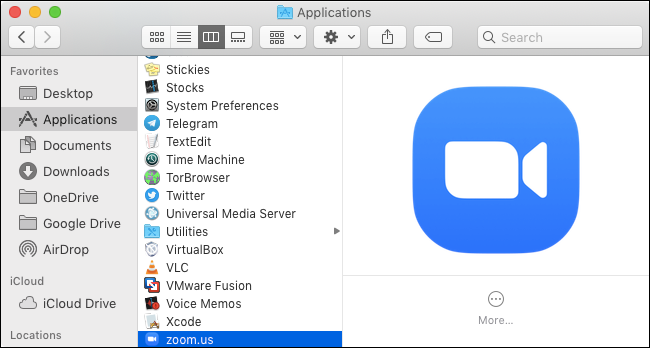





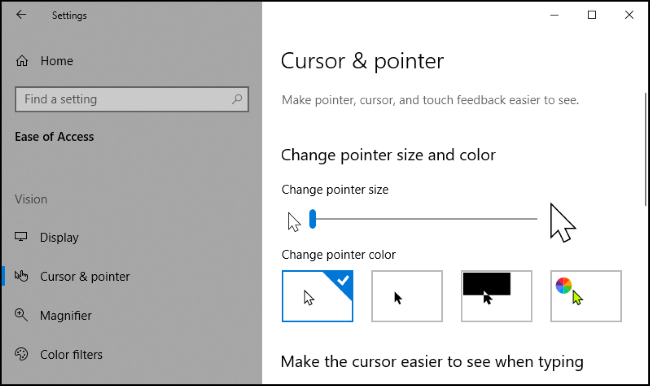


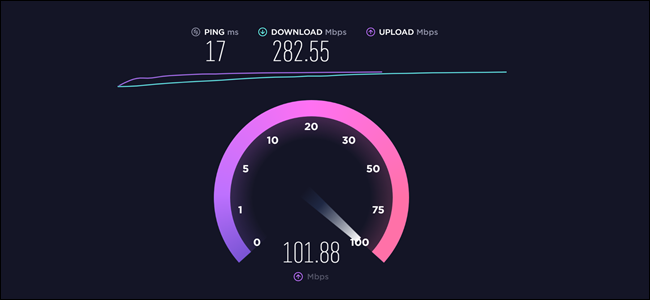











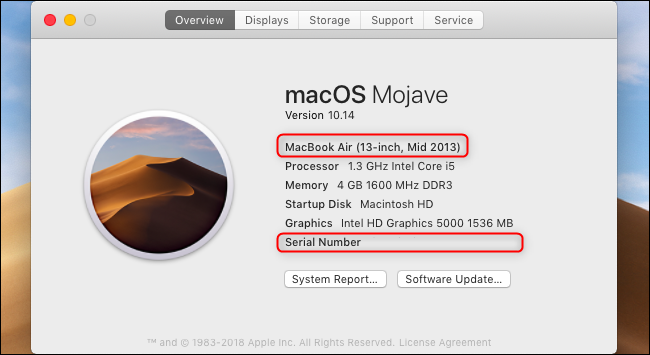












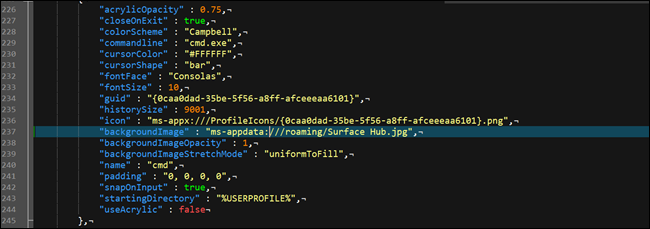


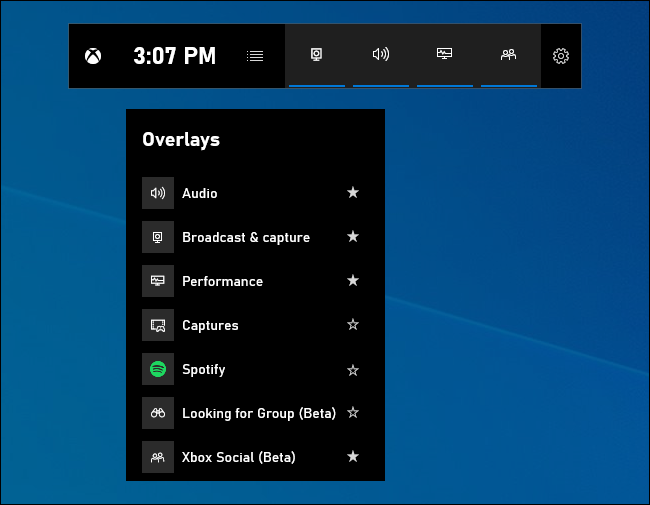


.svg)

Nhận xét
Đăng nhận xét